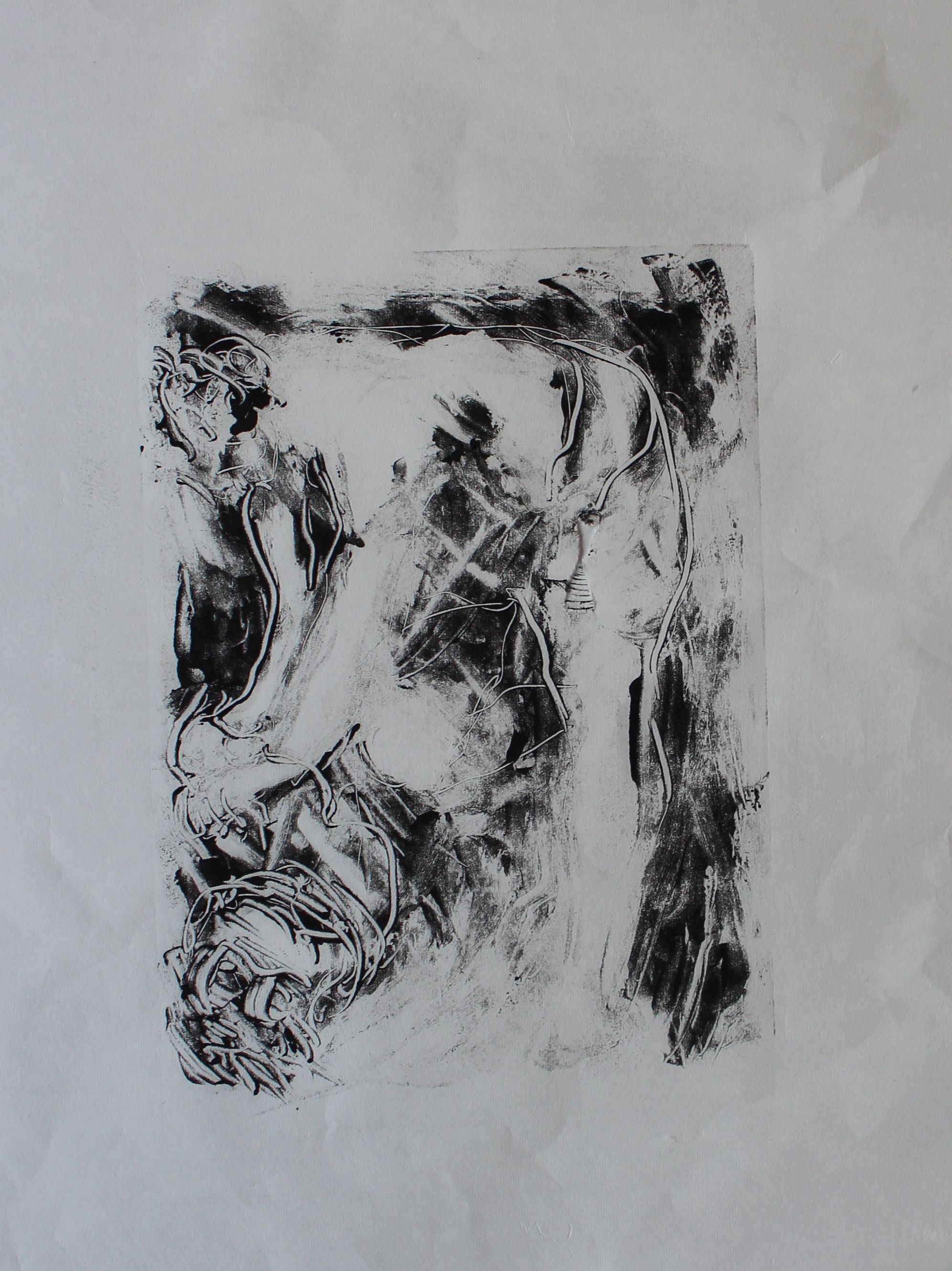
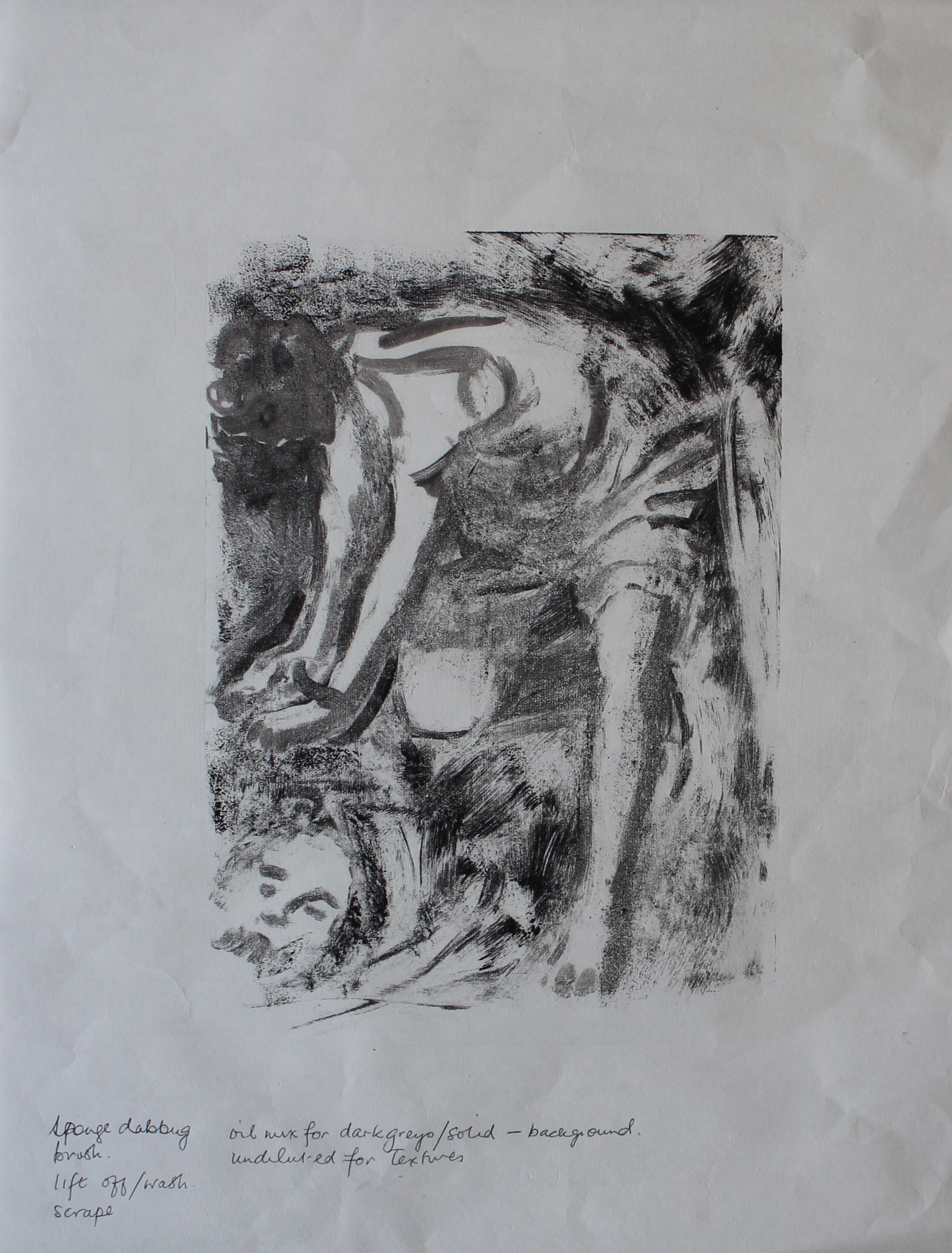
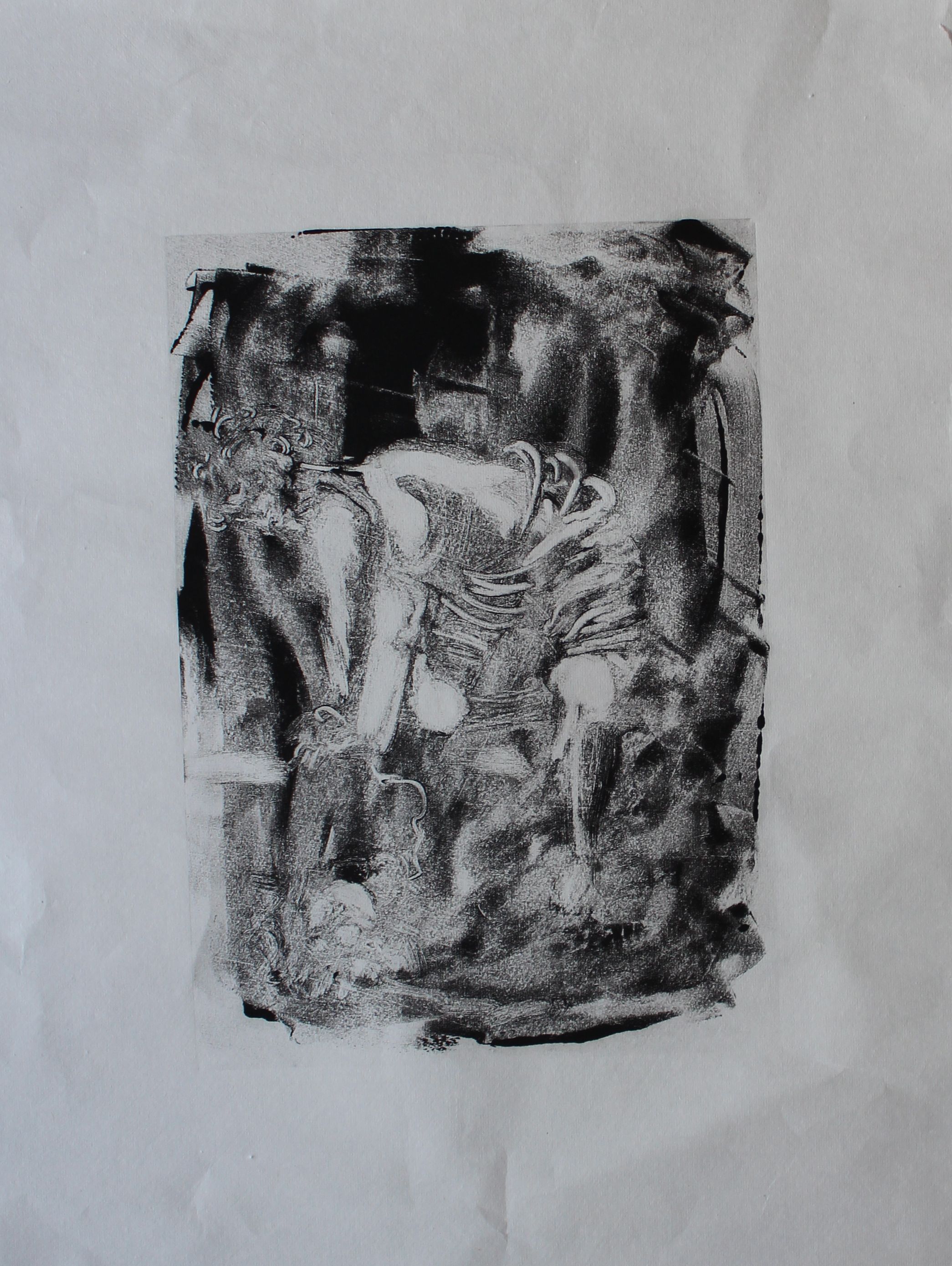
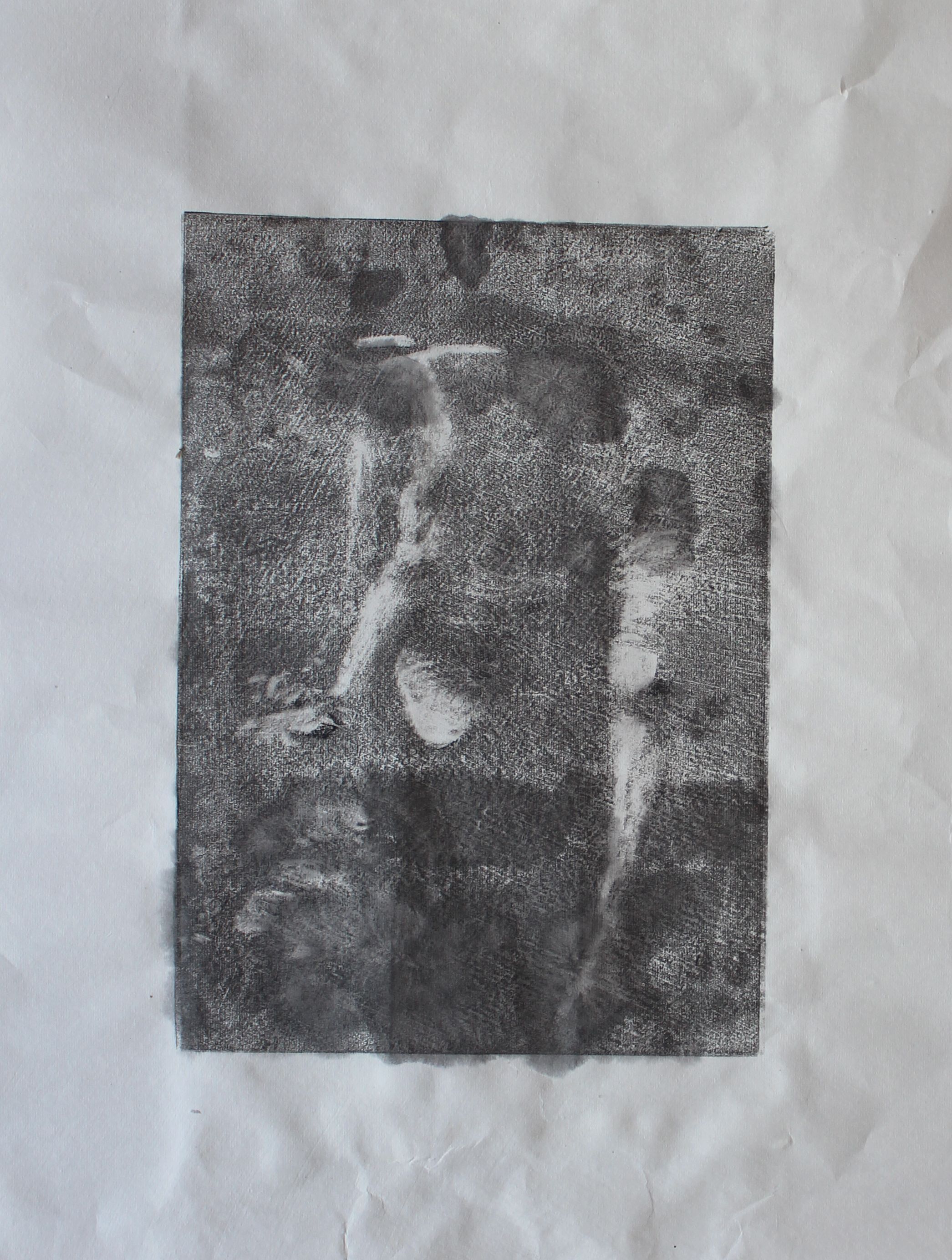
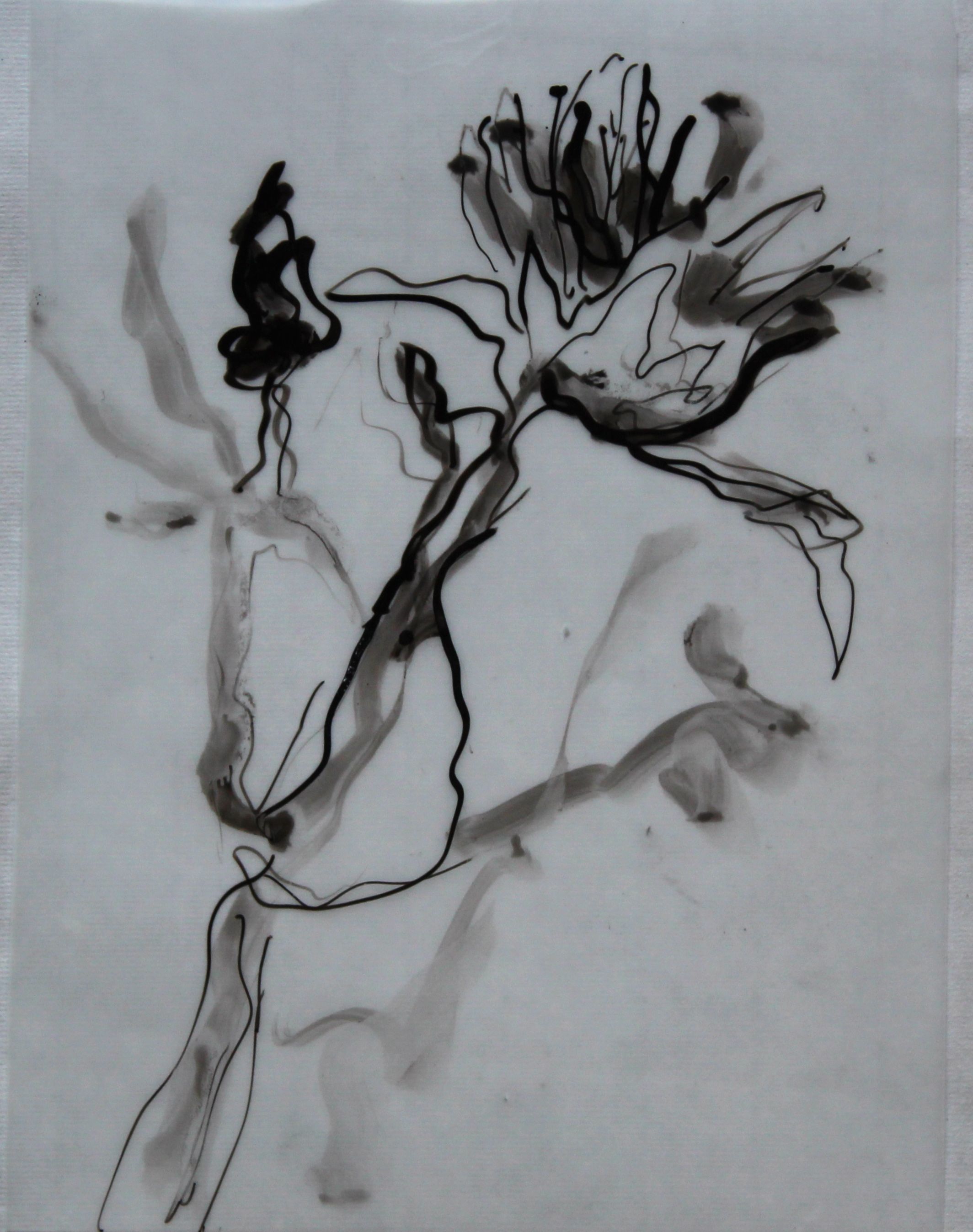
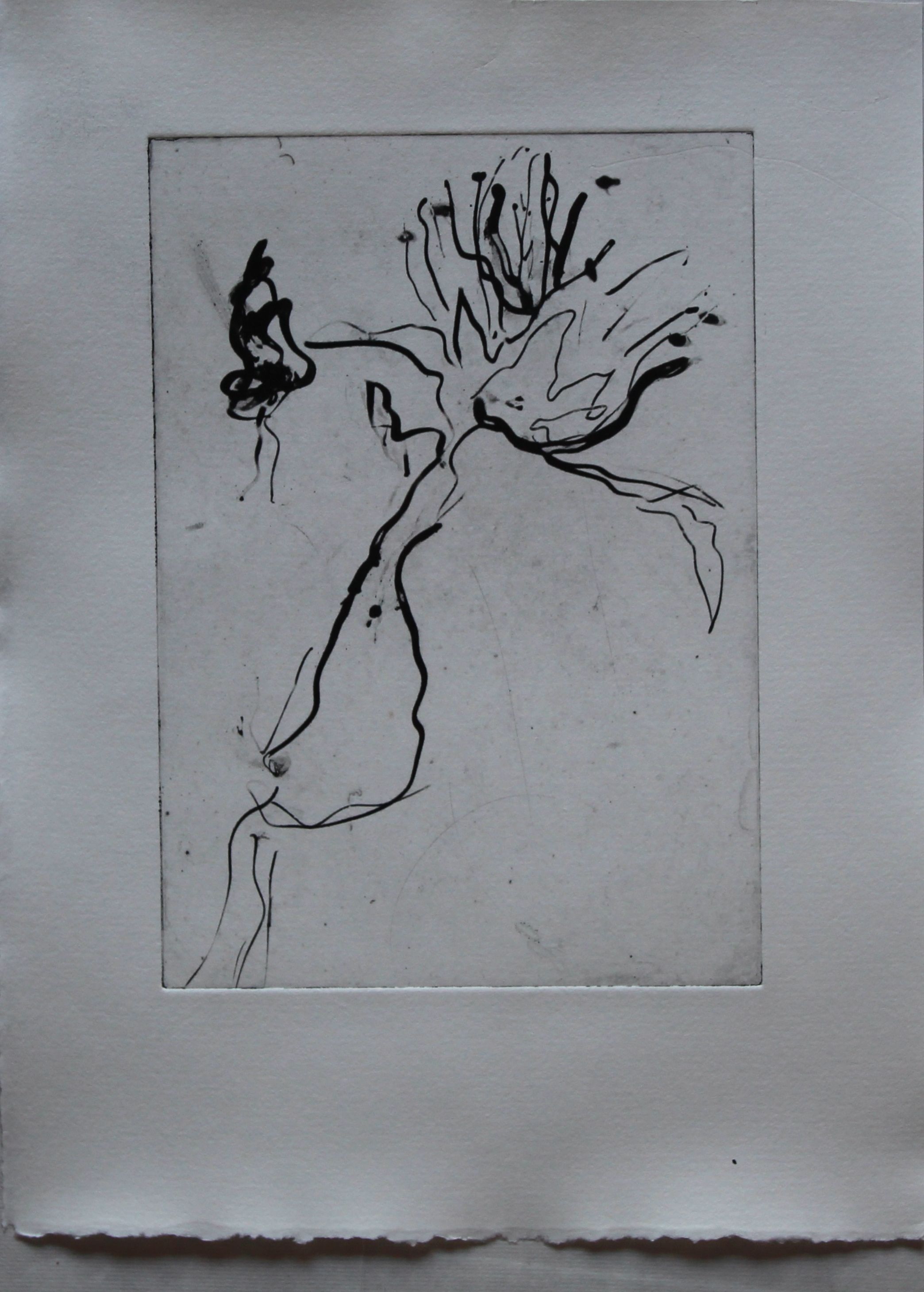
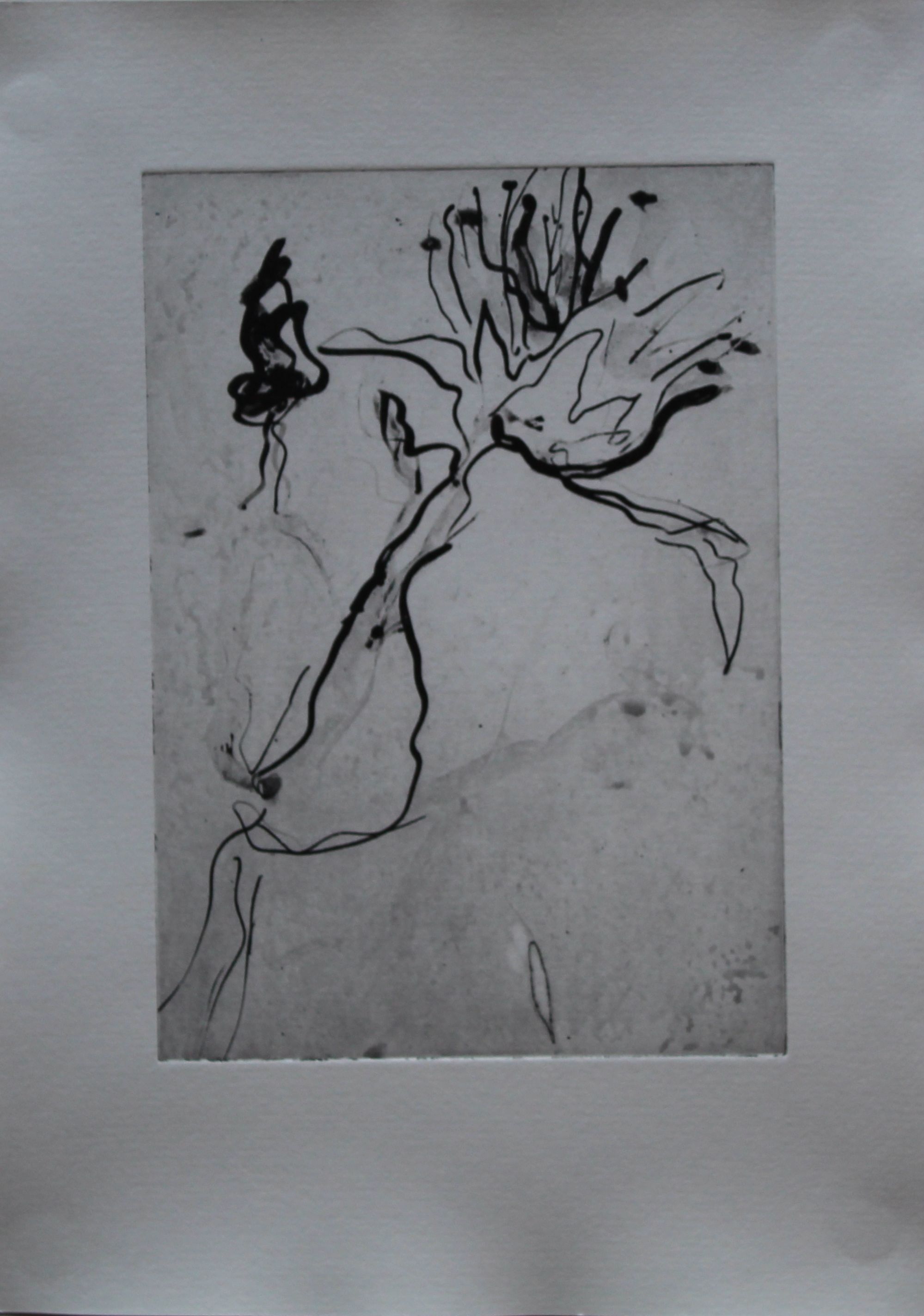
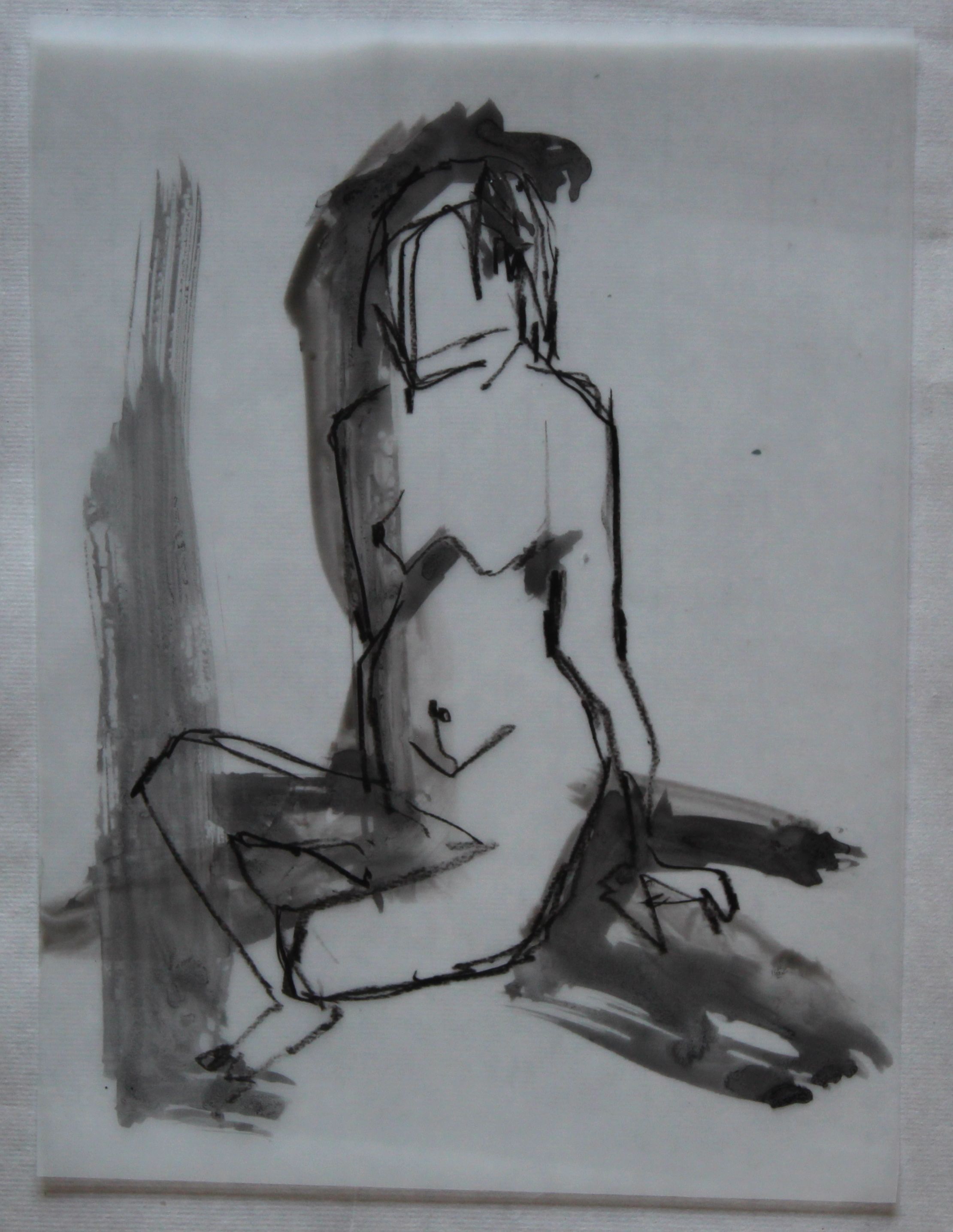
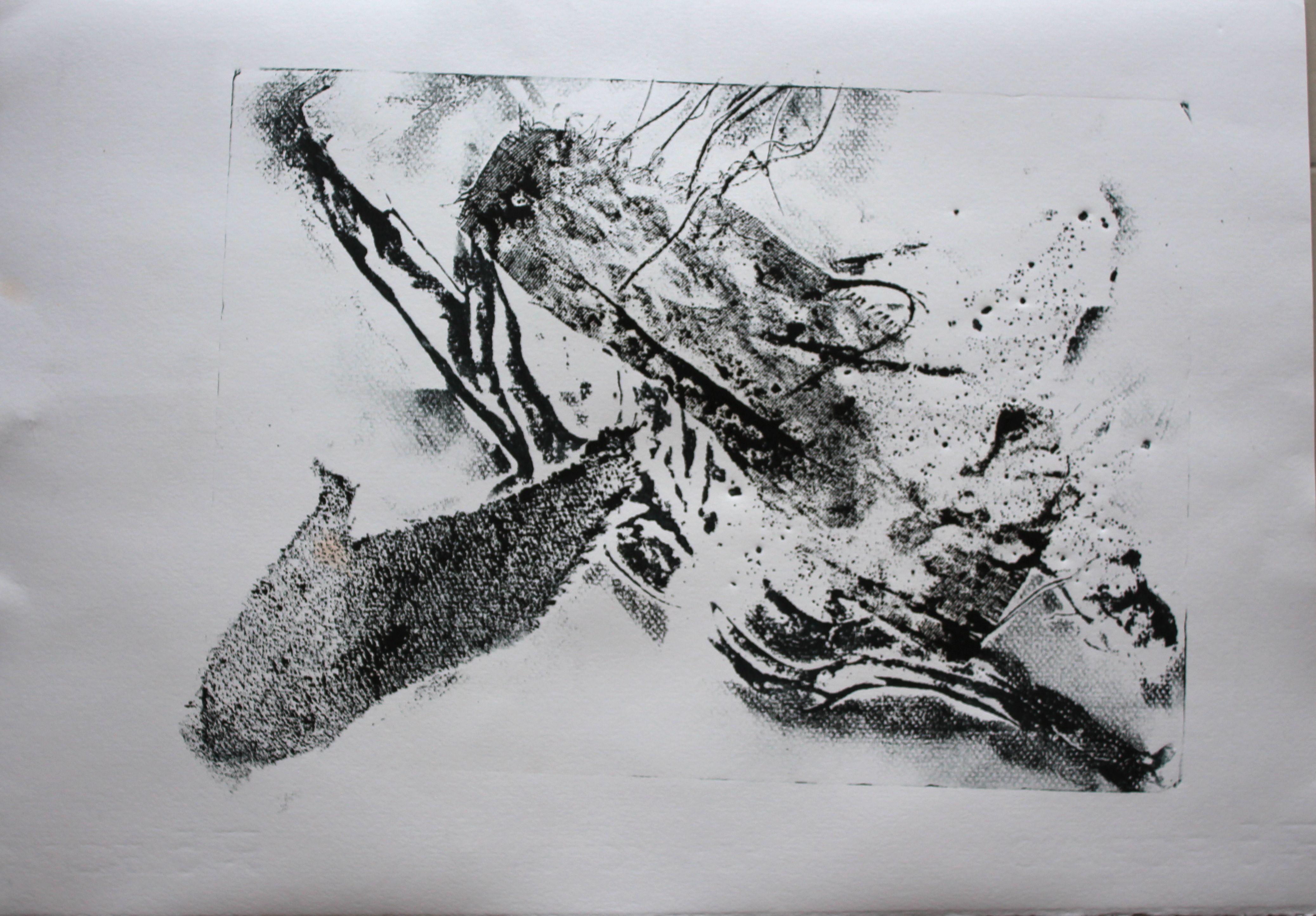
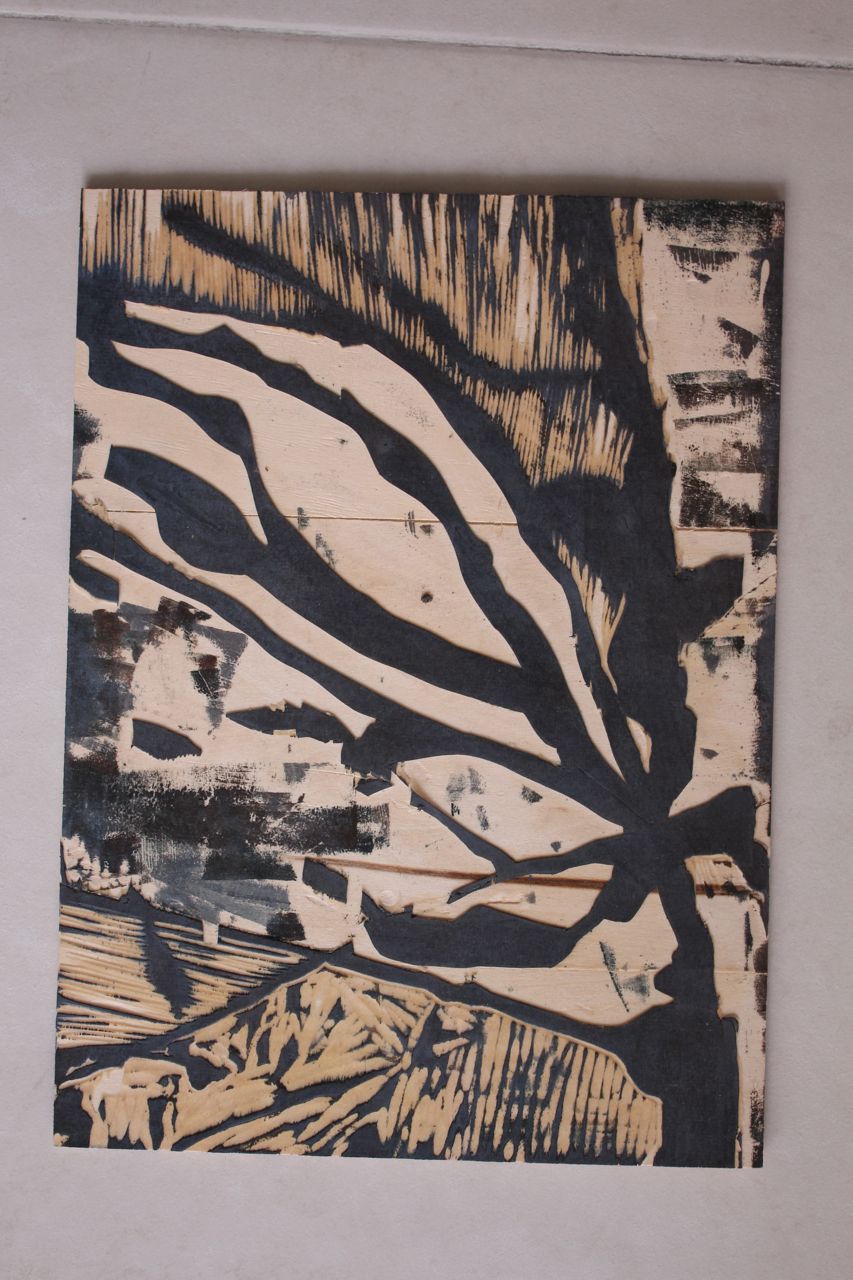
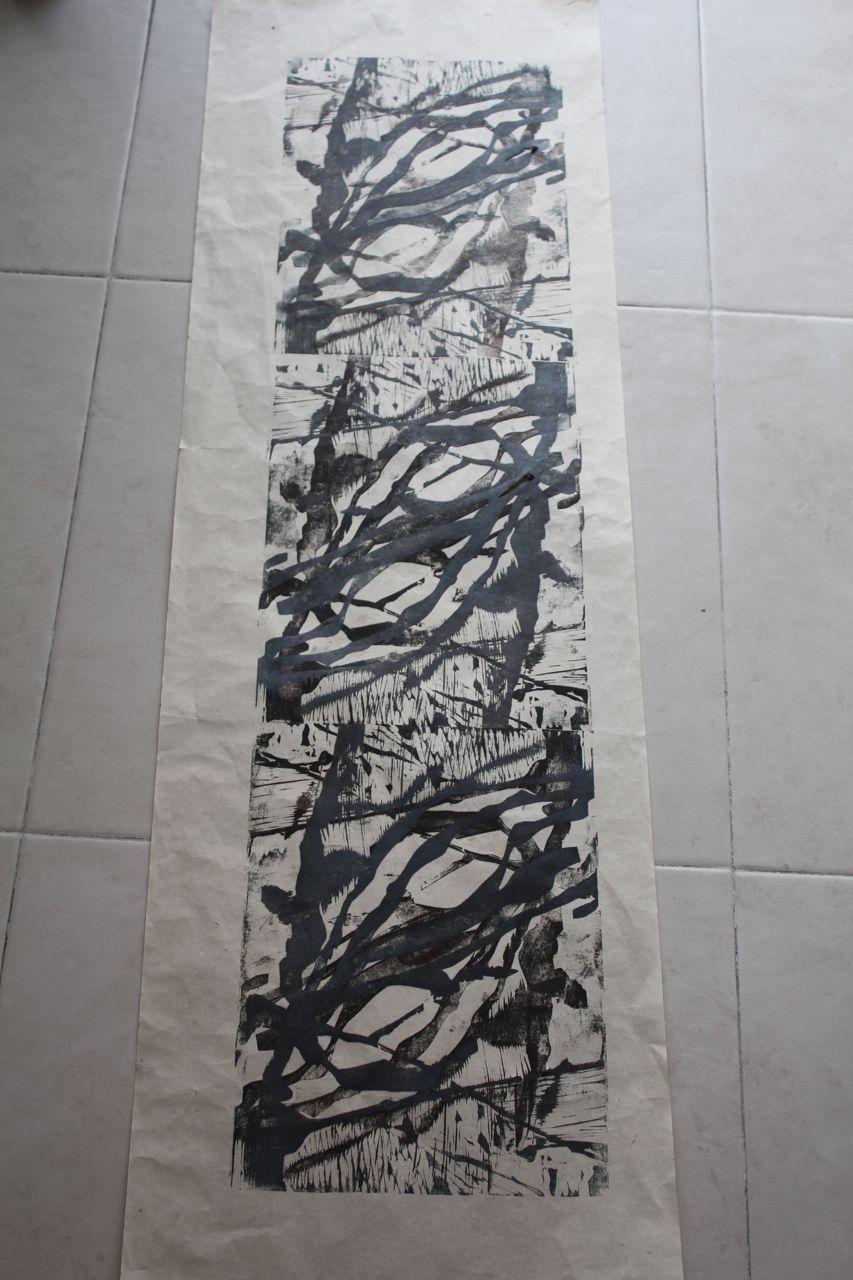
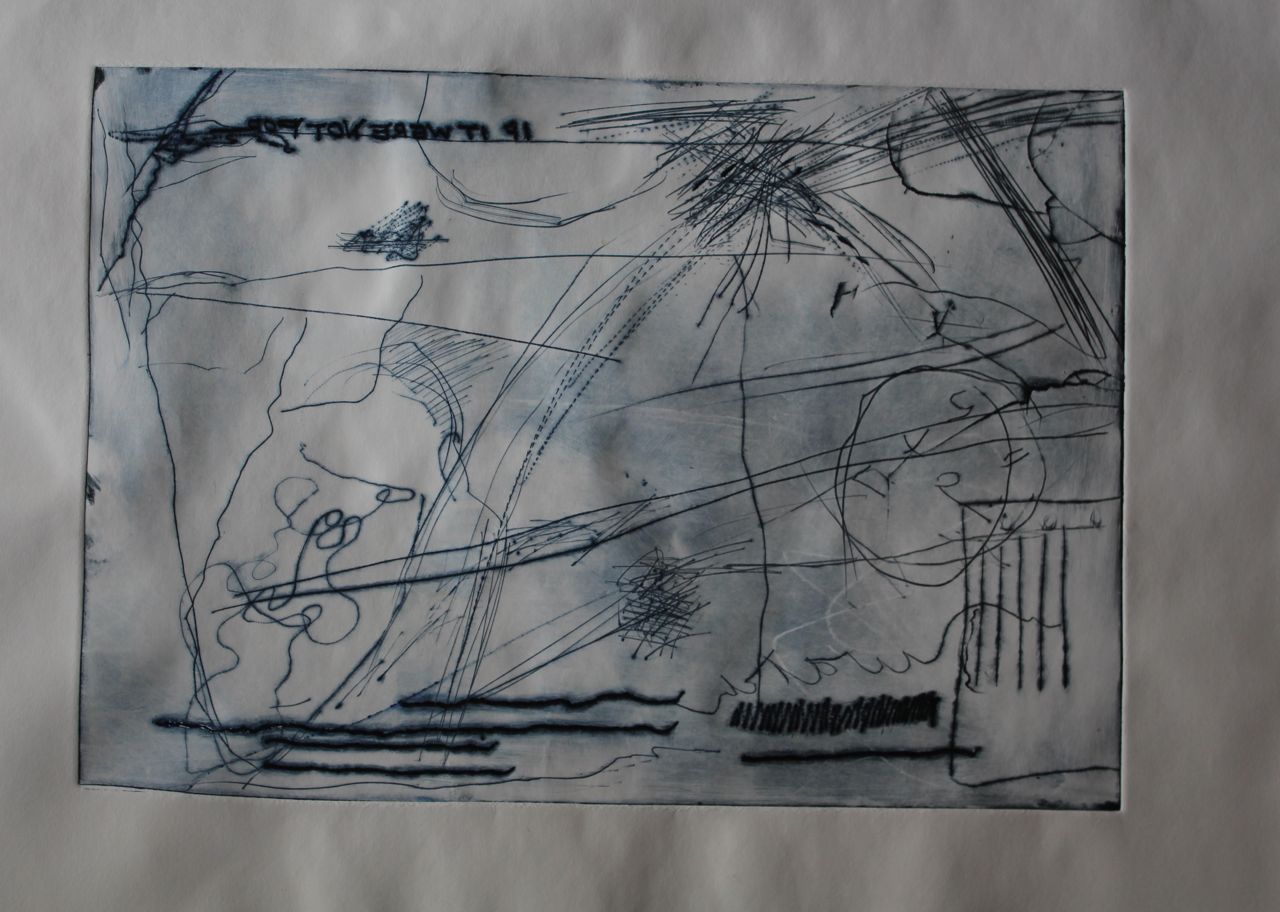
Assignment 3: Chiaroscuro: Newton’s apple series 1

Assignment 3

At one stride comes the dark. 

Well, this topic is all about avoiding that happening, about graduating tones to make the dark creep in, allow light to create form by moulding itself to the contours of what it meets.

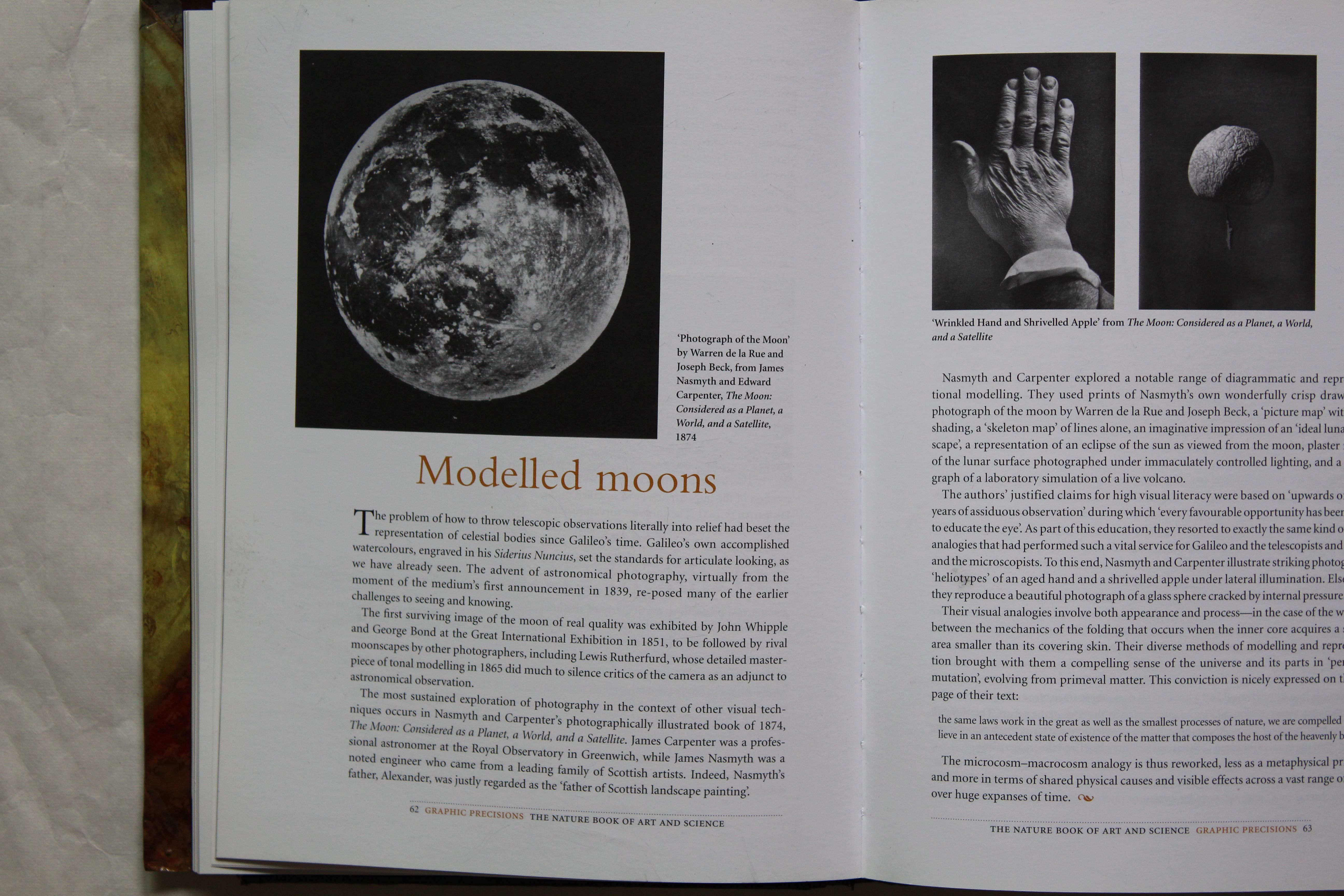
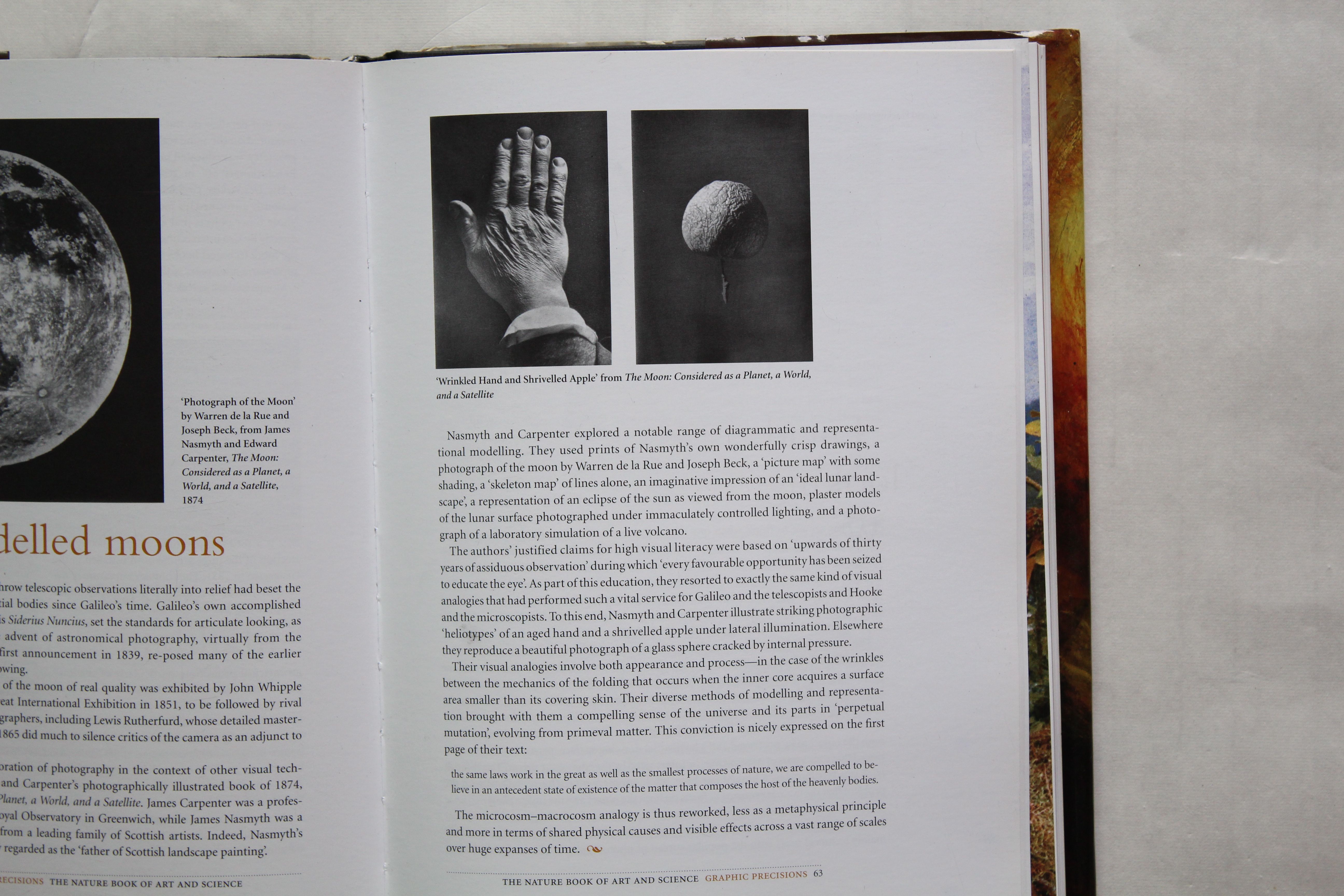
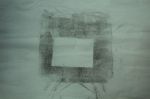
The inspiration for this series of prints was a book on Science and Art- “Visualisations” by Martin Kemp, which explores the use of analogical thinking in the development of Science. The particular chapter was one in which the use of lateral lighting in 19th century photography was used to create analogies with the moon, and thus to try to understand how its surface had been formed. The three images which illustrated this were very striking- an early, very clear photograph of a wrinkled apple, floating against a grey background, and a side-lit image of a wrinkled hand, and a stunningly clear image of the moon itself from 1874.

(There is more info on these images and the book they come from here: interesting!

The Moon considered as a Planet, a World and a Satellite

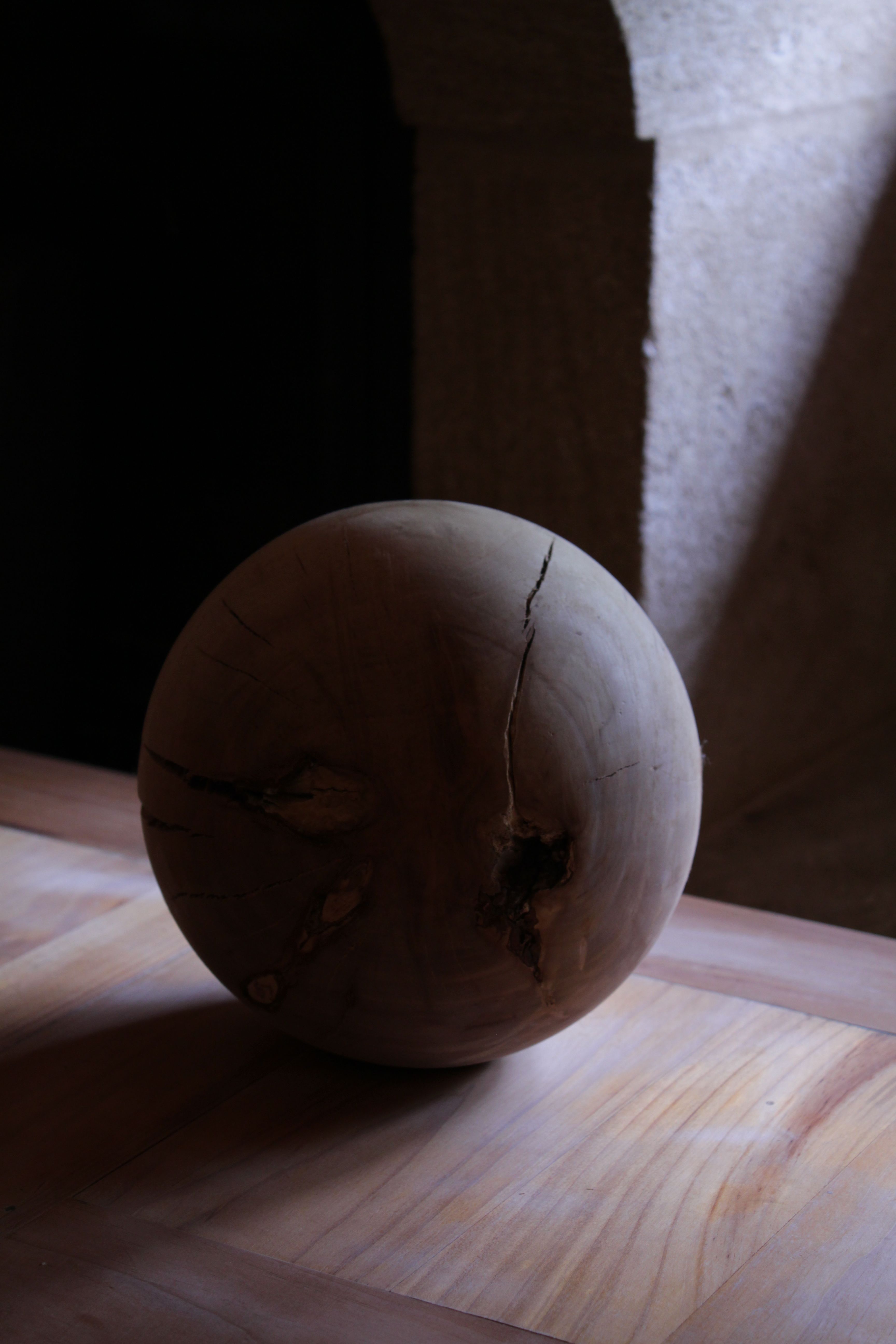
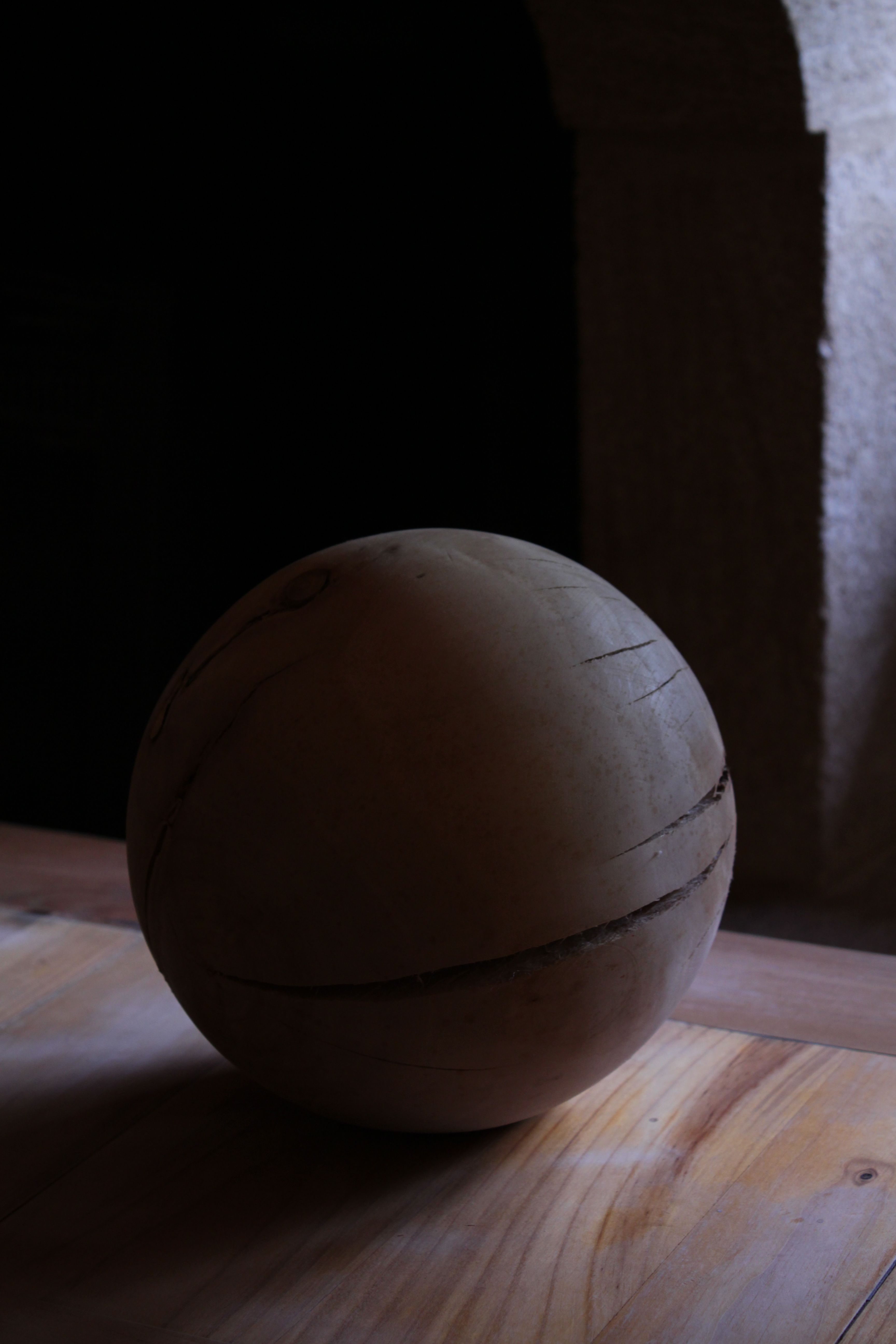
IMG_3732


IMG_3731

Newton’s apple

That impossible floating apple is very striking, and makes me think of Newton’s apple, and the apple of the Bible, and the idea of falling, and degenerating. And the coming of the dark. It’s a potent symbol.

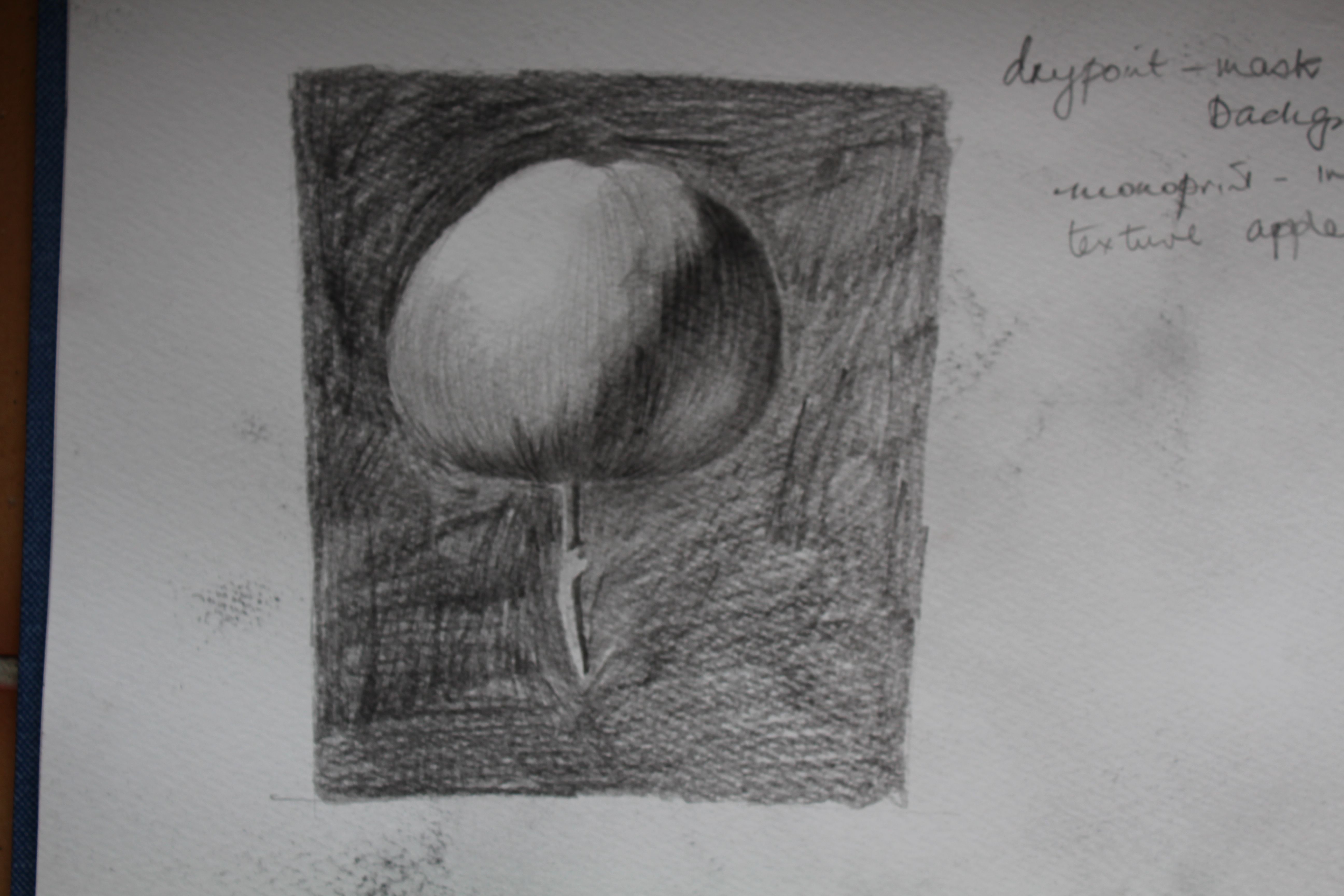
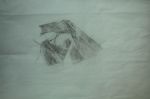
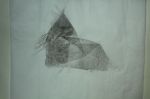
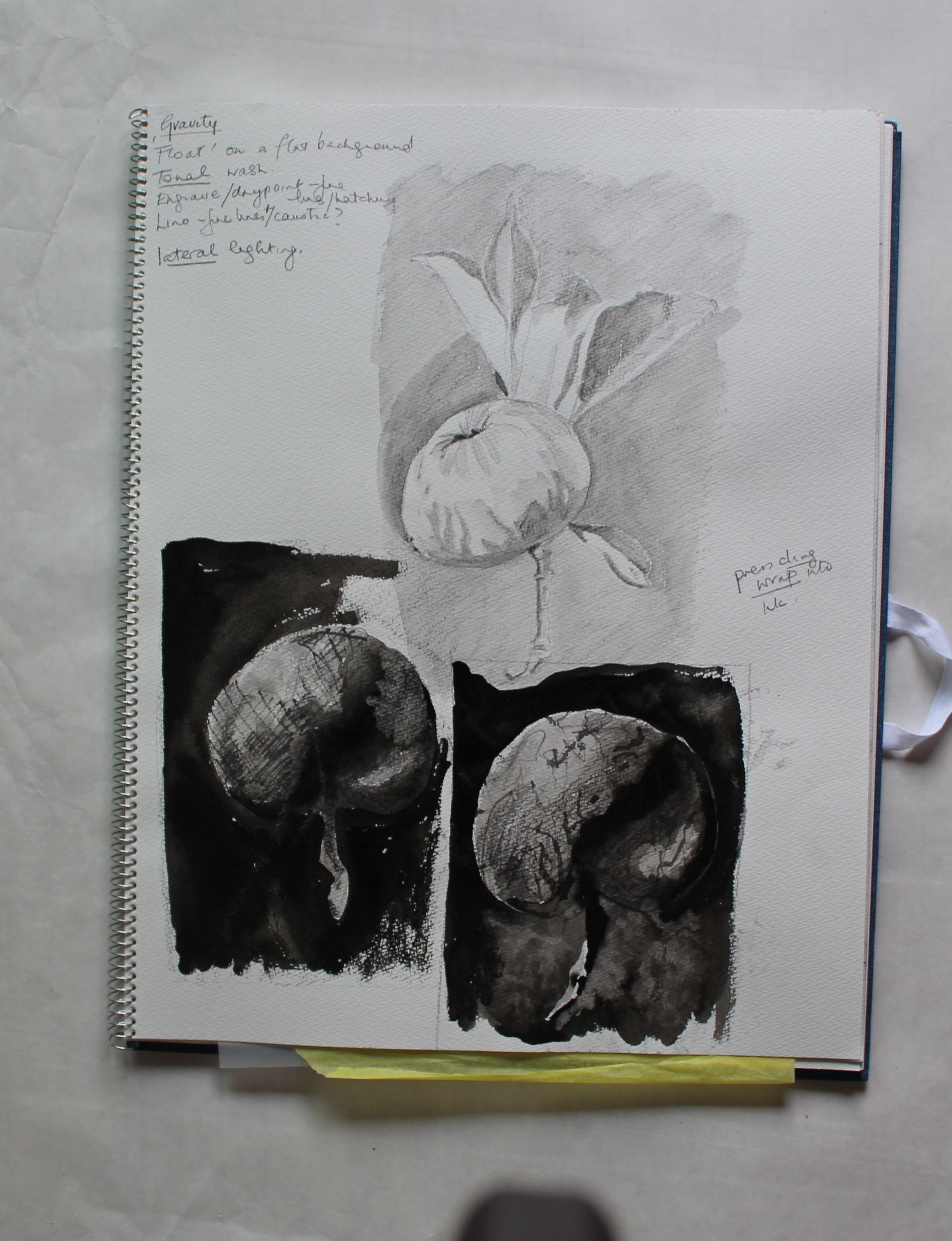
There’s also the fact that that’s a fabulous photo that would take some improving on. I started by recreating it with pencil, then sketching some real apples from my tree, and starting to think of ways to handle the subject matter.

IMG_3680

IMG_3720

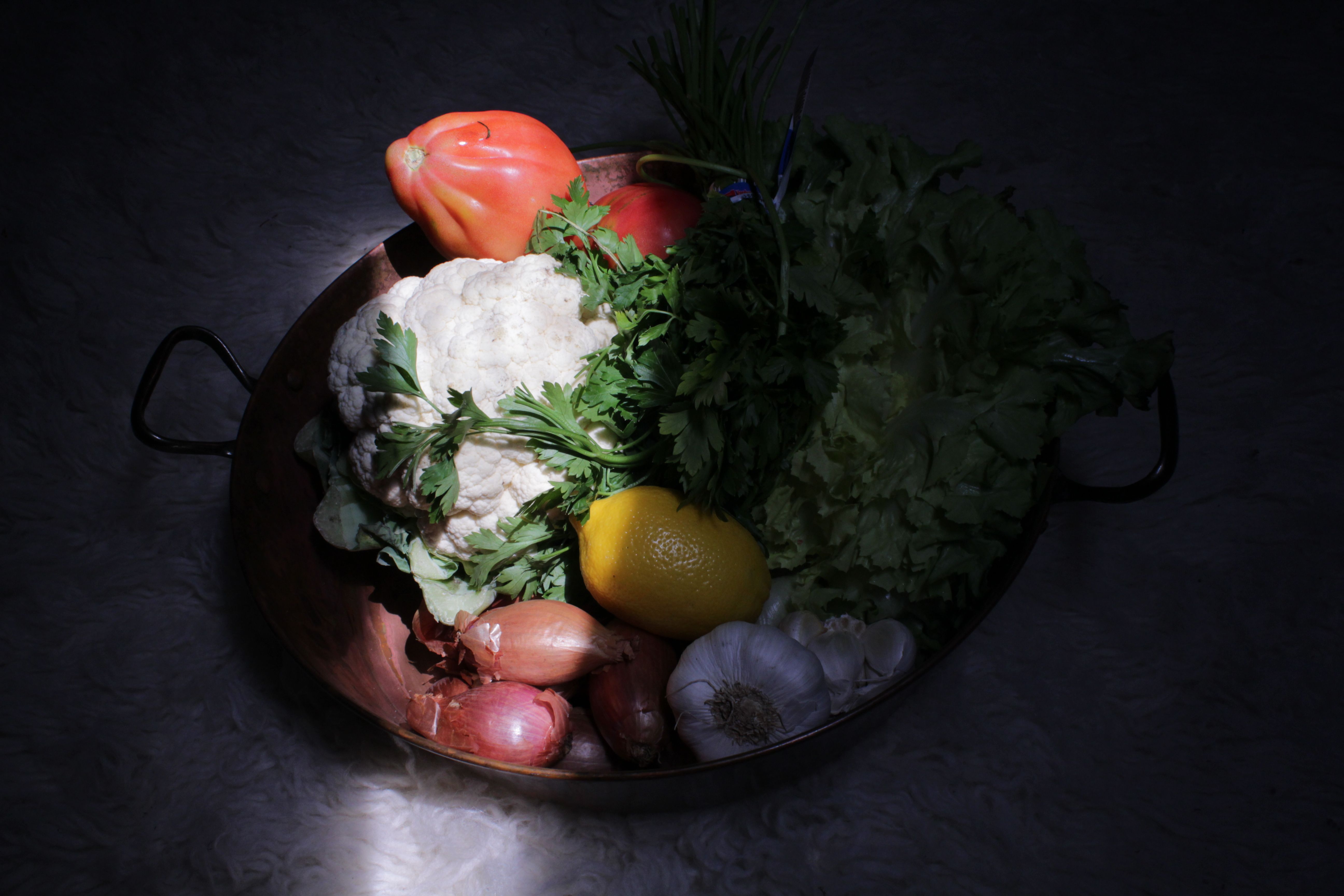
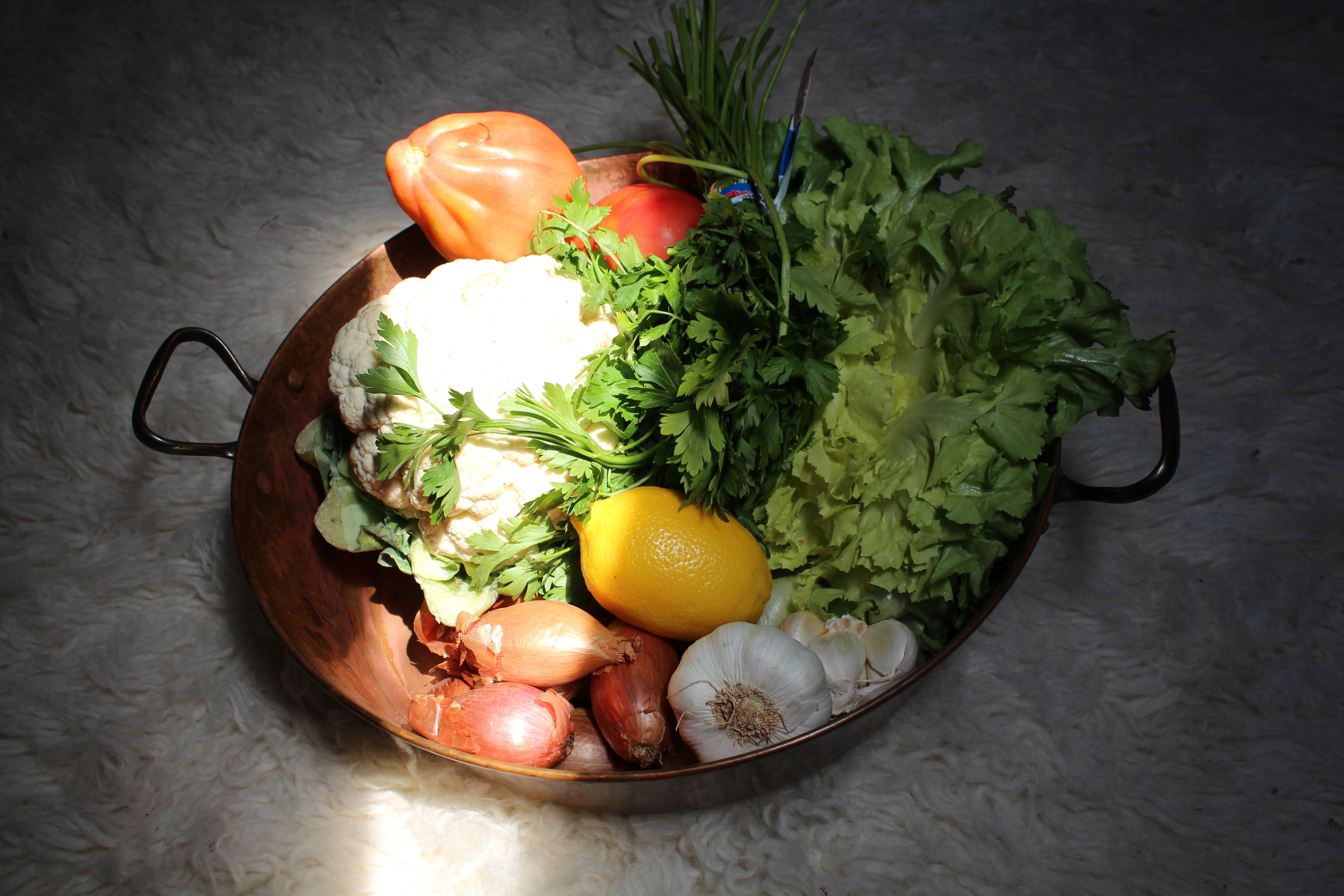
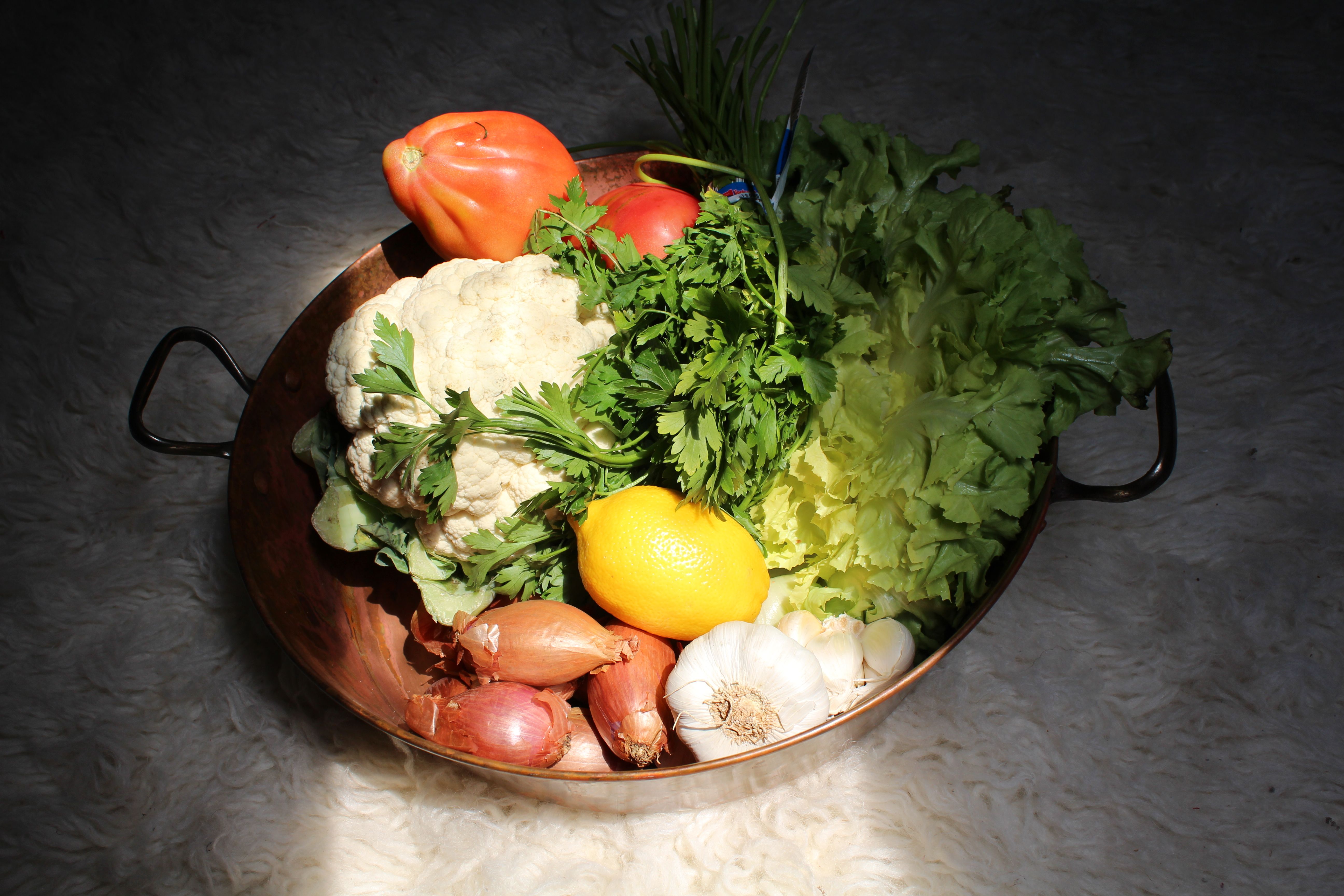
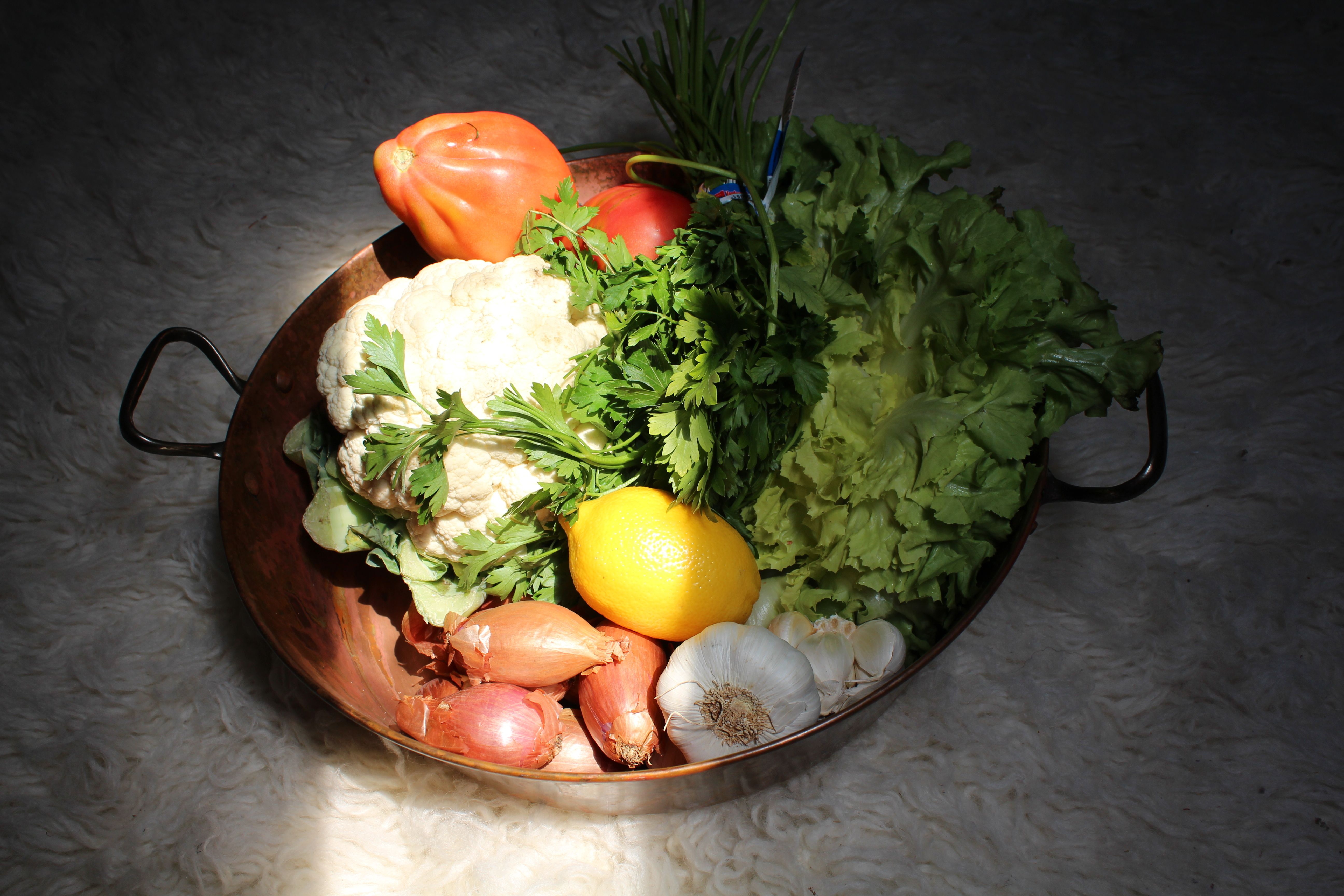
I also took some photos with directional light sources:

IMG_3601

IMG_3638 IMG_3637 IMG_3639IMG_3605 IMG_3604IMG_3603 IMG_3602


Monoprint

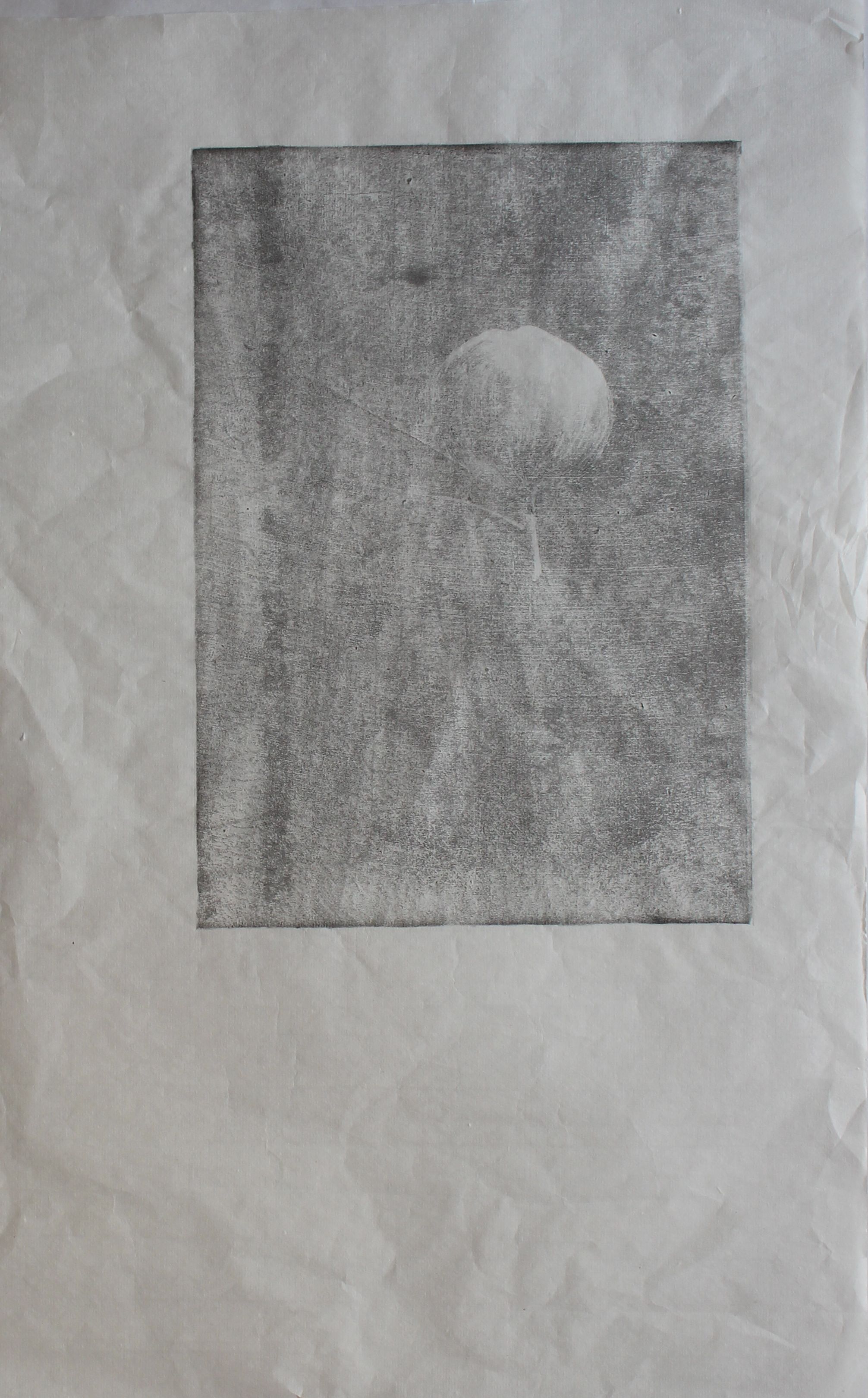
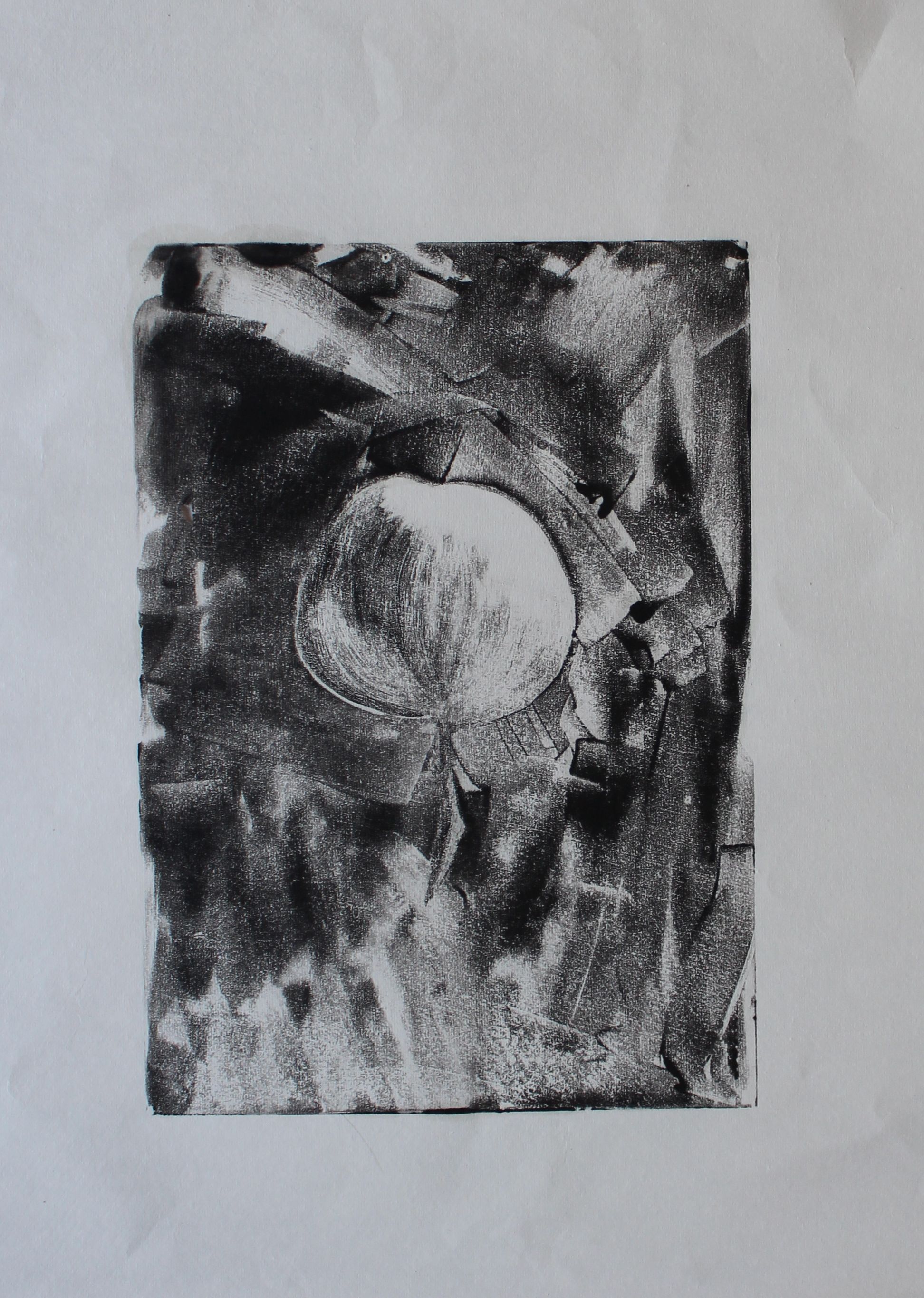
Still my first response, monoprint, , and felt that, with a mask, I should be able to get sharp edges that would make that lateral lighting work.  Starting with a delicate wiping off, and trying to create more contrast:

subtraction

subtraction

IMG_3786

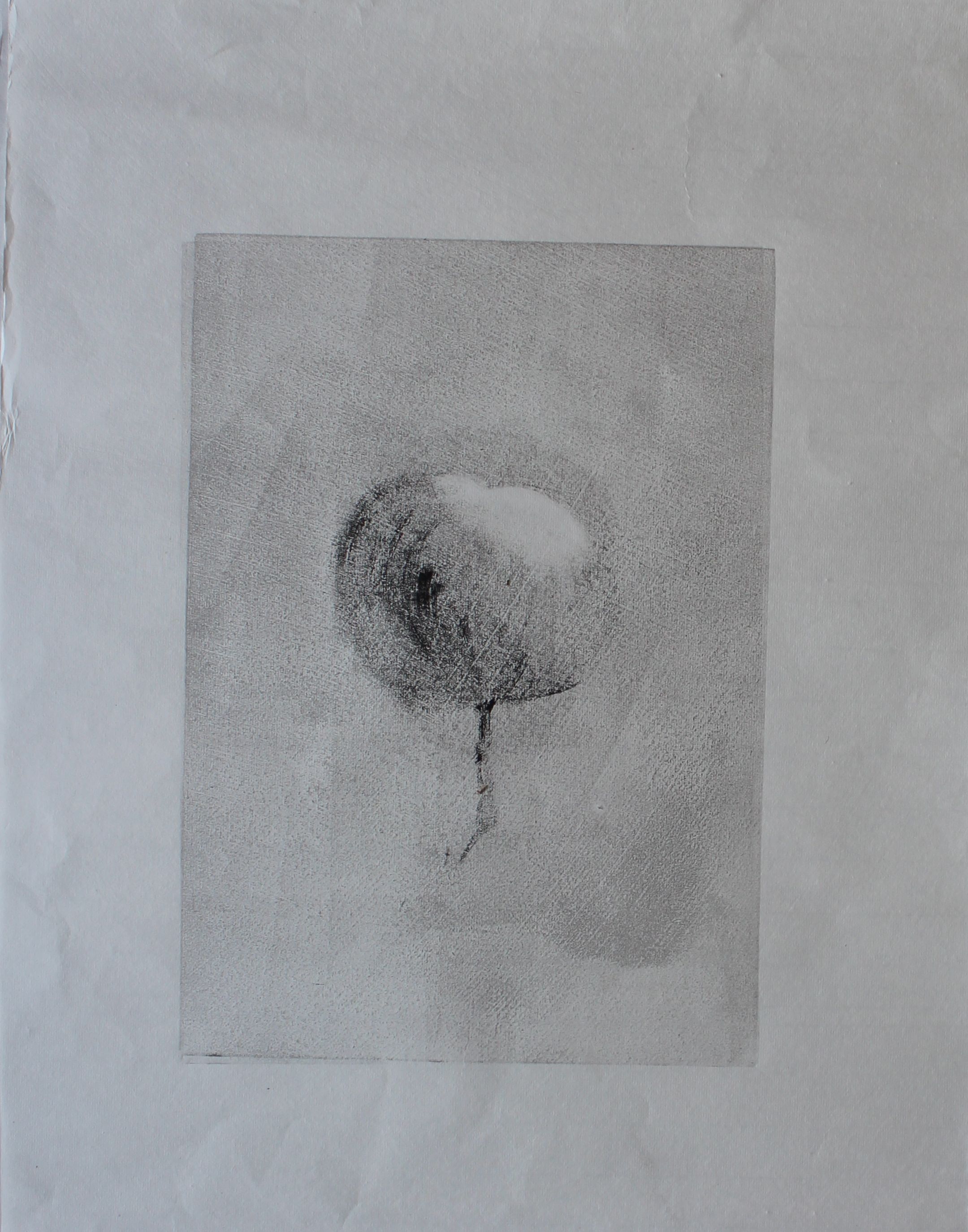
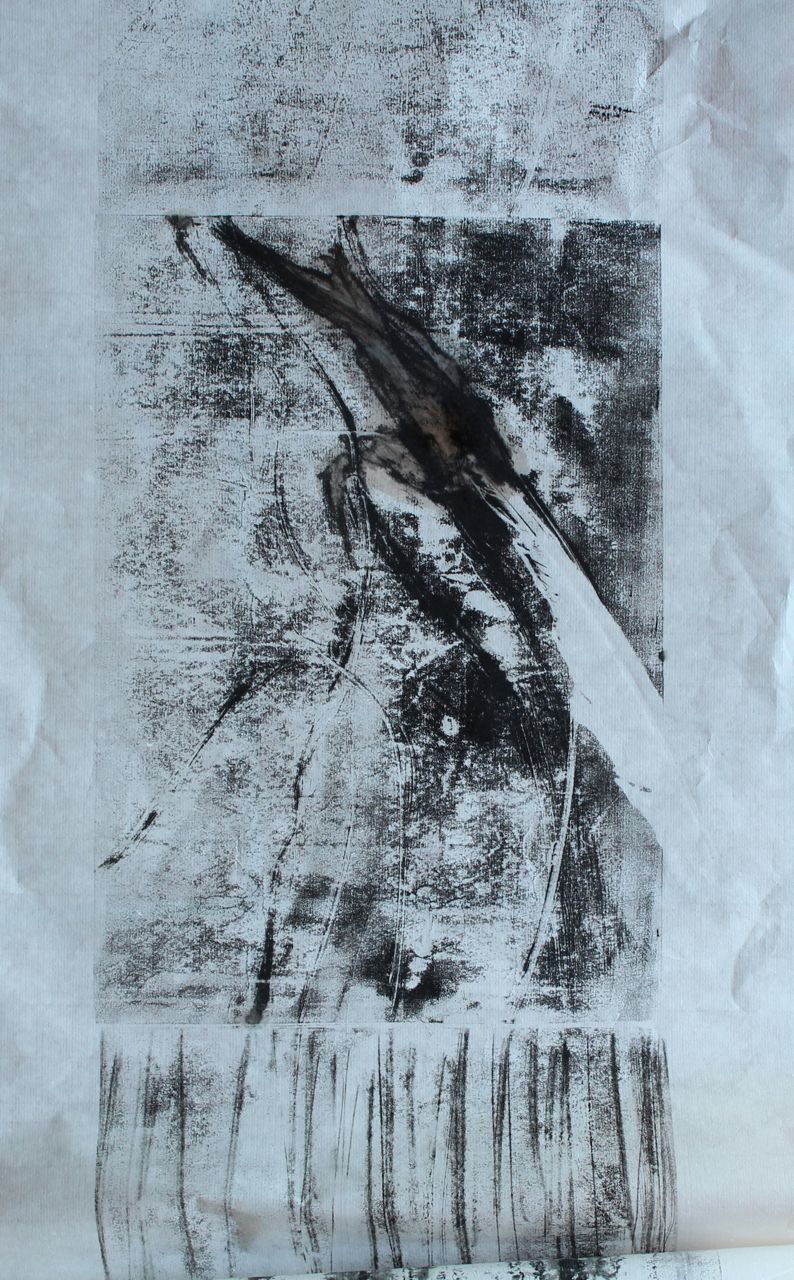
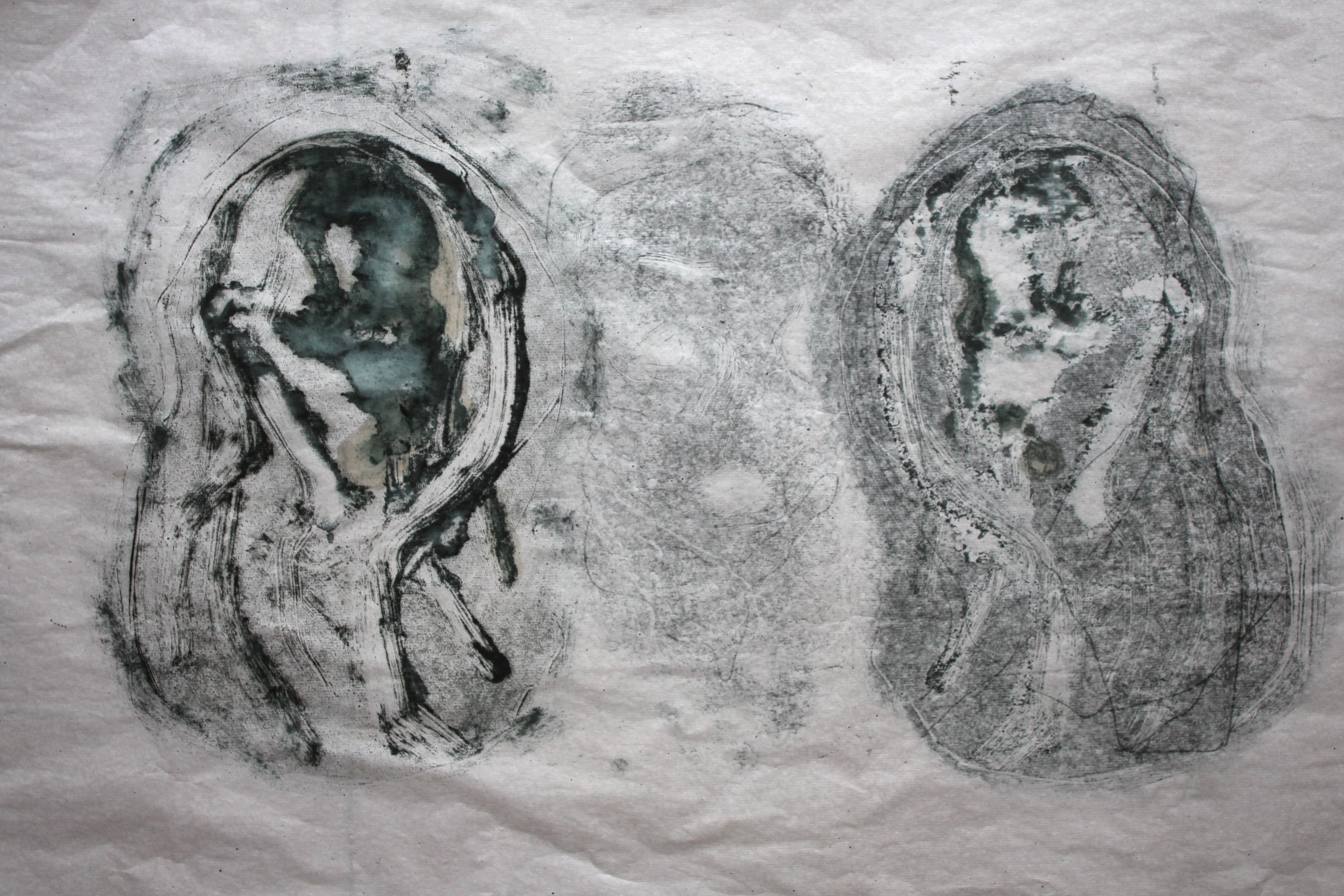
Then I tied making texture using brush strokes, the trick with this being to get the same degree of dryness for all the tones. I used a mask to create an even background. I thought this one worked quite well.

IMG_3782

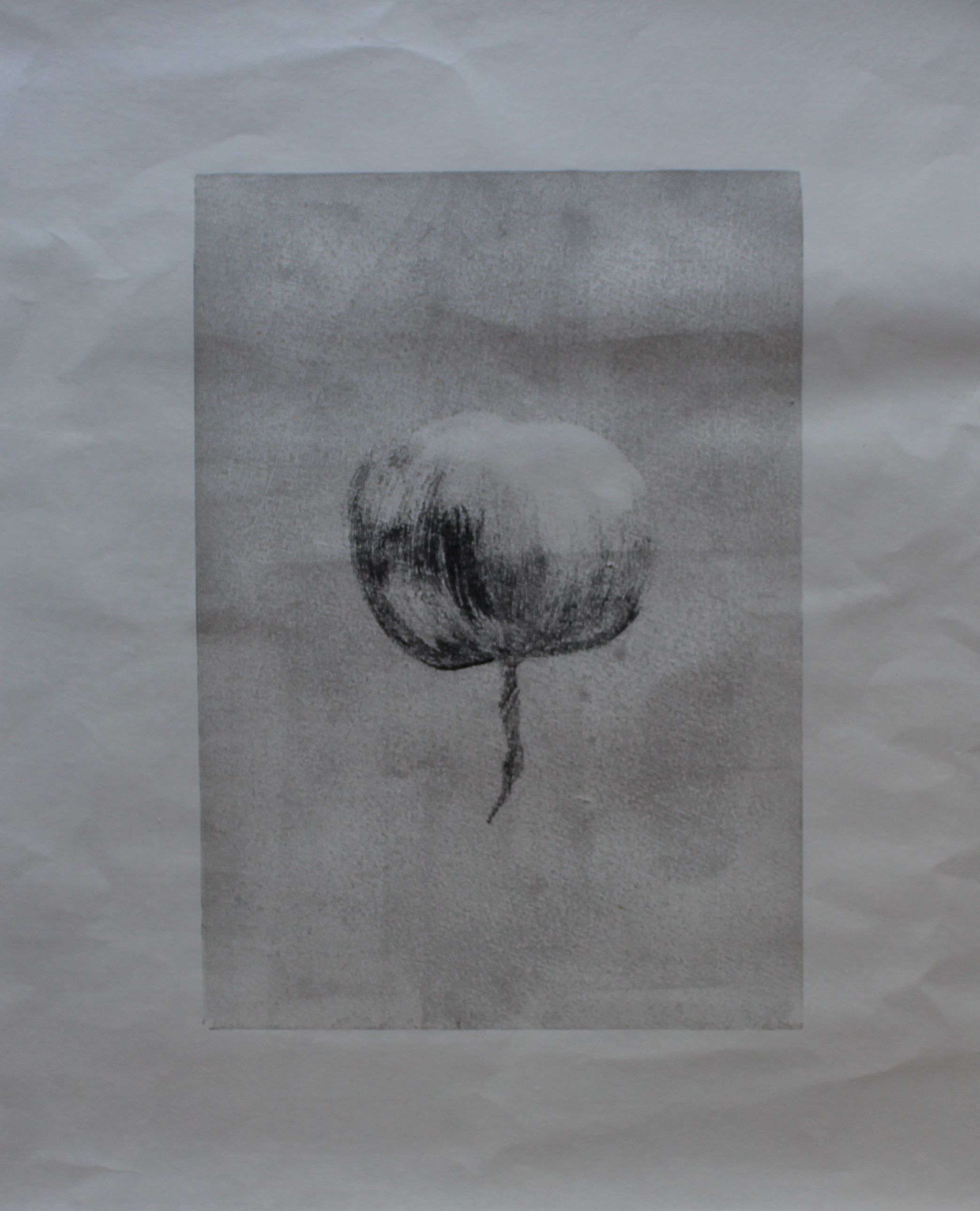
This one was bolder- but using delicate paper resulted in a tear.

IMG_3784

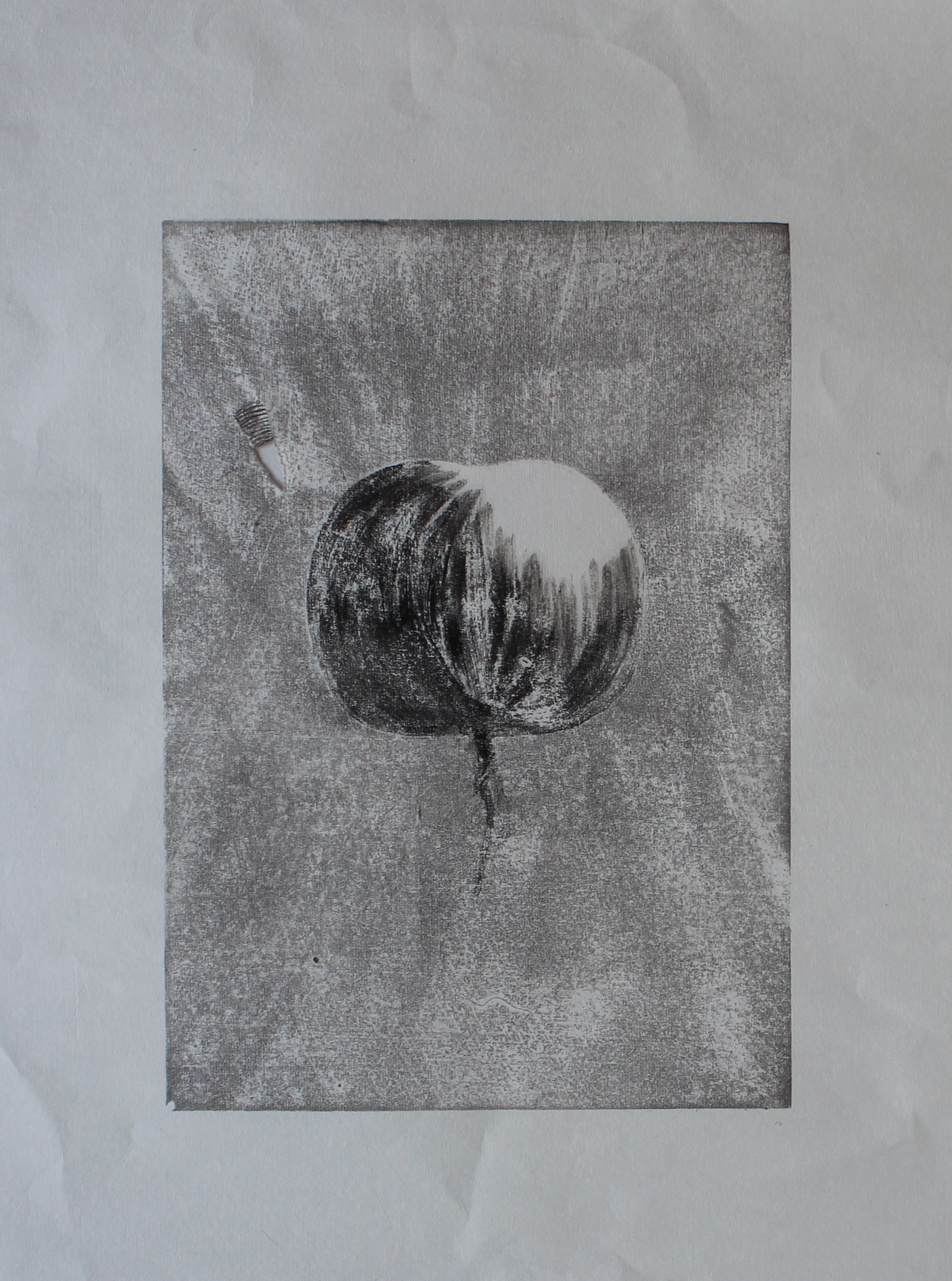
Finally a much bolder one, using a knife to apply the ink: the use of a mask made a very hard edge.

IMG_3785

Intaglio: Drypoint

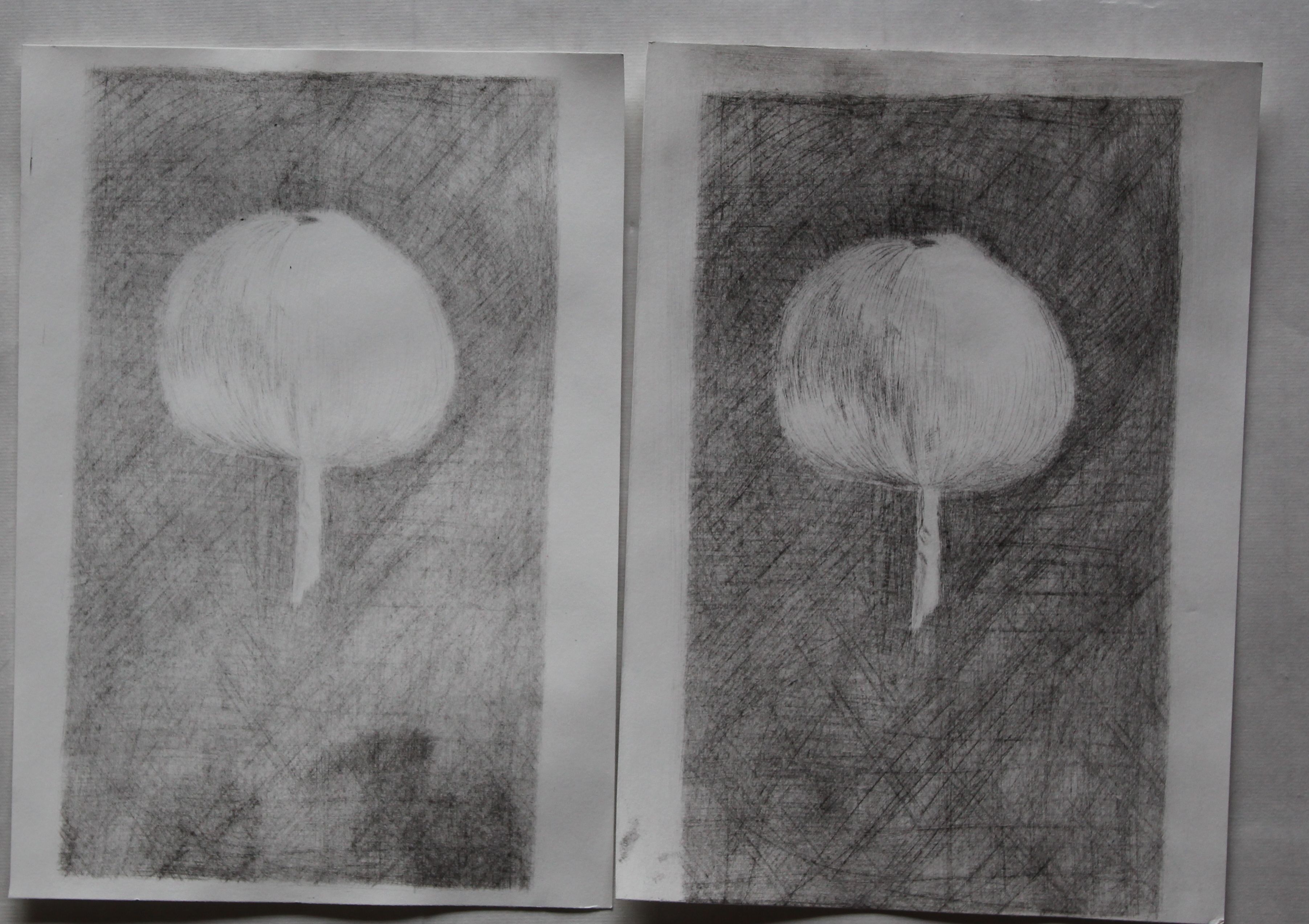
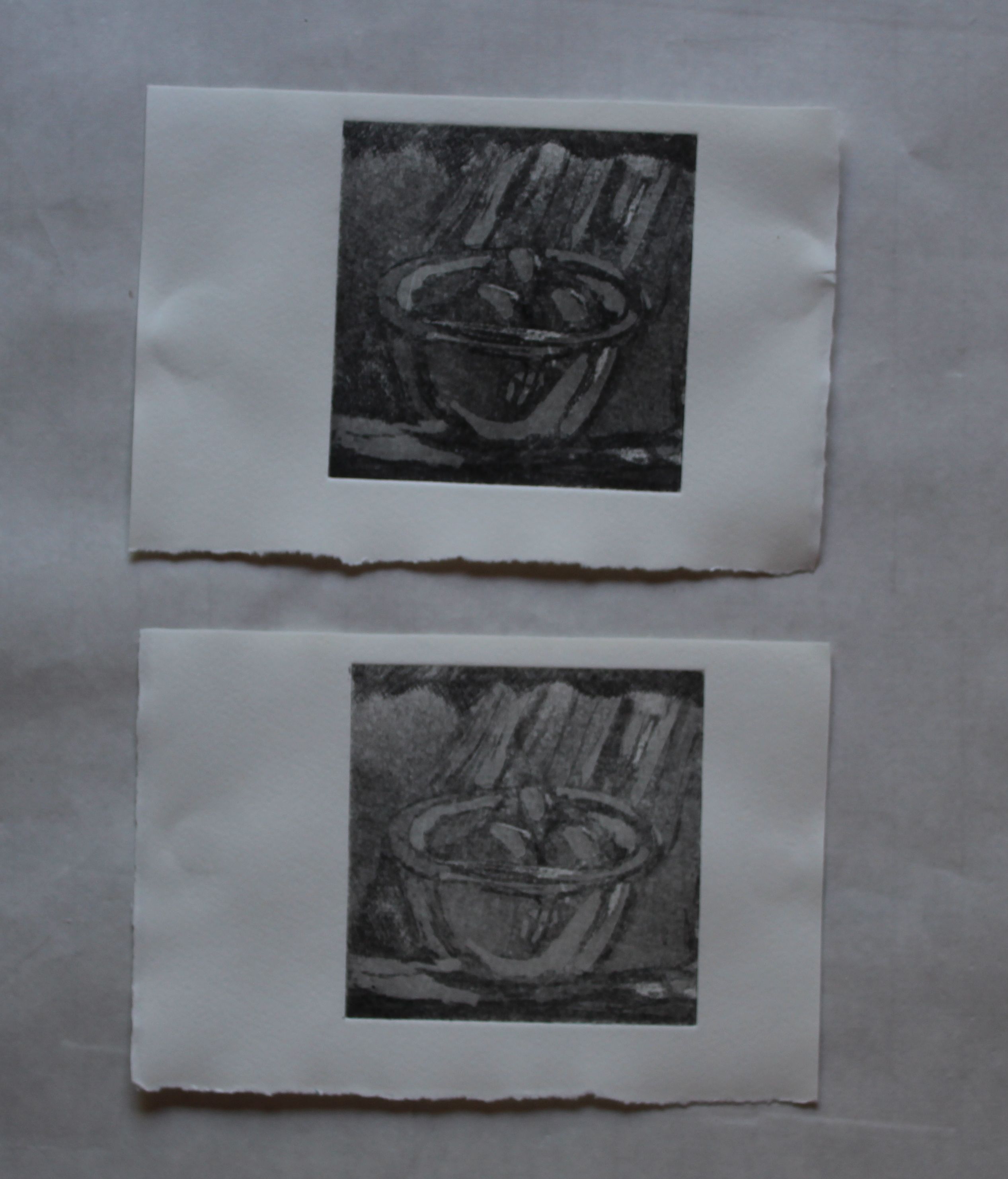
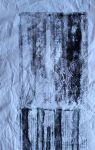
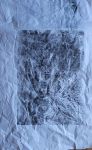
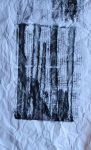
Still focussing on pencil type- lines, I decided to try intaglio on perspex. The first version of this was done with a wobbly needle stuck in a cork, and wasn’t very dynamic. It had cross-hatching for the background, and contour lines on the apple shape.

IMG_3701

Now I had some tools, and a press, so etched it better, and inked it up. Again I found that adding oil to the ink helped to get darker colours.

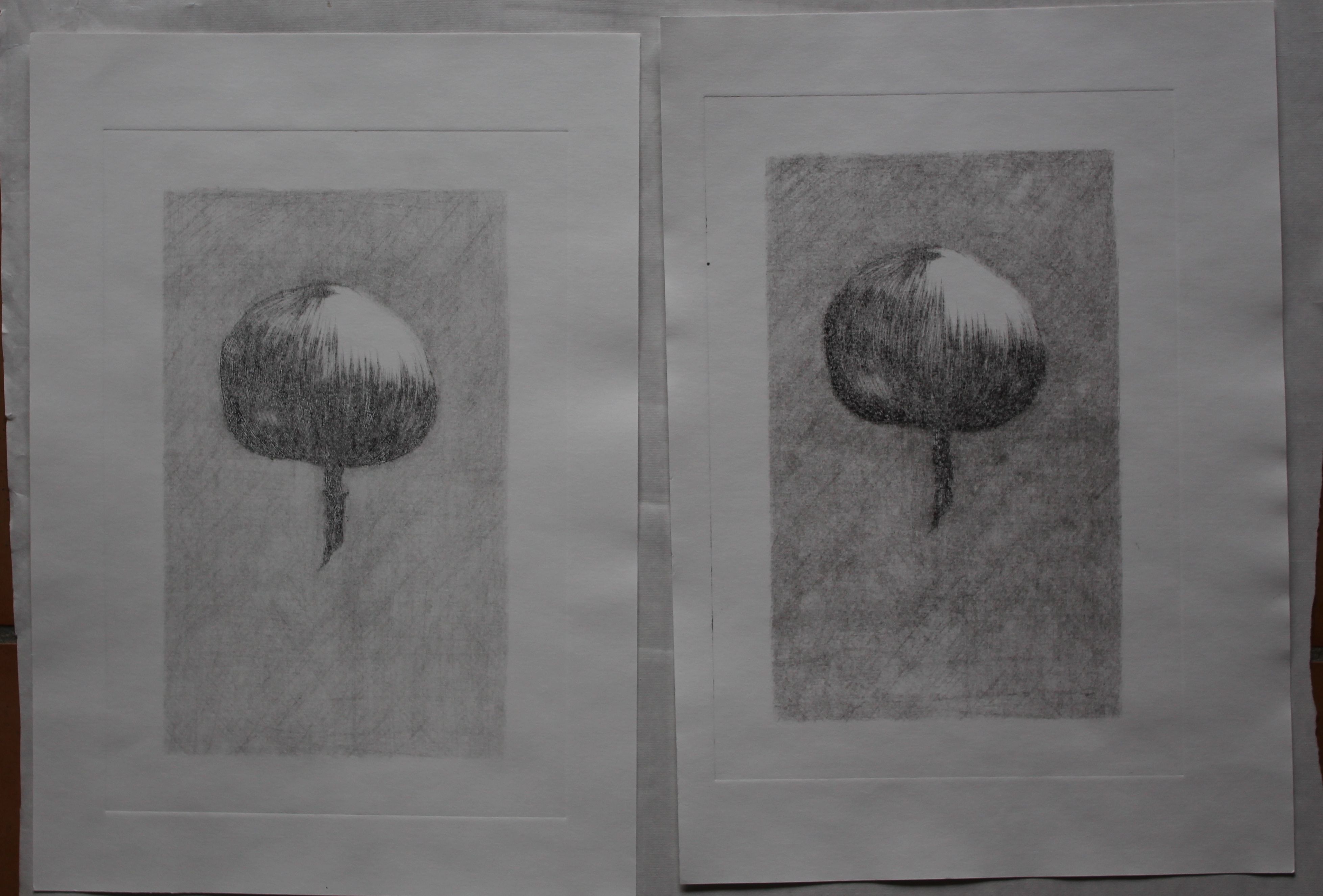
I was quite pleased with the results: Newton’s apple.

IMG_3705

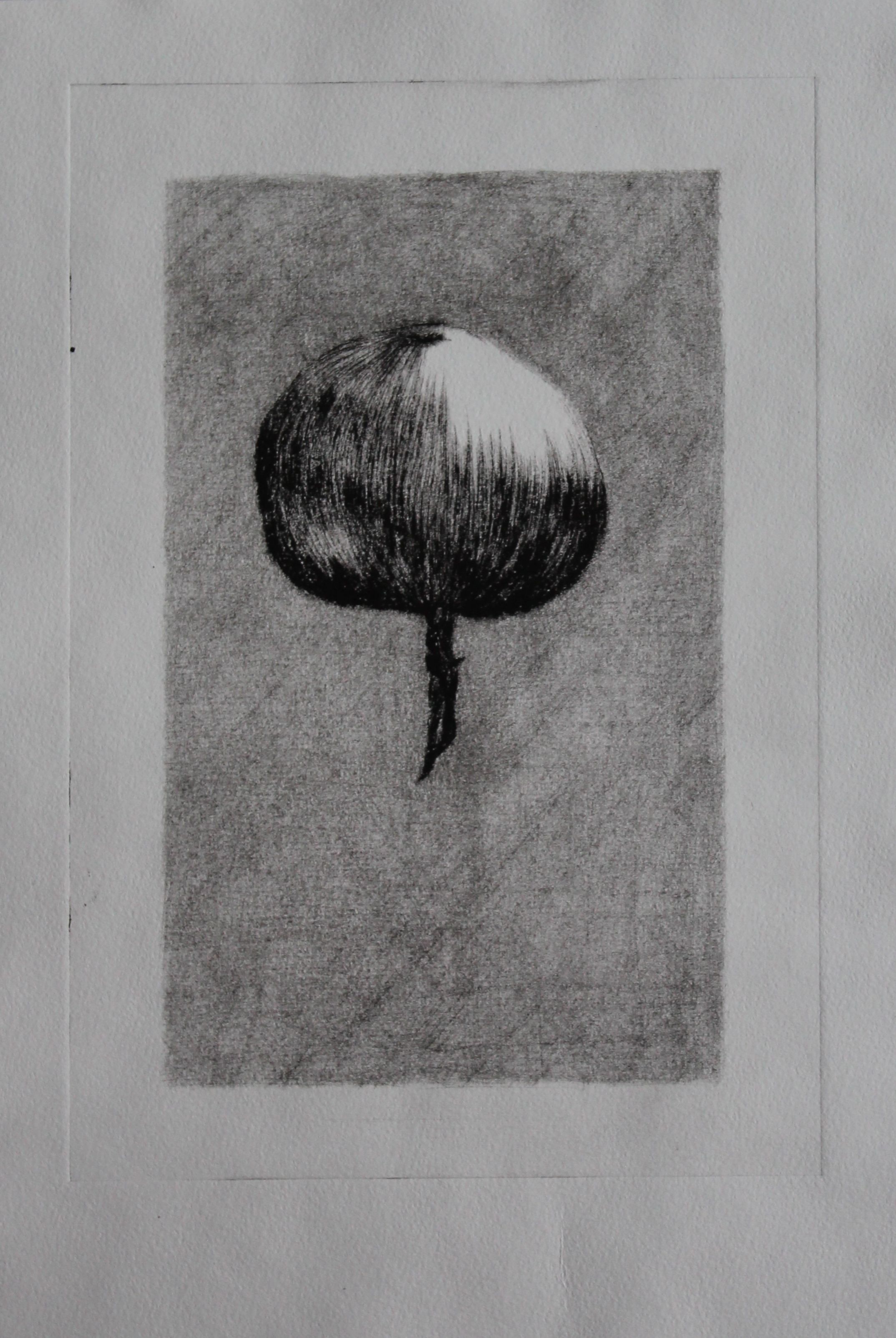
I made some more marks to get a more dramatic black: it may have lost some of the line definition, but I also was a bit more selective in rubbing off.

IMG_3702

This felt quite successful, and a good use of drypoint etching to create a quite dramatic result.

Assignment 3: Chiaroscuro: Caravaggio’s David and Goliath

Assignment 3

As I said, I spent a day in the Prado this summer, and felt that I had to use the experience to start thinking about the topic of Chiaroscuro. There is something, to my mind, very European about it, not just because it was a Renaissance technique, but also because the whole phenomenon of lateral lighting, long sunrises and sunsets, are associated with Europe for me. Here in Hong Kong, “at one stride comes the dark”; dusk does not linger.

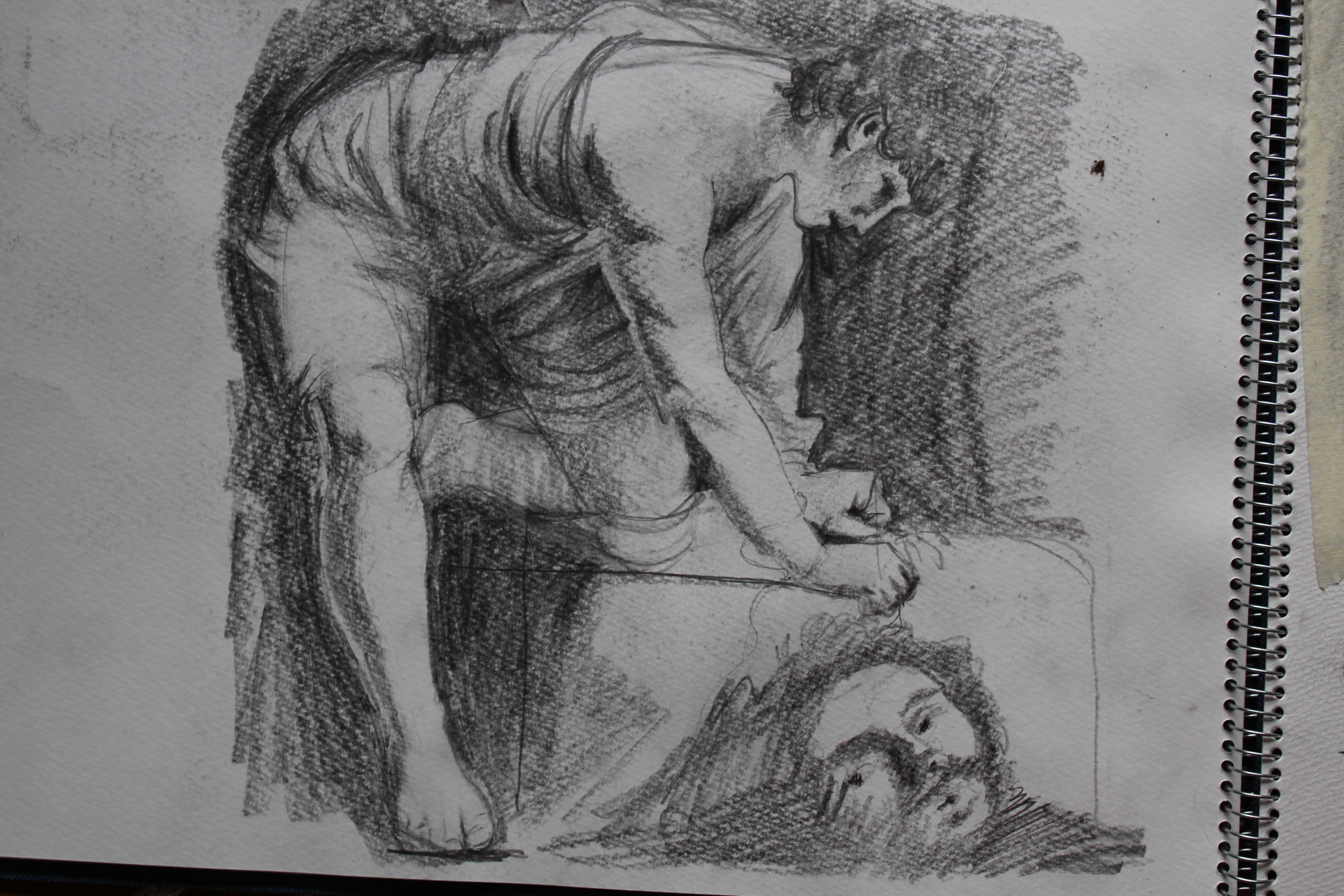
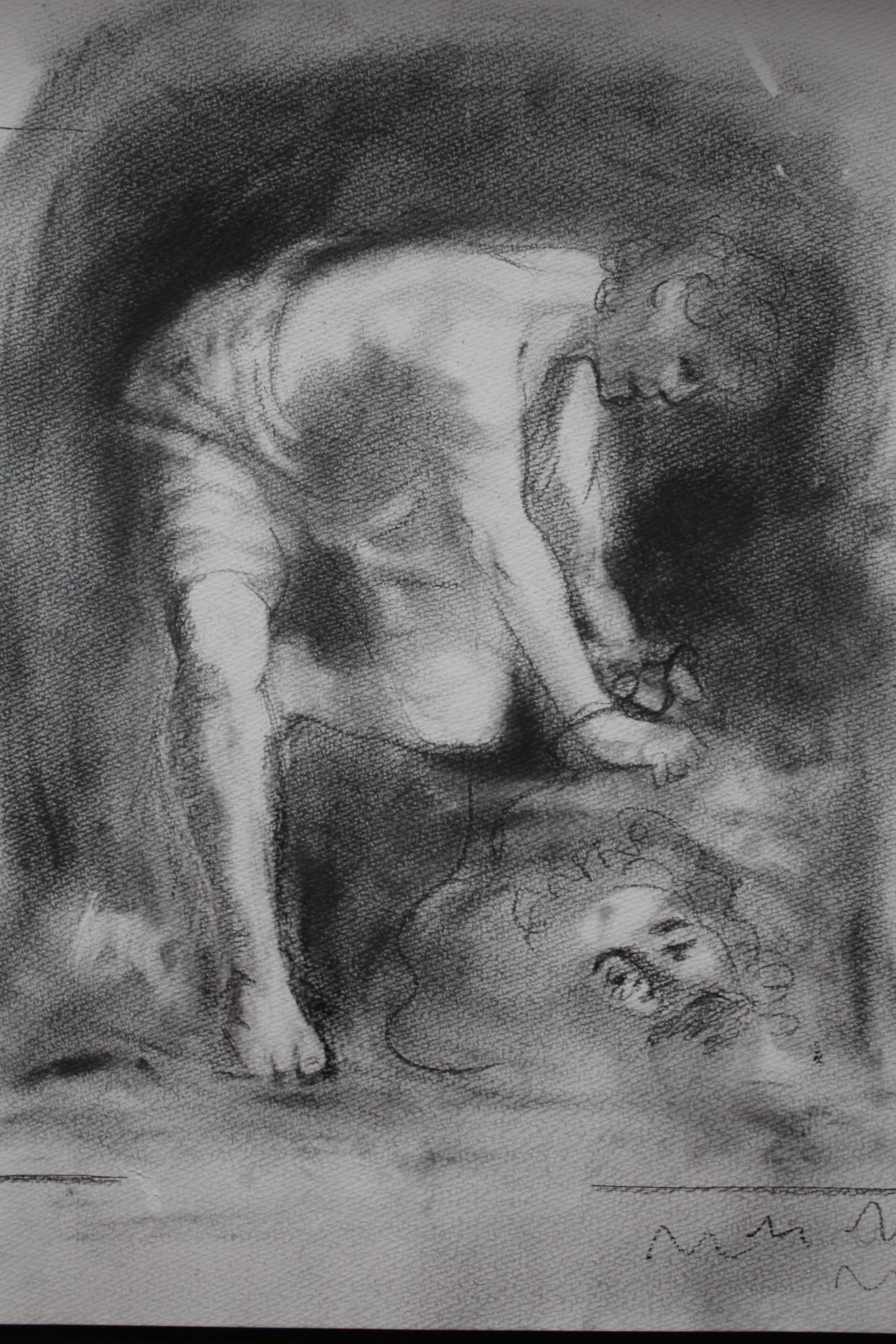
The image that inspired me was Caravaggio’s David and Goliath, and I set about trying to achieve a similar image using different media.

Here are the sketchbook pages- the softer image was done by using ground charcoal. The challenge would be to achieve anything like this kind of softness using printmaking techniques. Approaching it in a reductive manner was easier- lifting off where light struck the body.

IMG_3681 IMG_3682

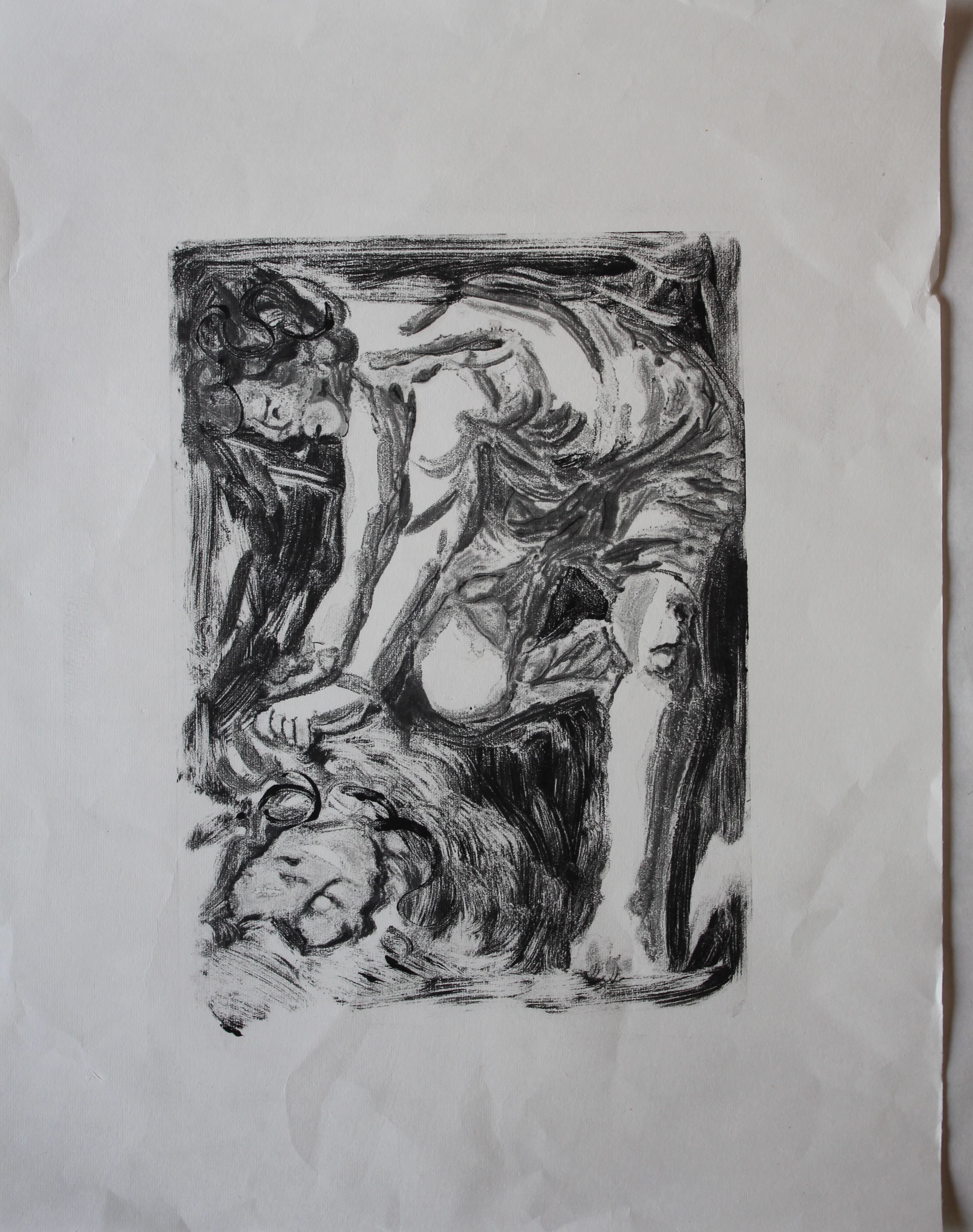
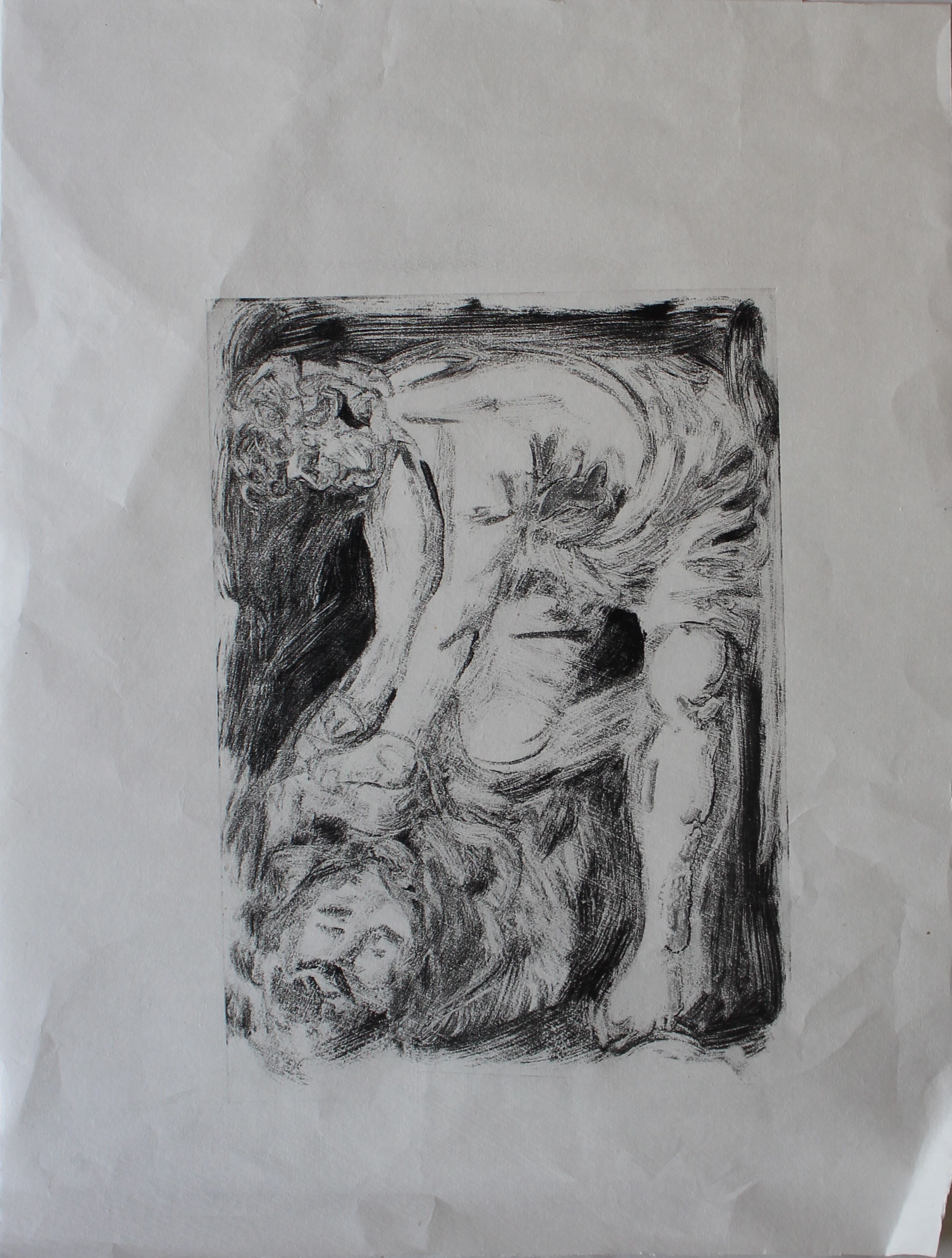
At this stage, I had no new materials, as they were still en route from Valencia, so it was back to monoprinting.

I tried various techniques- additive and subtractive, using different tools, brushes, sponges, knives, cotton, using stand oil and solvents to thin the inks, and add various degrees of viscosity and painterliness.

IMG_3803 IMG_3801

IMG_3791 IMG_3790 IMG_3789

Sometimes the oil stained the lightweight paper.

subtractive

subtractive

Woodblock

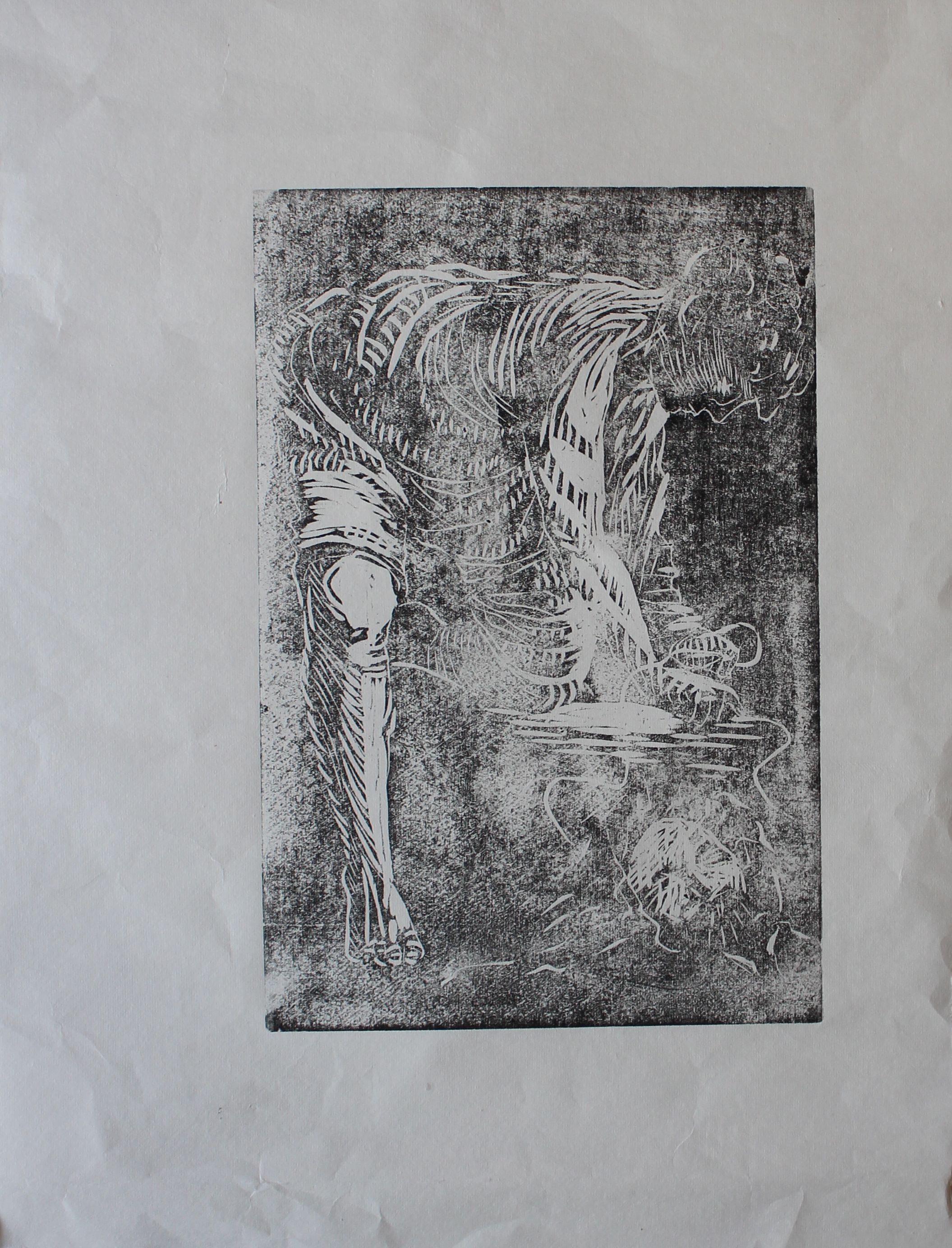
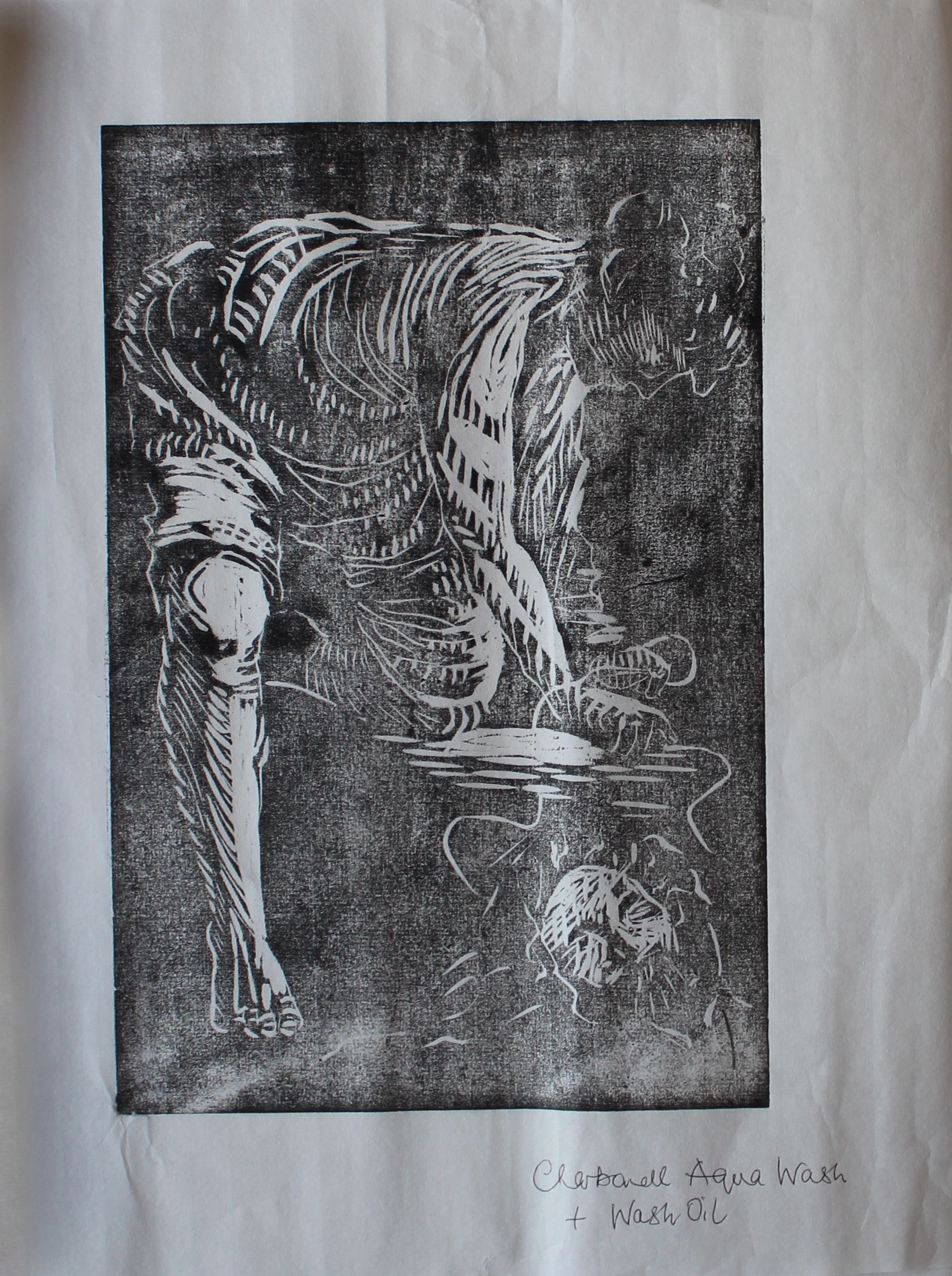
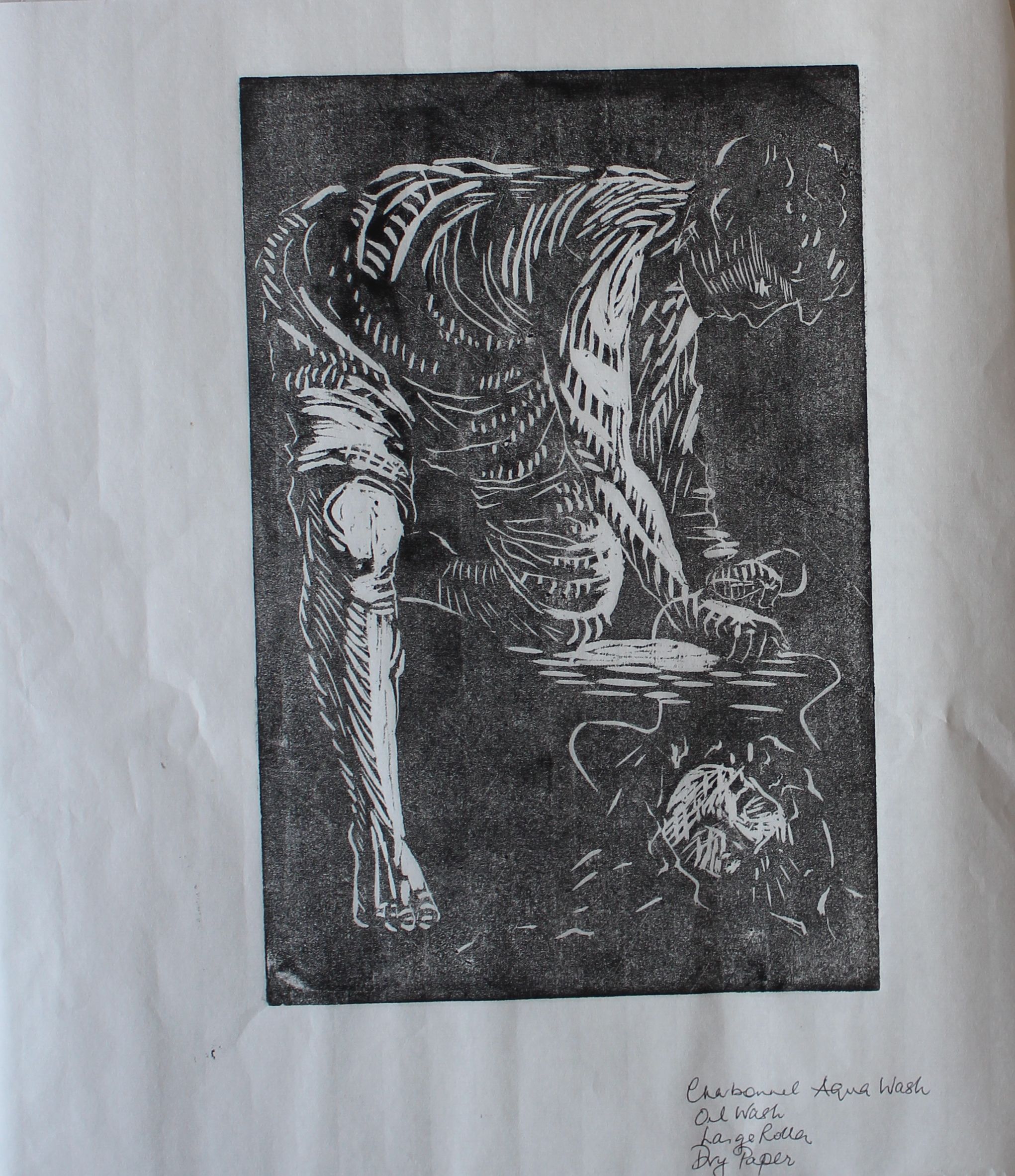
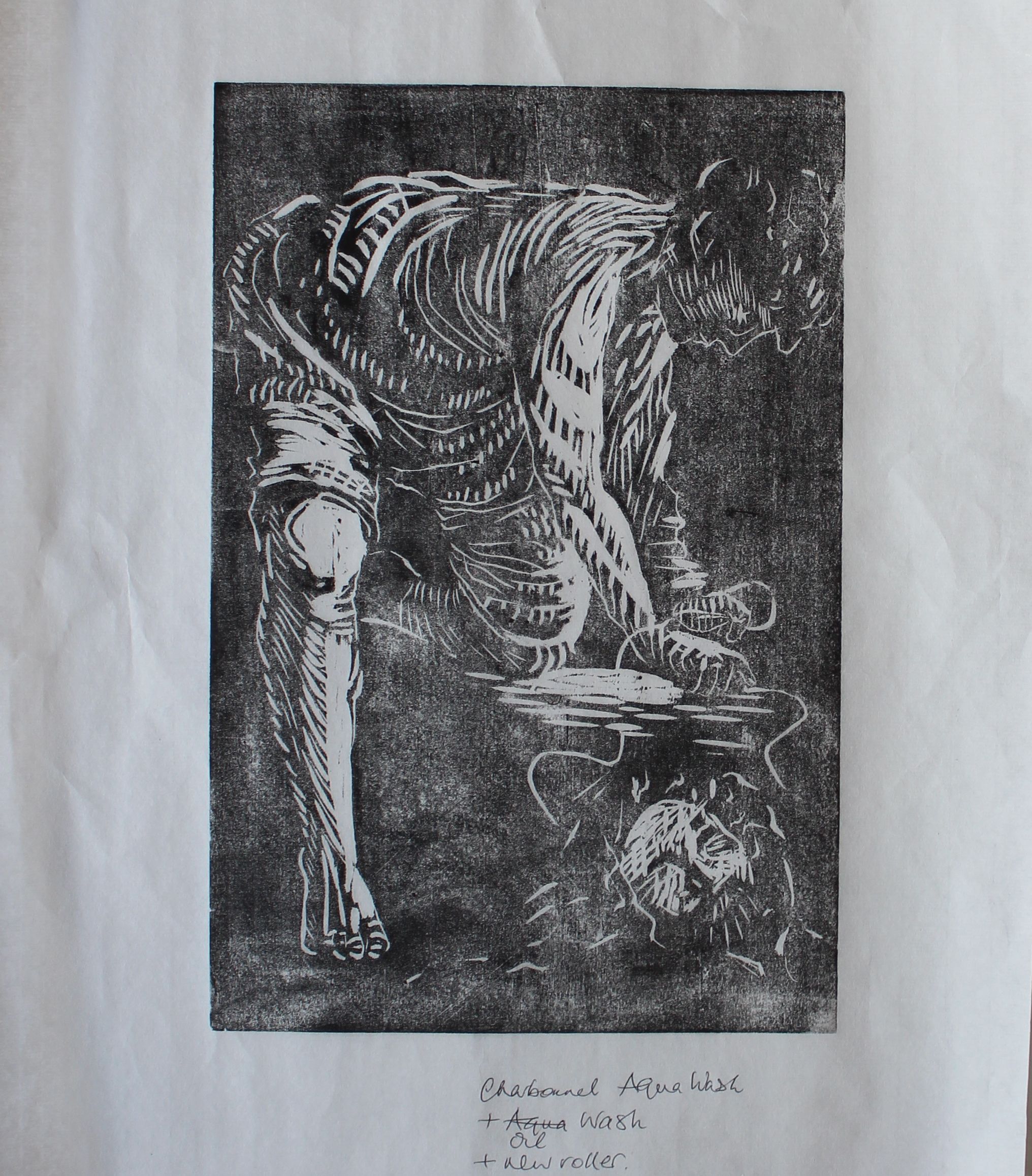
Then I decided to try a woodblock. At first this printed very faintly, but I had bought new inks and a new roller and found that these made a big difference. The old inks/ roller:

IMG_3798

New inks and large roller. Inks diluted with oil wash.

IMG_3794 IMG_3793 IMG_3792


I’m not too happy with my cut marks here though- they are rather crude. I was waiting for a Dremel to arrive amongst the new materials.

Lino

I started a square print, planning a reductive print using caustic soda on lino, in order to avoid these harsh cut lines. I haven’t got back to it yet.

Practice: Photopolymer printing

Assignment 3, Research

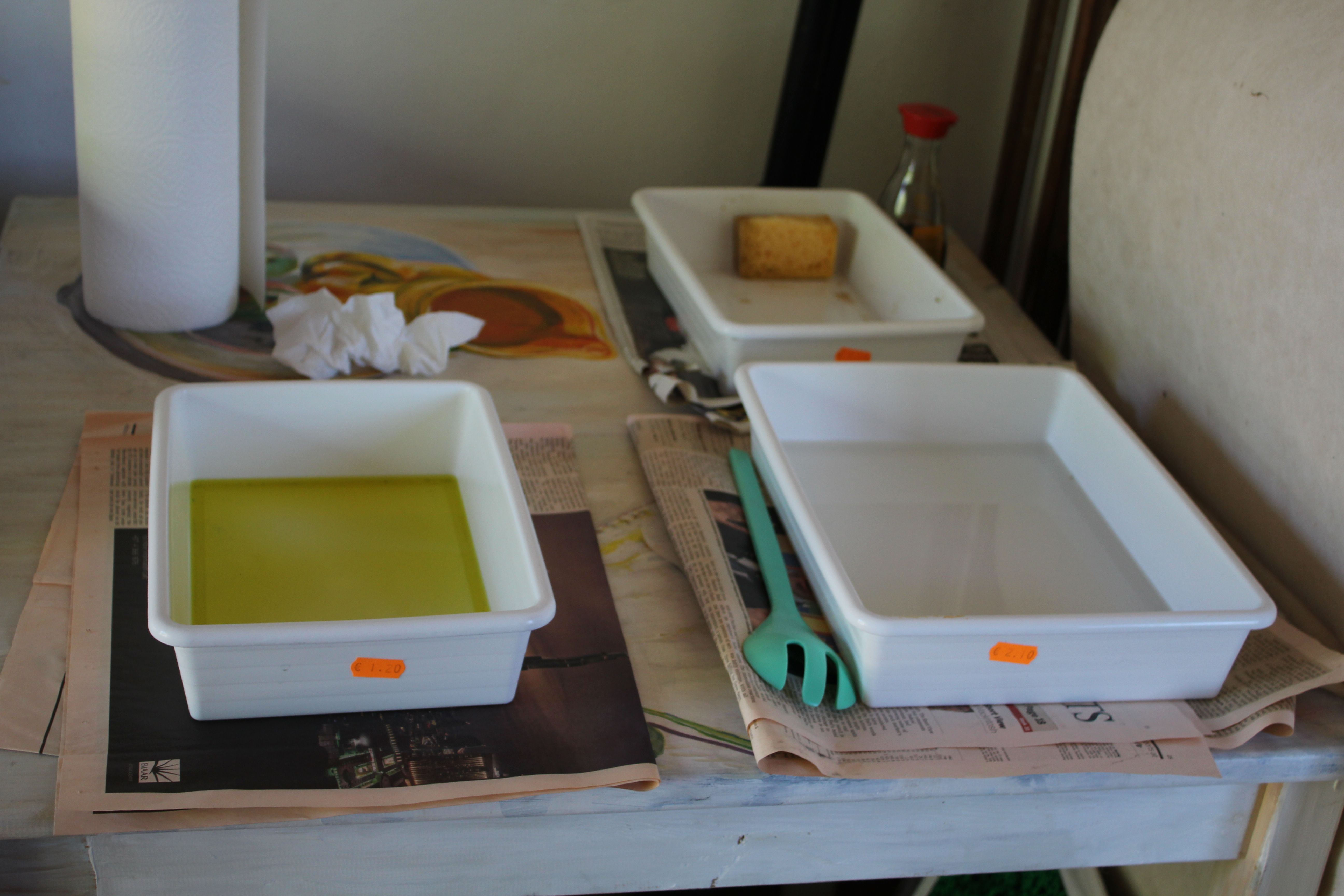
This is a highly sustainable practice which uses no dangerous chemicals, and leaves the printing plates reusable. In Capileira, we used copper plates, which had to be cleaned- wet/dry sandpapered to remove any scratches- then deoxidised in a bath of salt and vinegar solution- then degreased (in soya sauce). Finally washed and dried.

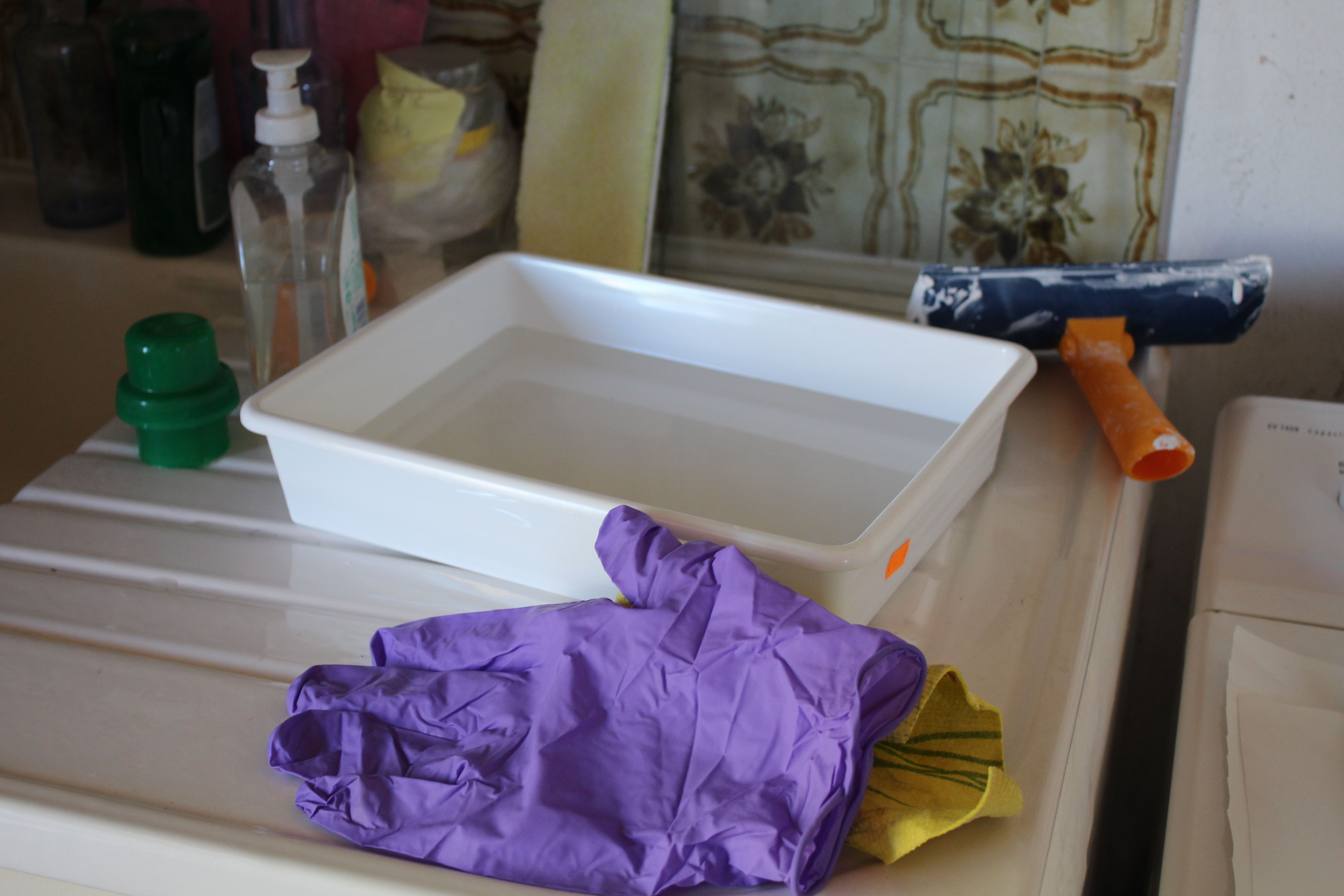
The laminating process could be done wet or dry, and the important thing was to avoid exposure to UV light, as this is photosensitive film. The film could be cut larger than the plate, then floated in a shallow bath of water, where the underside of the film could be stripped of its Mylar coating (hold onto this Mylar for other uses). The film is them squeegeed to remove air pockets, then dried with a soft cloth on a dry surface, and all remaining air pockets removed.

The plate is then dried flat in a drying cupboard for 2 minutes. Then it needs to be stored in a box until ready to use. This is perhaps better done the day before exposing.

The image that will be printed is exposed onto the photosensitive film by means of a UV lamp and a stencil made on transparent or semi-transparent film. Timings are precise- seconds- and have to be calibrated using a test plate.

The first decision is whether this is an image that can be exposed directly, or whether it needs to be exposed through an aquatint screen.

For the first- direct exposure- the image must be a line drawing or a purely black and white image. It may be made up of hatching, but there are no half-tones.

For images with continuous tones, such as ink wash, gouache- then an aquatint screen- a layer of tiny irregular sized black dots- must be used first.

The image is developed in a washing soda solution, then dried in a drying cupboard. It can then be hardened in the sun before inking and printing.

The film is removed in caustic soda, leaving the plate ready to re-use.

This was my first attempt: an image on film, made with marker pen, chinese ink and wash.

IMG_3763

It didn’t come out well, because at this stage I didn’t know about the aquatint layer, so only the black lines came out, not the continuous grey tone.

IMG_3776

With an aquatint layer though, it still wasn’t great, and I tried selective developing, i.e. focussing on the grey areas when developing the film in washing soda.

I wanted to try getting pencil type lines, so used a litho pencil- an actual pencil would not be black enough. This is the image on film; litho pencil with ink wash, so again a continuous tone.

IMG_3764

The image was ok- I tried it a few times, and mixed it with a monoprint layer and mask, but still not getting real black blacks.

IMG_3779 IMG_3774 IMG_3769 IMG_3768

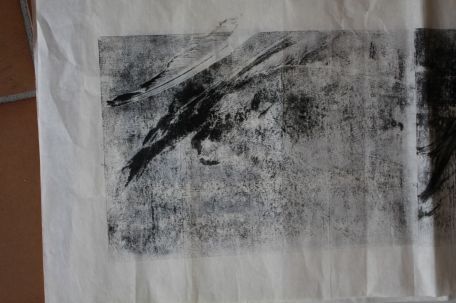
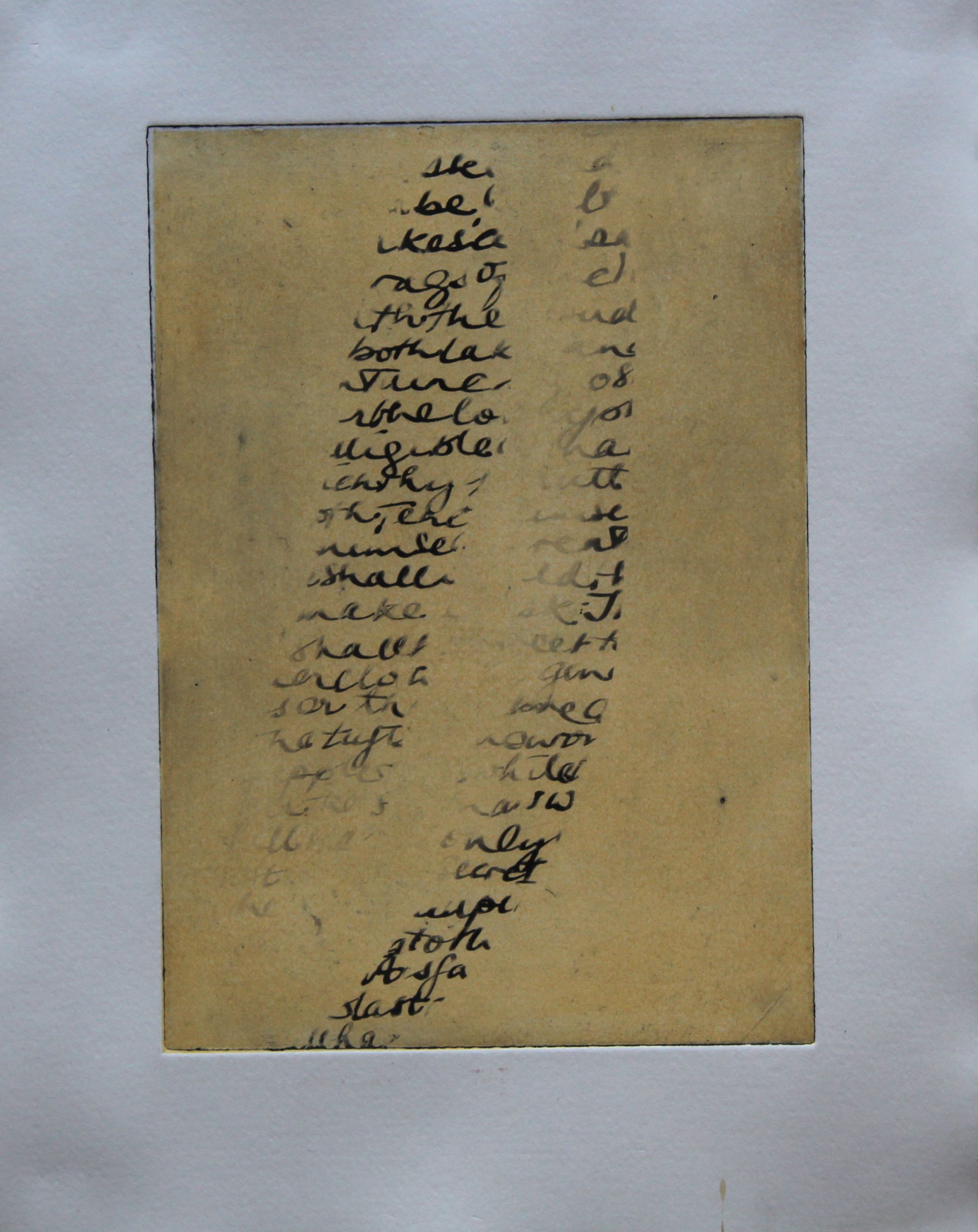
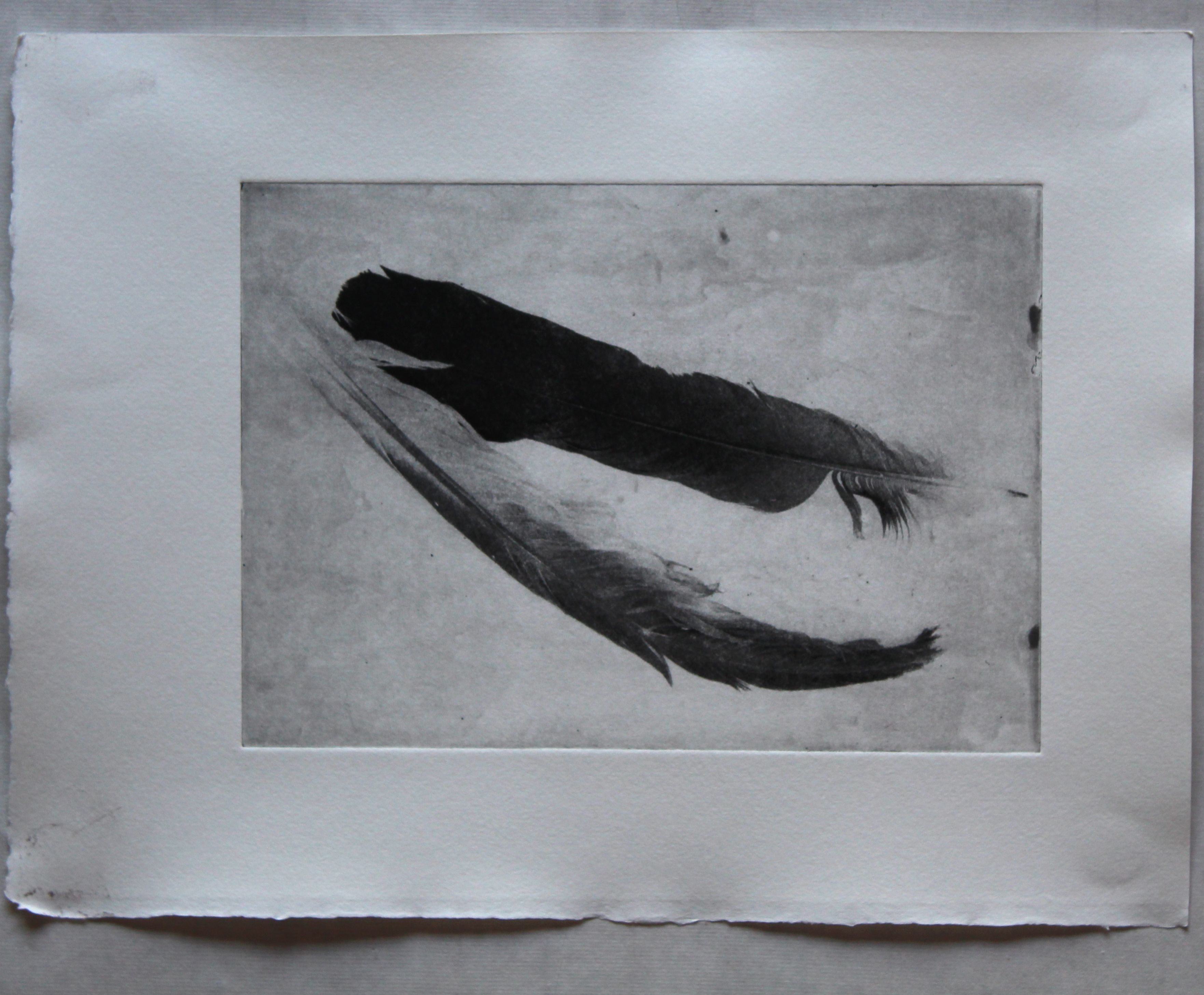
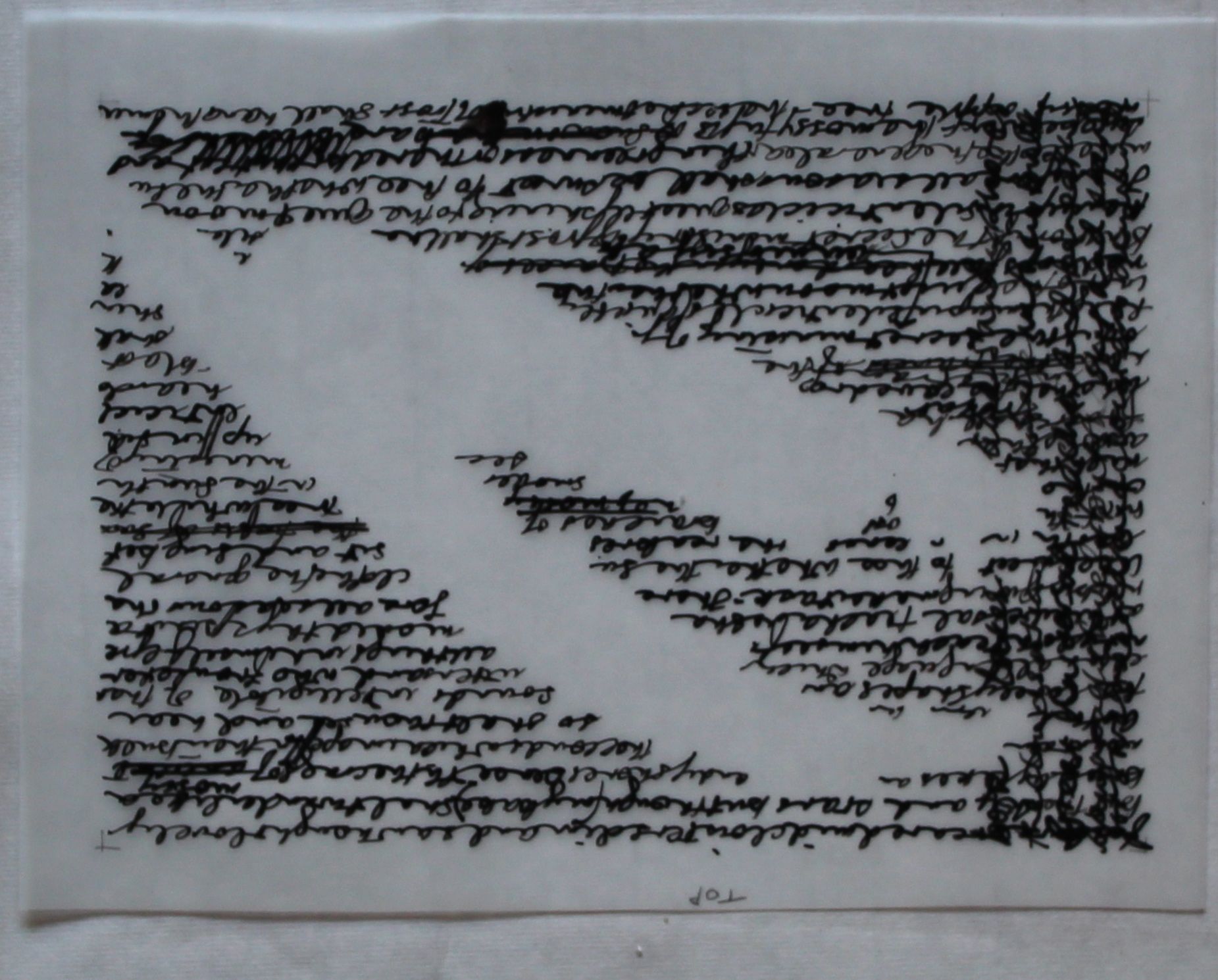
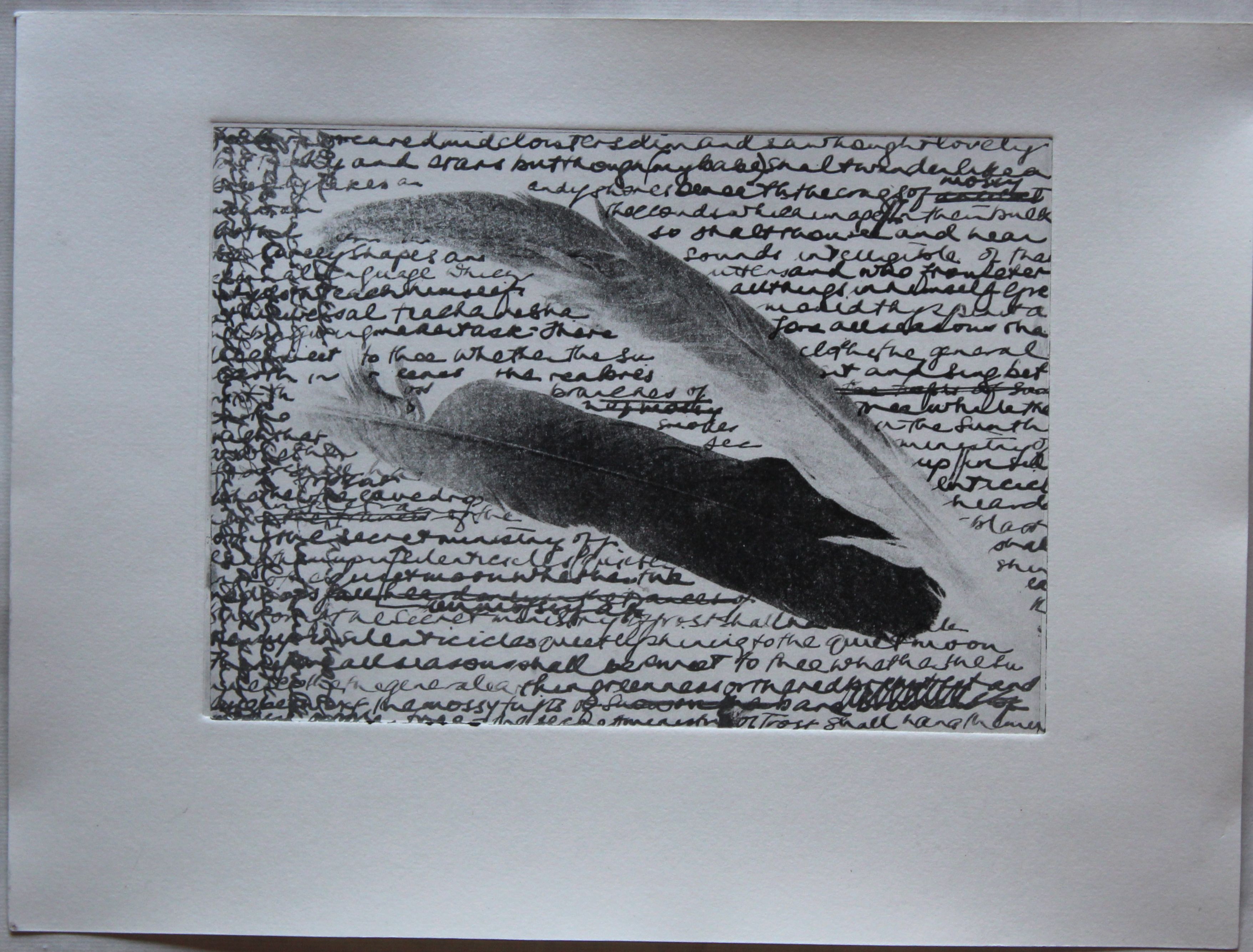
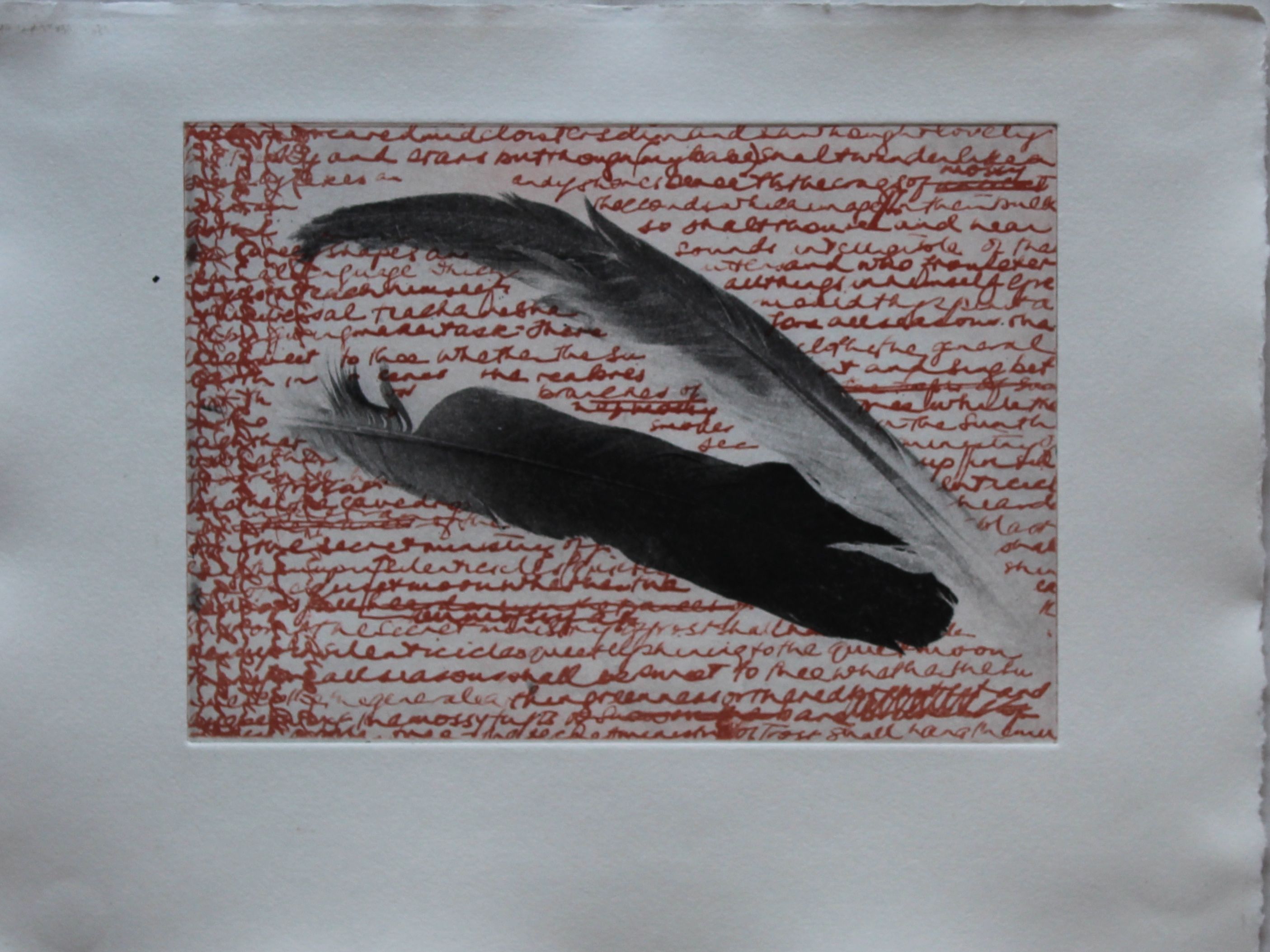
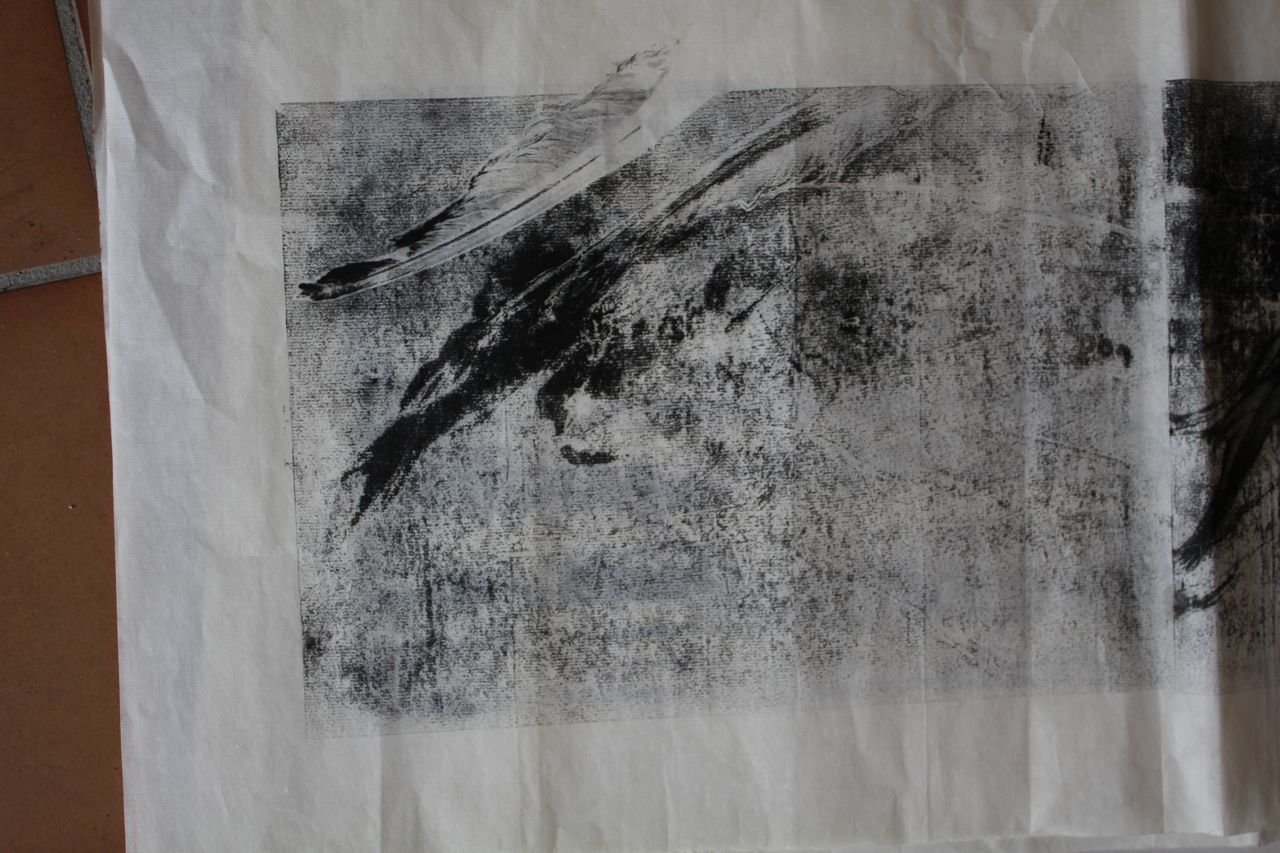
Then I experimented with masks and using photographs- this involved using photoshop to manipulate the image, which I am not good at at all, so is probably not something I will repeat, although the feather photo did come out well. There are other ways of using photos, with photocopies or scans- and even using oil to make a photocopy transparent- these things I have not yet tried. This image was a return to my favourite poem, as I made a couple of transparencies as masks, writing the words of the poem as I remembered them, repeating, crossing out, over-writing in a palimpsest.

This one was unsuccessful because the mask was not sharp- it was a pair of  actual feathers – but I could not put them under glass in case particles were sucked off in the vacuum unit, so just had to lay them on top. then a sheet with writing all over was exposed, but only the masked section would now be able to pick up the image.

IMG_3766

This was an actual photograph, which could then be used to produce a highly detailed print. This involved two layers as well, but reversed this time.

Photo printed on film

Photo printed on film

Mask - script on film

Mask – script on film

Black and white printed image with registration not quite right- I should have had a guide on my photo, but it was taken on a white background, which made registration difficult. At least here though, blacks are black and whites are white.

Black and white print

Black and white print

This is a colour version, my favourite image of the week:

Black and sanguine

Black and sanguine

This was one that didn’t work well as an image, but is a technique for painting on developer directly onto the aquatinted screen. You need to work in low light, quite quickly. It would work better at home I think- the washing soda developer was mixed at different strengths, but was getting mixed with several people using it.

IMG_3773

After returning from the course, I set about getting equipment for this- it’s not straightforward though. The film is specialist, as is the aquatint screen, and a UV lamp is expensive, although the sun can also be used. The materials are “everyday” yet it’s surprising how hard those “everyday” items like washing soda are to get hold of. I managed and had a good set up. In France. But too little time to use it. I succeeded in laminating plates and making masks while there, but didn’t have an aquatint screen for greys. (I forgot that I could still do line drawings!)

IMG_3668

IMG_3667


Postscript:

I brought back the film to Hong Kong, as well as washing soda crystals and other items such as the copper plates. But for some reason, the film will not adhere to the plates. All the materials are the same, and the film was kept cool. Frustrating, as I now have the aquatint screen too.


Assignment 3: Chiaroscuro: Beginning

Assignment 3

I haven’t completed Assignment 2 yet, although my landscape morphed into abstraction.  I will revisit.

Why chiaroscuro? Because printing is all about getting blacks black and whites white. And the interesting thing is how to achieve the effects in between.

Why now? Because I visited the Prado for the first time this summer, and am in a Renaissance frame of mind, and you can’t say “chiaroscuro” without thinking of Caravaggio, of whom I think the PM 2 course designer is a fan. I’m also finding myself interested in science, or at least the history of it, in particular how “artistic” thinking and “scientific” thinking relate to one another. And I’m having to deal with the chemistry of etching. My son says it “sounds like Breaking Bad over there.”

Secondly, I have taken part in a non-toxic Intaglio workshop in Capileira, where I learned about both etching in ferric chloride, and the technique of photopolymer intaglio- the latter is a real challenge in terms of creating blacks.

Reference texts:

Kemp, M. (2000) Visualisations: The Nature Book of Art and Science. OUP, Oxford, UK.

(History of Science)

Honour H. and Fleming J. (2009) A World History of Art (Revised). Laurence King, London, UK.

Wallace, R. (1971) The World of Leonardo. Time Inc., NY,  USA.

Coughlan, R. (1971) The World of Michaelangelo. Time Inc., NY,  USA.

Jimenez-Blanco, M.D. (ed.) (2014) The Prado Guide. Museo Nacional del Prado Difusion, Madrid, Spain.

Boegh, H. (2007) Handbook of Non-toxic Intaglio.

Hoskins, S and Pearce, R. The Chemistry of Ferric Chloride. Printmaking Today Vol. 4, no. 2.  Accessed via www. artmondo.net.


Assignment 2: Abstraction: the questioning mind

Assignment 2

I have already said, that I interpret abstraction here as a process, and have explored different processes, letting the  processes determine the outcome, to a degree. It’s like trying to “automate” the work- a bit like how Surrealists came up with their abstract images, except without the Freudian element.

So, it’s a case of putting the plate materials together with the things that will damage or degrade them and trying things out. I am particularly keen on the copper plate and ferric chloride process, and wanted to see how far I could go in damaging/ degrading a plate.

So I used this plate, the small one that had already been experimented on, on both sides.

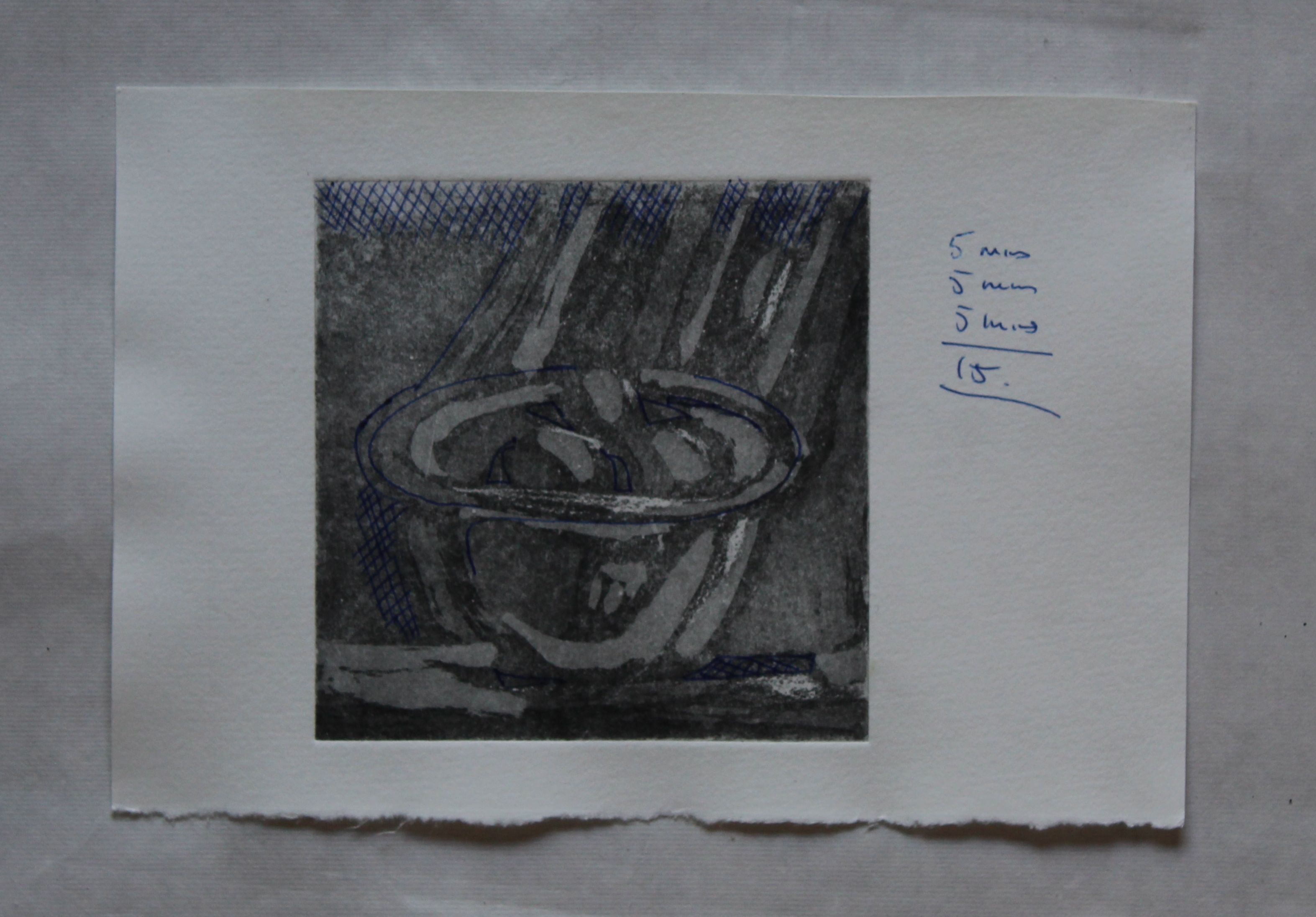
I had used it as a test plate in Capileira to determine times for aquatint etching, with brushpainting of stop-out at 5 minute intervals. This would be the front.

IMG_3771

Then, also in Capileira, trying out hard ground with etched lines, to add areas of dark and outlines.

IMG_3757

Then the other side had been used at home to test my materials and solution:

IMG_3694

Now I wanted to experiment with degrading the plate to the point of break-up.

I masked one side – the one immediately above- with a plastic shape, roughly like a wave, covering just over half, then masked the other side with a layer of Lascaux hard ground, mirroring the same shape. On the hard ground, I etched lines, concentrating on the already weakened areas, and adding shapes suggesting holes. Then I put it in the ferric chloride overnight.

And got the most exciting result.

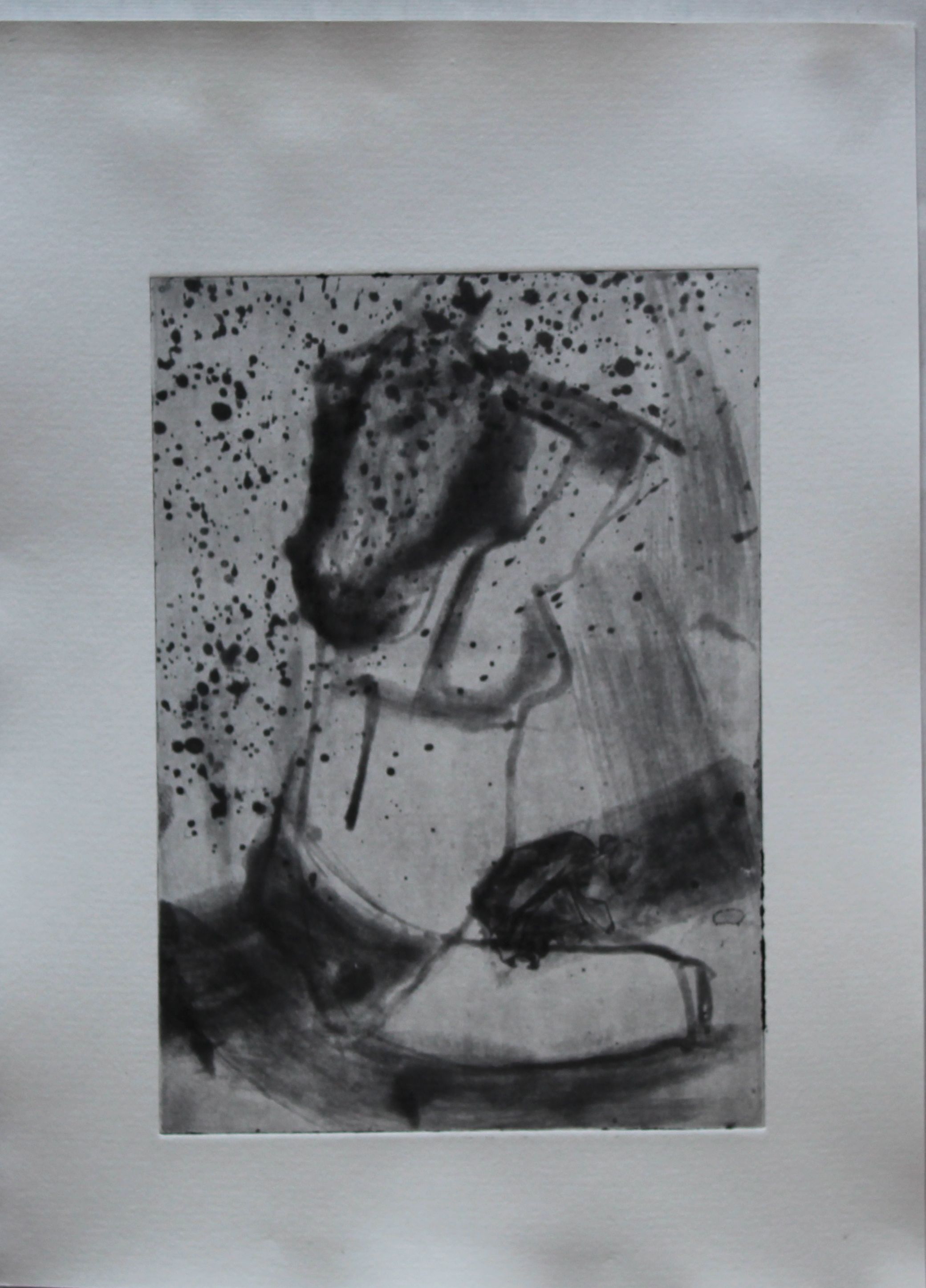
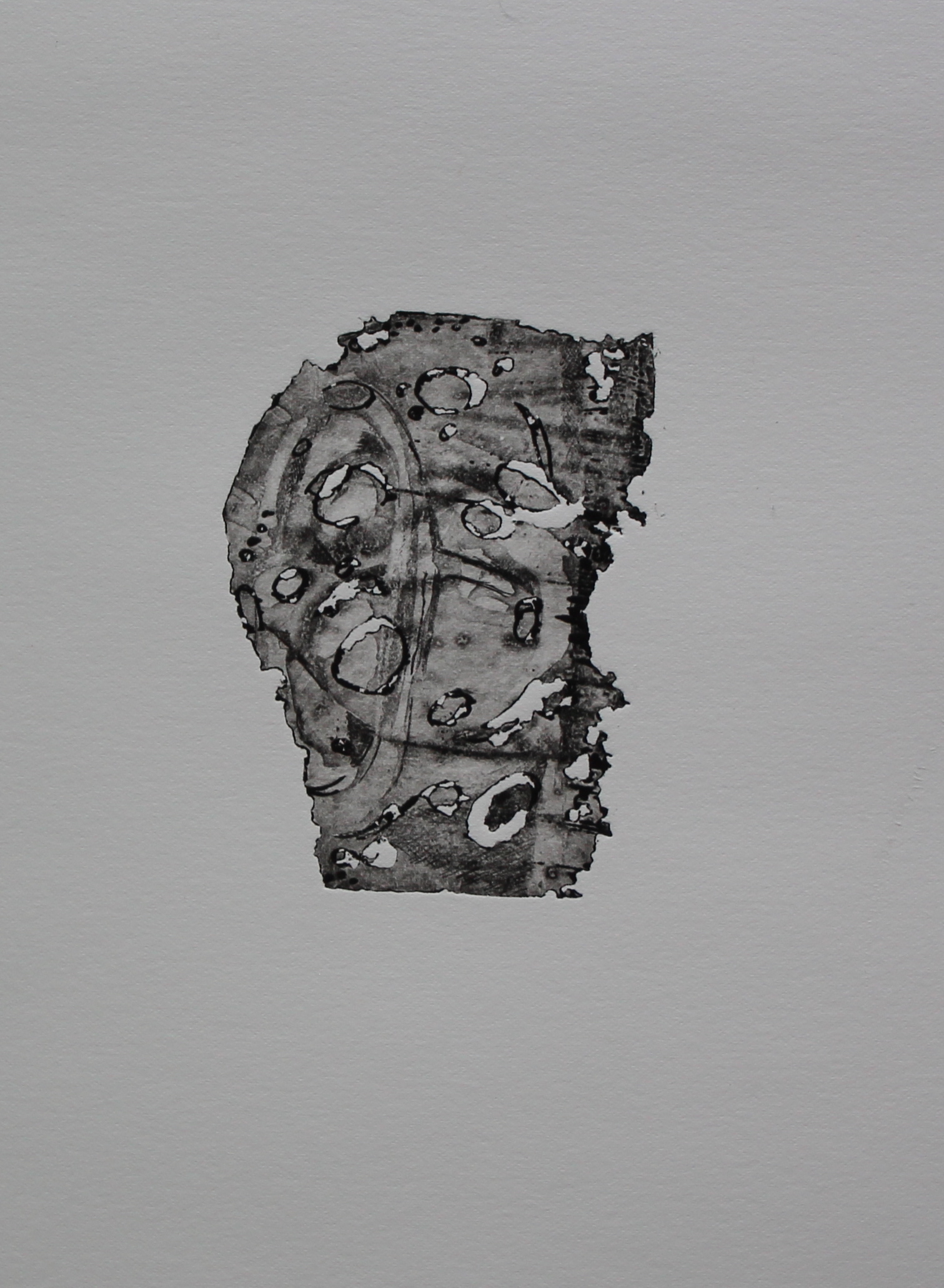
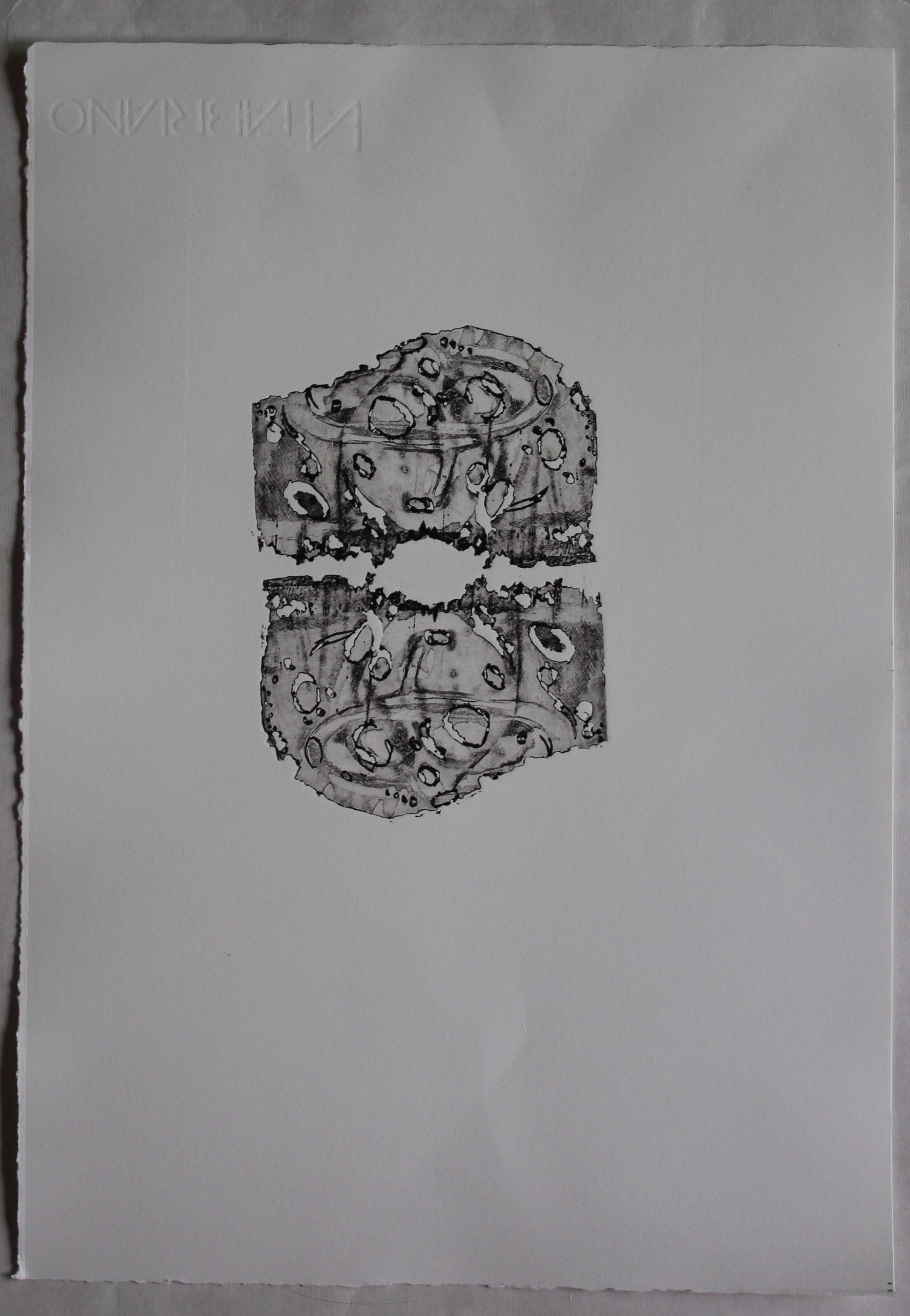
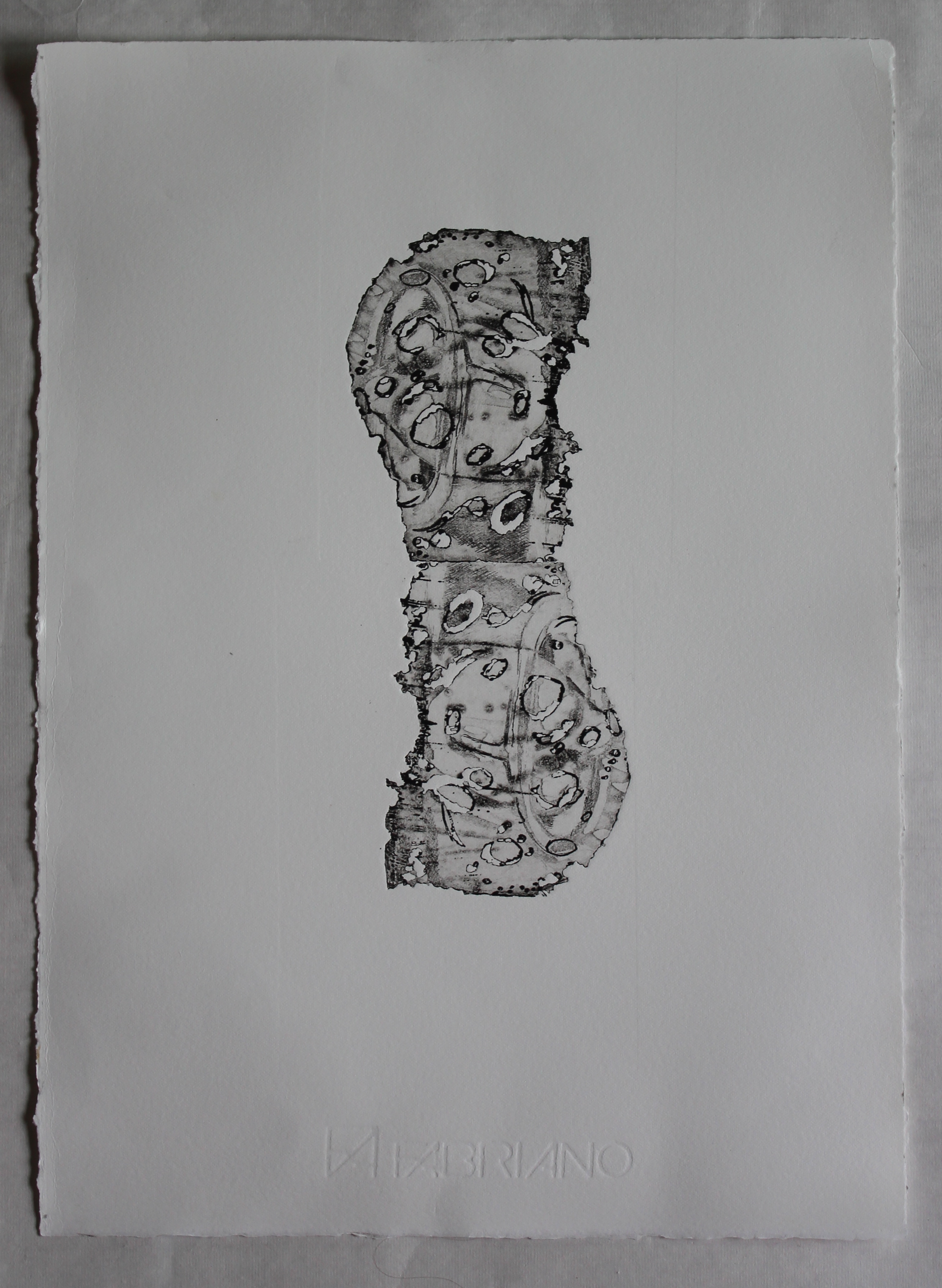
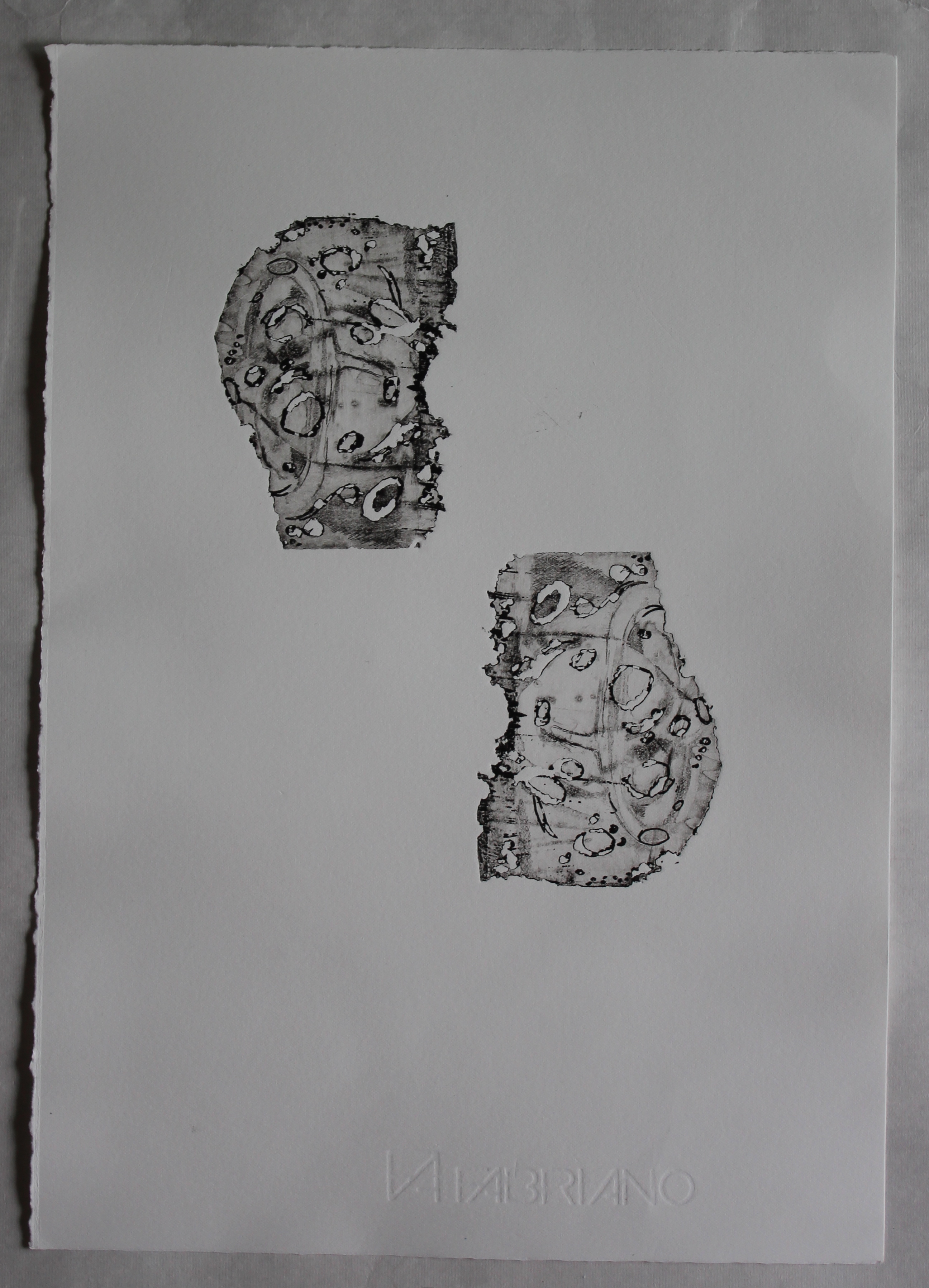
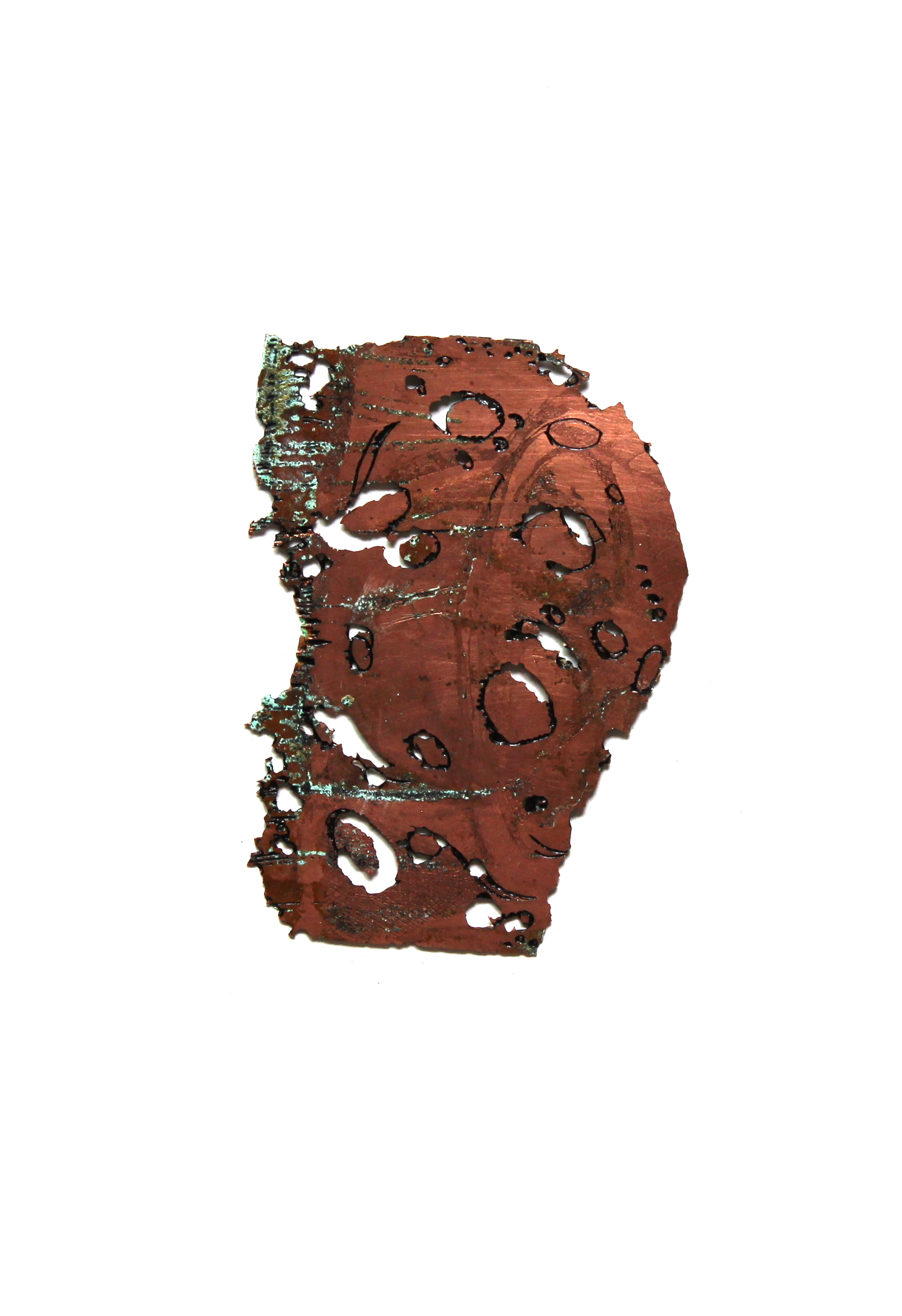
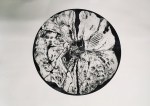
There is still a trace of the original etch, and the curved lines complement the cut holes. The ragged edges, and the marks, suggest to me a brain, but also echo the “moon” images I’ve been working on, with crater-like shapes and shadows, looking ahead to  the “Chiaroscuro” assignment. The shape is beautiful, and can be printed in multiples to create new shapes, with a pleasing organic quality, but just a hint of a graphic question mark shape, which is why I’m calling it “the questioning mind”- but beneath what might appear to be a celebration of curiosity, there is also the idea of degradation, of things being eaten away, deterioration. technically, I love the softness of the etched surface against the crispness of the edges, and the way those edges hold the ink.

the questioning mind: copper plate etching on Fabriano Rosaspina

the questioning mind: copper plate etching on Fabriano Rosaspina

Printed in multiples:

IMG_3748 IMG_3747 IMG_3745

The plate itself is a thing of beauty, with the colours of the copper and the contrasting grey green of the verdigris; just lovely.

What I take away from this is the value of testing materials to see what happens. The shapes have ended up again, like the experiment with breaking perspex, organic, because they represent what happens rather than what I have designed. This again, is an almost  “automatic” image, in the tradition of using unconscious processes to create (yes, there is some intervention, but it’s reduced.)

If only I could get hold of the materials (getting the ferric here is proving a challenge even though it’s standard in the electronics industry); I’d love to do more of this.
This will be the technique I use in my final piece for this assignment.

IMG_3743

Assignment 2: Copper Plate etching: Abstract

Assignment 2

So, this was a copper plate etching I started on my last day at this summer’s Non-toxic intaglio course.

It is a combination of different techniques, so really just evolved as I practices various things, but the design principle was simple- keep balancing shapes, lines and textures.

The first stage here was to make a mask to protect certain areas form the ferric chloride bath. I could have used various stop-out methods, but the one that would give the securest edge and solid shapes, seemed to be with a sheet of photopolymer film.

So I’ll just go through the stages here,as this was so much about technique and craft practice, and as these processes are still new to me, I need to record them:

Mask layer

Laminated the copper plate with photopolymer film

Make a mask – I tore paper, and created some block shapes at angles- these had a mix of cut and torn edges.

The photopolymer film was exposed under a UV lamp, but could have been done in the sun (No need for an aquatint layer, as this was just black/ white), edges cut and left to harden for 2 minutes. Then it was developed in washing soda, which removed all the unexposed film and left the rest of the copper clear. (A quick dip in ferric chloride will determine if the film is completely removed, as the plate will oxidize if it is. De-oxidise in salt/ vinegar solution and dry)

I also hardened it in the sun to turn the photopolymer dark purple, but this may not have been necessary.

Aquatint layer

Without an aquatint layer, the copper would be open-bitten- that is to say, in large areas, there would be nothing on the eroded copper to hold the ink, except for the edges of the shapes. To create an aquatint layer that would resist the ferric chloride, I had to spray on a fine layer of acrylic using an airbrush.

Aquatint etching

Then started the process of creating layers using different exposure times. I had already got a list of times from practice plates.

I already had a white layer from my mask, so was not going to stop out anything in this first layer, which would end up as the darkest areas. One of the first things I did was to cut, with an engraving tool, a geometric shape- a thin line to counteract the solid shapes. This was cut into the masked area as well, to break up those shapes. (That was not recommended by the workshop leader, as it would result in harsh lines, which I liked the sound of however)

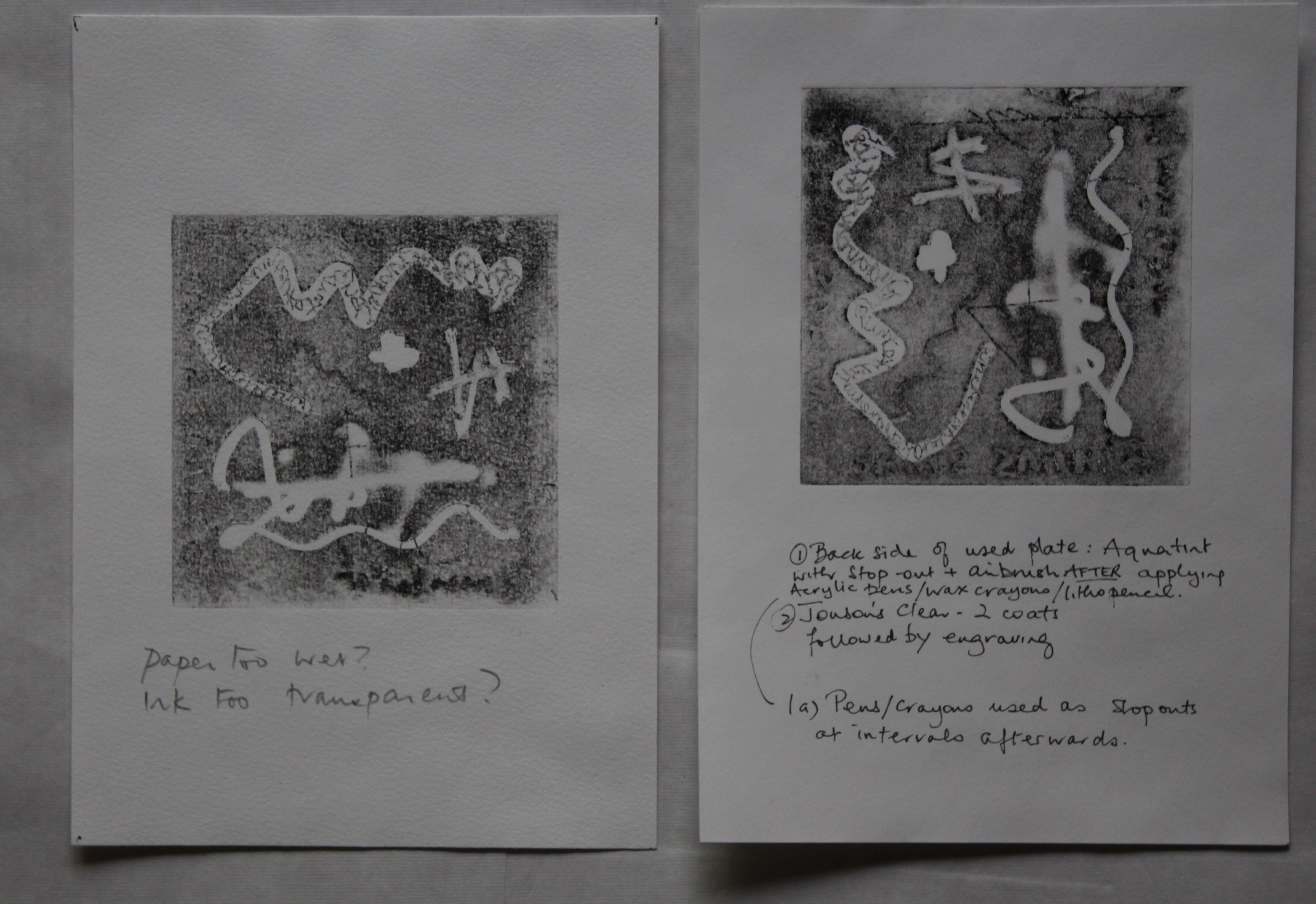
Then, using different stop-out material- a hard wax crayon, which I knew from my practice plate would give a textured result- and brushed on stop-out (Lascaux acrylic ink)- I made  layers of grey, with times ranging from 5 , 10 and 15. After each exposure to ferric chloride, the plate had to be deoxidised to make sure the stop-out materials would stick.

Finally the plate was dipped in caustic soda, which would remove all the acrylic- though this is best done in Mystrol, which is a bit less strong- but the caustic would take off the photopolymer film.

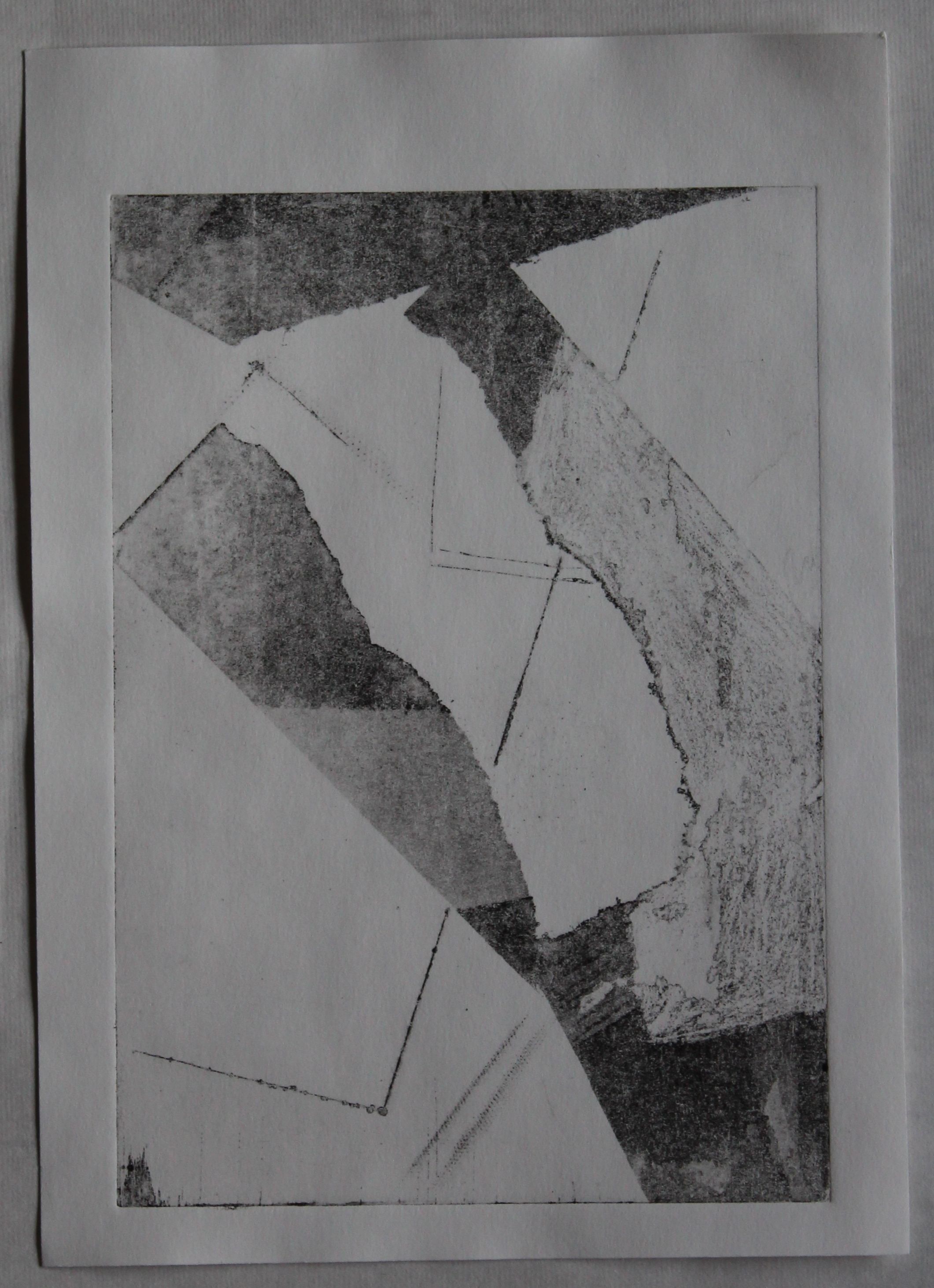
This is the first inked plate- some the different greys didn’t come out clearly but probably would have if I’d inked them again- they seemed to improve in subsequent inkings. It was all a bit rushed at this stage as time was running out and I might have left too much ink on. On the other hand, I had exposed the first layer for 5 minutes, quite long for a solution that worked to differentiate at intervals of one minute or less at the start of the process. The maximum length of time for dipping in that particular ferric solution was recommended to be 20 minutes to achieve black, and I hadn’t used all that time. I wanted to leave more room for working. But I was reasonably happy with this early result. The lines in the mask are indeed harsh, scored looking, not delicate. The wax crayon worked well. The other layers are not visible in this photo. There is clearly a bit of open bite where my aquatint layer may not have been thick enough, but it has created a happy accident that looks like a light source down the right hand side. I wanted this to have a floating effect, with planes going off at different angles, but it’s still quite flat in this print.

IMG_3695

I kept the plate and brought it back with me, and once I had got all my own materials together, and had practiced with the timings, I added more layers to this.

Hard Ground

First up, I covered the back to protect it, and, after deoxidising the plate, brushed on a hard ground layer (Johnson’s Floor polish), then pressed two weights of sandpaper onto it and ran through my new press. I added more lines, using etching tools. After etching in the ferric chloride  I found that the sandpaper marks were rather slight, just visible in the centre as a few pale dots, so decided to have another go with soft ground. (15 minutes etch in my solution, which seemed to be working faster than the one at the workshop) There was also an interesting accident, in that perhaps some of the hard ground is not properly cleaned off and there are some pale marks where the wax crayon texture should be. This is certainly all much lighter now than the first inking. The etching tools- rockers as well as needles have created different line qualities- some quite soft. It has started to have a sensation of receding depths/ multiple planes.

IMG_3696

Soft ground

This was an oil-based soft ground, which had to rolled on with a soft roller in a thin layer. (Of course this is not a smooth surface now, but should still work I thought) Then I placed the sandpaper on it again, plus some tarlatan, covered with an oiled layer of Mylar, and ran through the press. This was etched again ( 15 minutes)

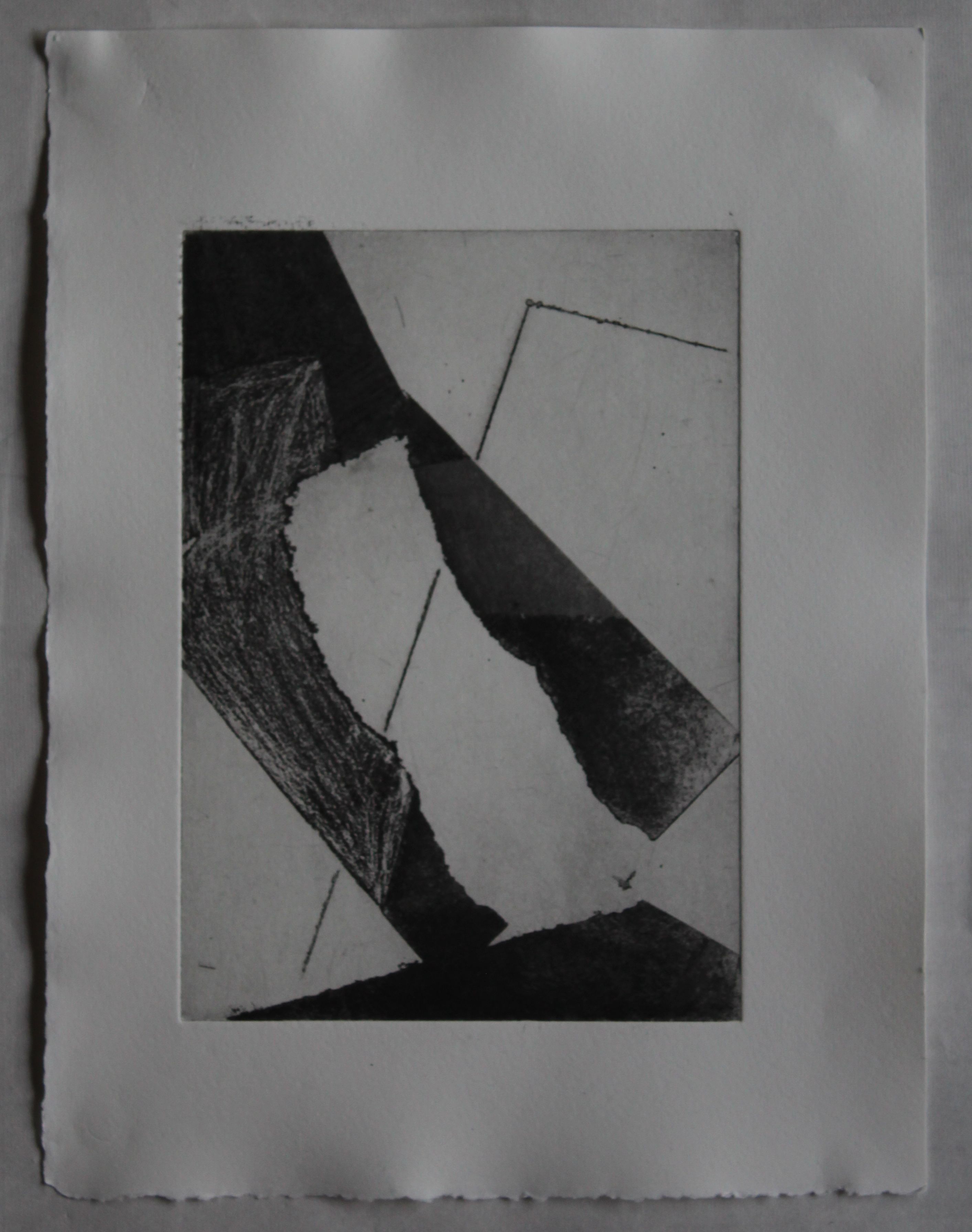
The result is now much more complex, with an interesting variety of lines and shapes.

Abstract print

Abstract print

The torn sandpaper edges have added more organic shapes, and the tarlatan texture helps to mesh shapes together. There is an interesting range of greys, and the original solid shapes have now been modulated. I must admit I am still quite unsure of the exact science of what has happened, and how these originals have been affected when they were under a mask- but presumably the uneven surface that I was applying the ground to meant the ground was a bit uneven too. I’m not sure how deeply bitten areas get to look less bitten now- that’s not possible- but maybe it’s to do with the overall relative levels. or maybe I’m just inking better.

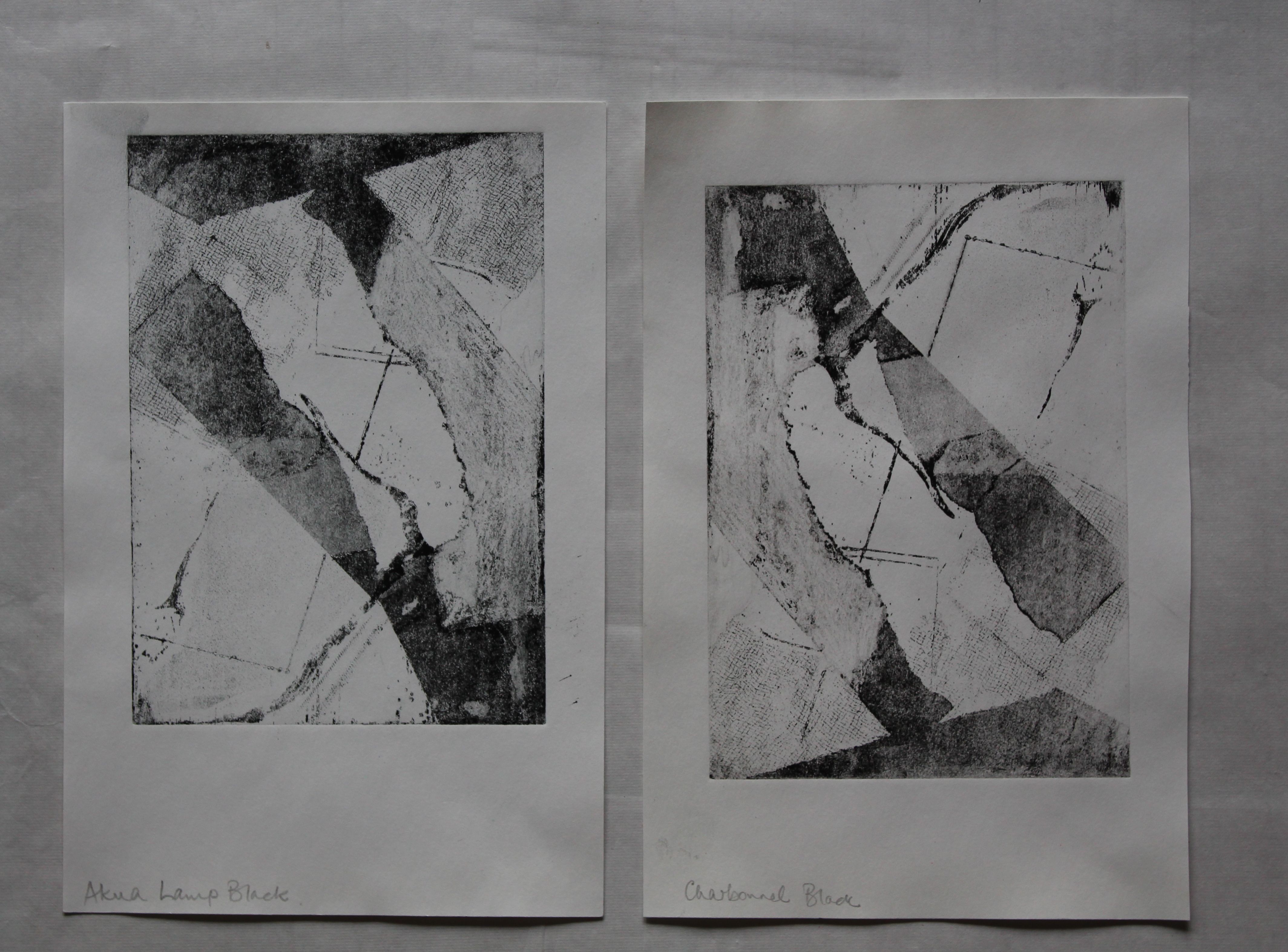
The two images above were just trying out the different new inks I’d got. I felt the Charbonnel was very thick. I could try out some viscosity printing- that’s something of a mystery to me as well.

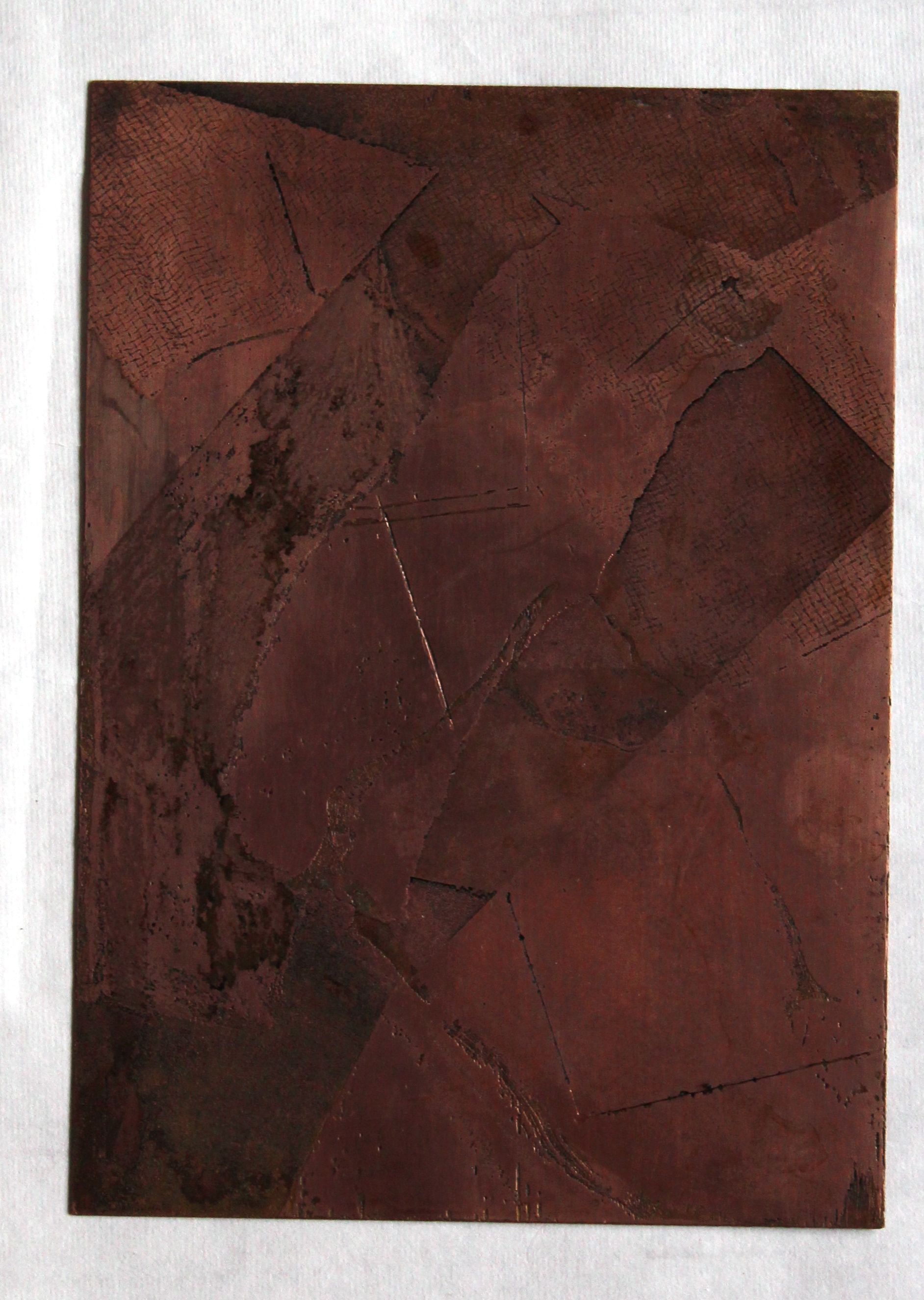
Here is the plate: it’s clear that there are brush marks at the edges where the hard ground wasn’t entirely brushed on. The depth of that initial harsh cut through the mask is clear here too.

IMG_3697


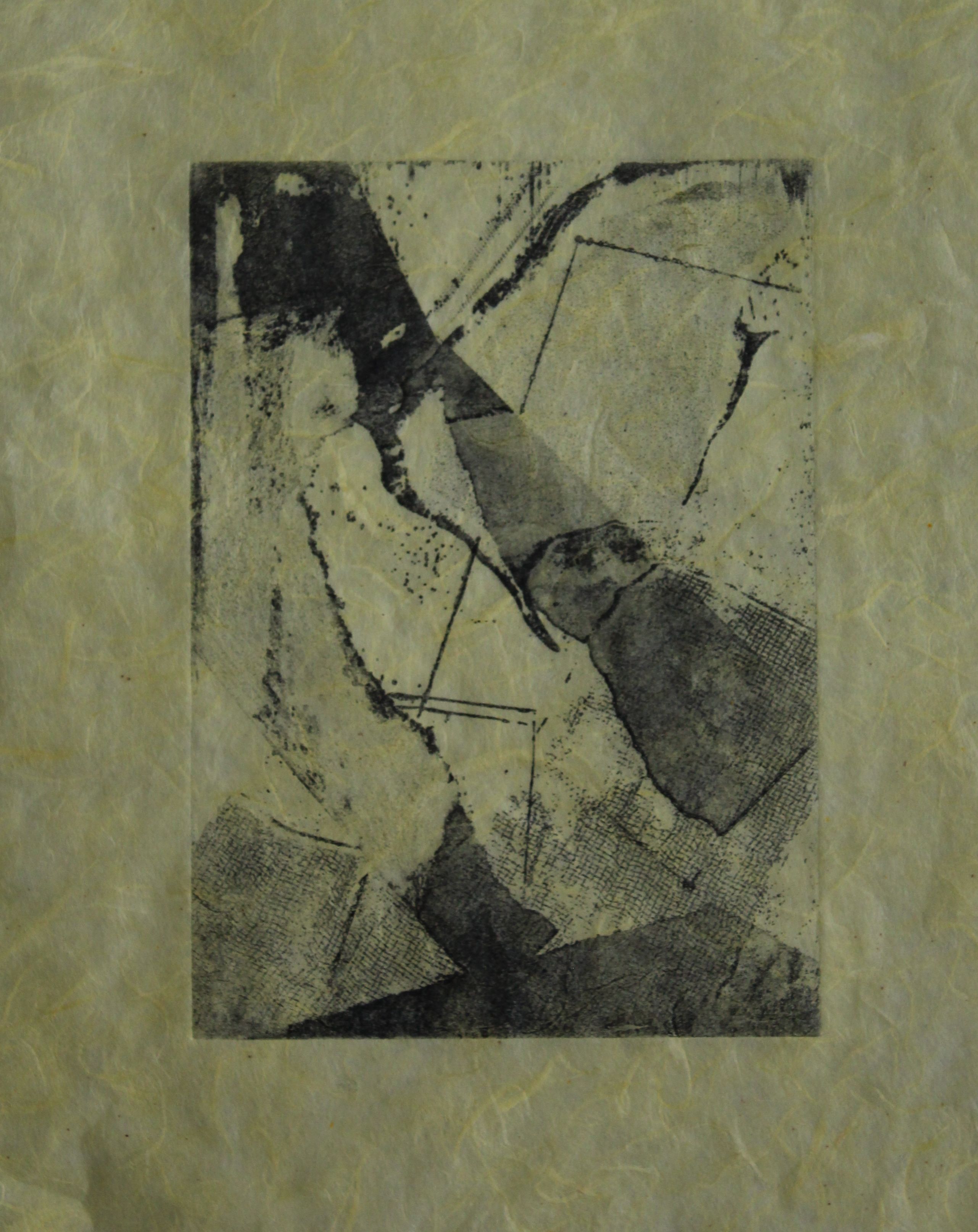
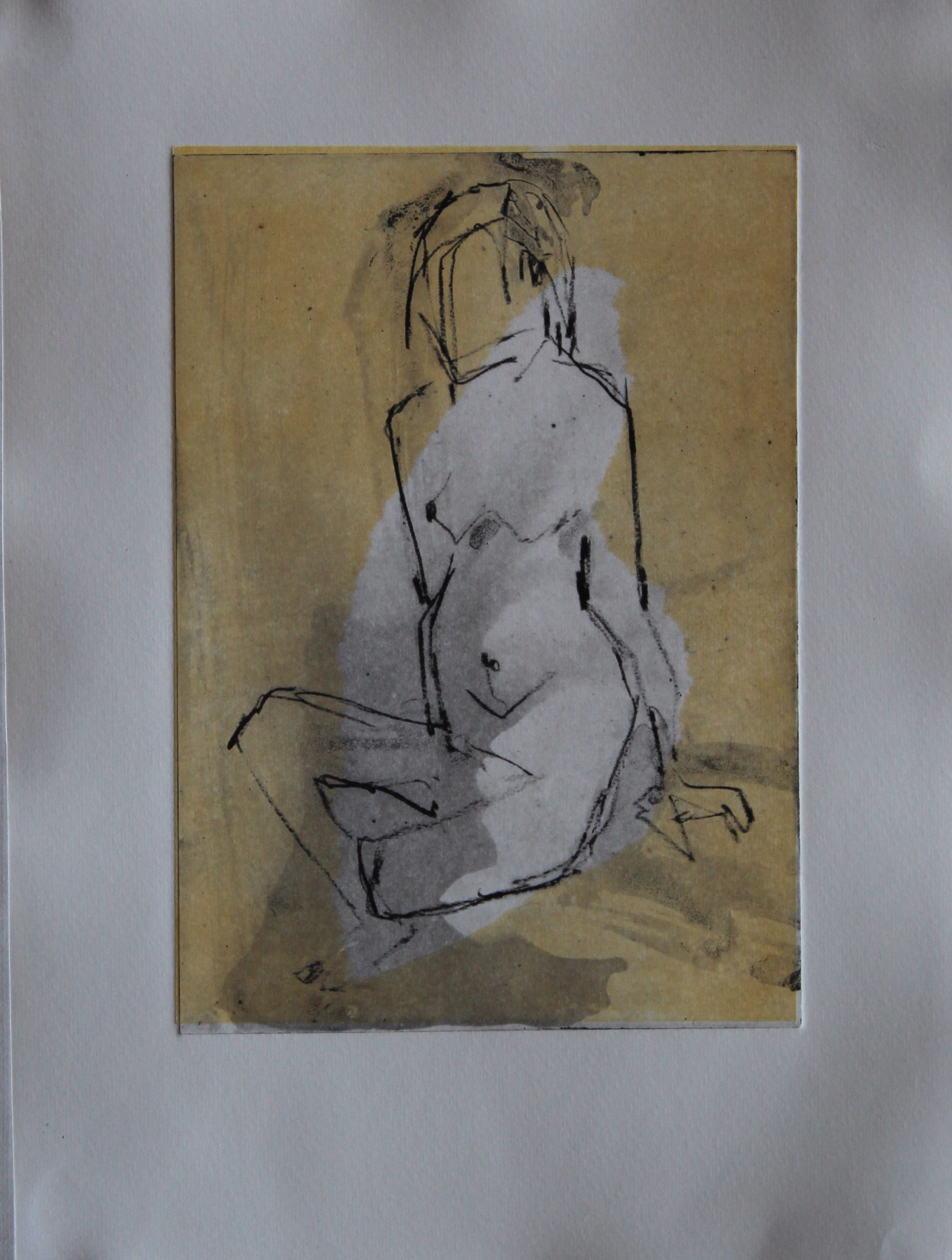
I printed it again on coloured banana paper which softens the whole thing and picks up the delicate grey tones created by the sandpaper on the soft-ground stage, as well as the larger marks of the rougher sandpaper from the hard ground stage.

Abstract on yellow

Abstract on yellow

Overall, I like the image, but it has been an experiment in repeating the etching process to achieve layers of different marks. I feel I could control some of these now.

I keep seeing geographical and political analogies in the image- an aerial view of a landscape, the Gulf of Aden,   fields laid out for agriculture, erosion of water, fishing, ruled lines in the landscape, like those straight ones made in the sand, ironically, in the middle east, a bombing sight, a pointing finger- and the awareness that this is damage, that some violence has been done to this plate, with sharp tools, with abrasive surfaces- and that tarlatan now looks like a frayed bandage.

I’m aware that I’m probably more excited by this result just because it’s a new process, and I’m using new materials, but I do have a sensation of having moved to an other level with this, and my previous monoprints are now looking very simplistic. It’s also a bittersweet feeling, because I’m now writing this up in Hong Kong, having had to leave a lot these materials behind, including my press of course, and am trying to restock here and feeling very frustrated.


Assignment 2: Abstraction by degree: Cyanotypes

Assignment 2

This was another new technique- quite a simple one, but in keeping with the Breaking Bad approach I’m veering towards at the moment, with my new found interest in Science.

This is the use of Ammonium iron (III) citrate, and potassium ferricyanide to create a light sensitive wash to make cyanotypes, which can be exposed under the sun. I love this simple way of making images appear, and it also, like the photopolymer method, takes me back to the days of developing photos in a darkroom and seeing the images emerge.

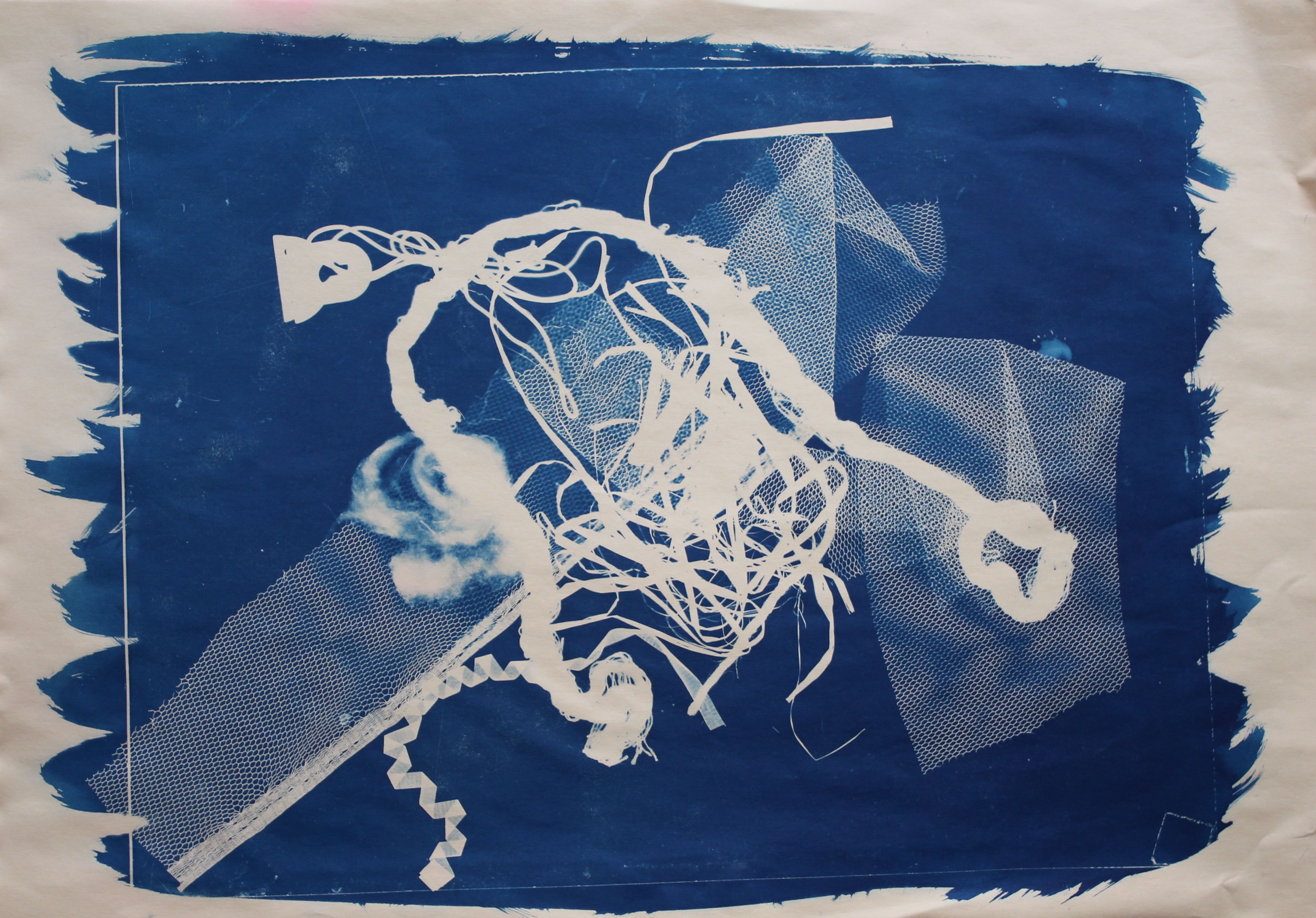
Abstraction here happens with distance- physical distance- if you choose to use actual objects to create inverse silhouettes, then the closer they are to the surface, the sharper and more realistic they appear.

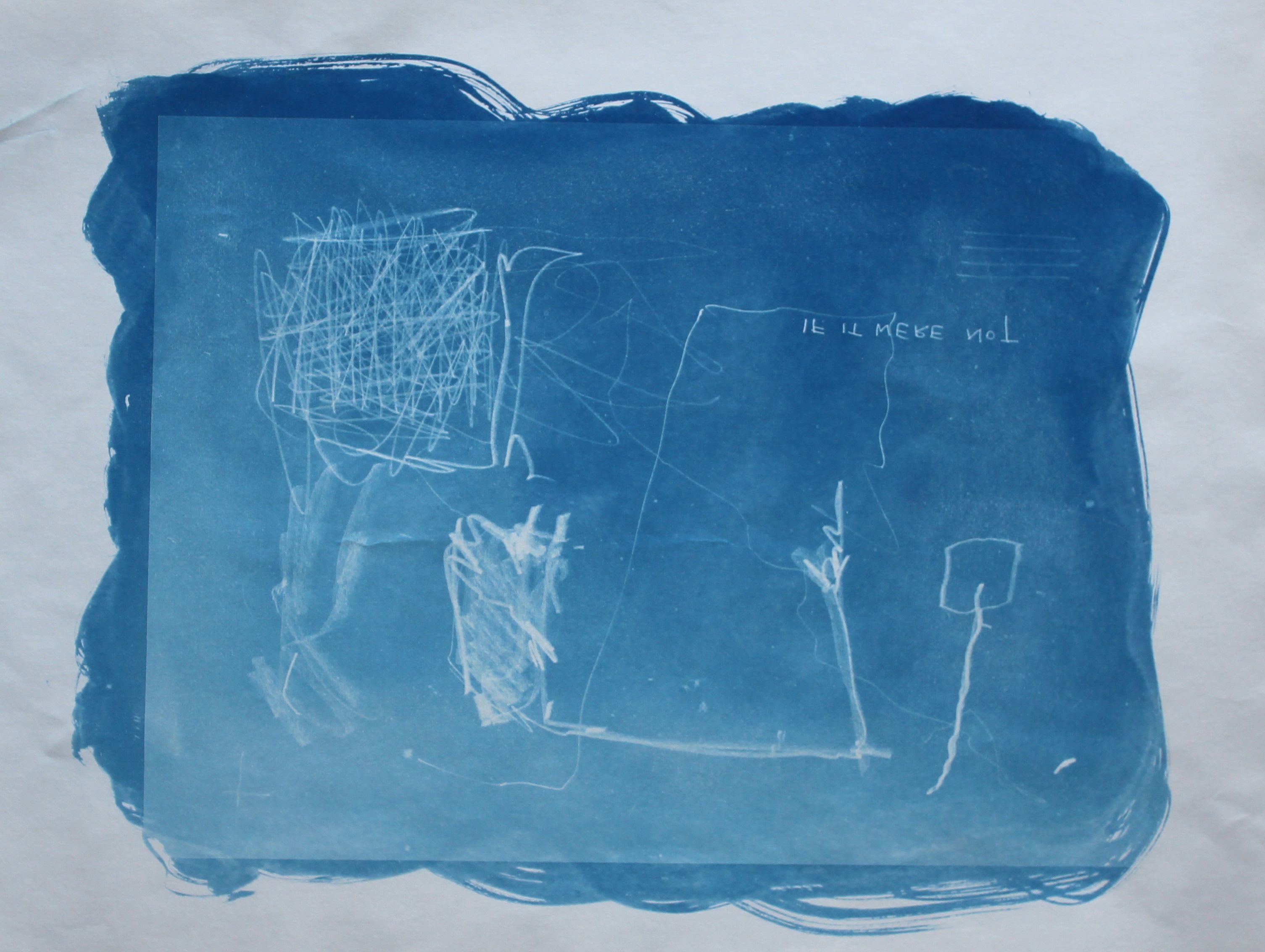
So this image was made with textures pressed quite close to the paper with a glass on top (the edges of which appear). This closeness means there are hard edges, except in the case of the cotton wool, which has created an interesting cloud-like texture. Although the contrast between geometric and organic is quite interesting, this is a bit literal, as it doesn’t take much imagination to figure out what the objects and materials are.

IMG_3854

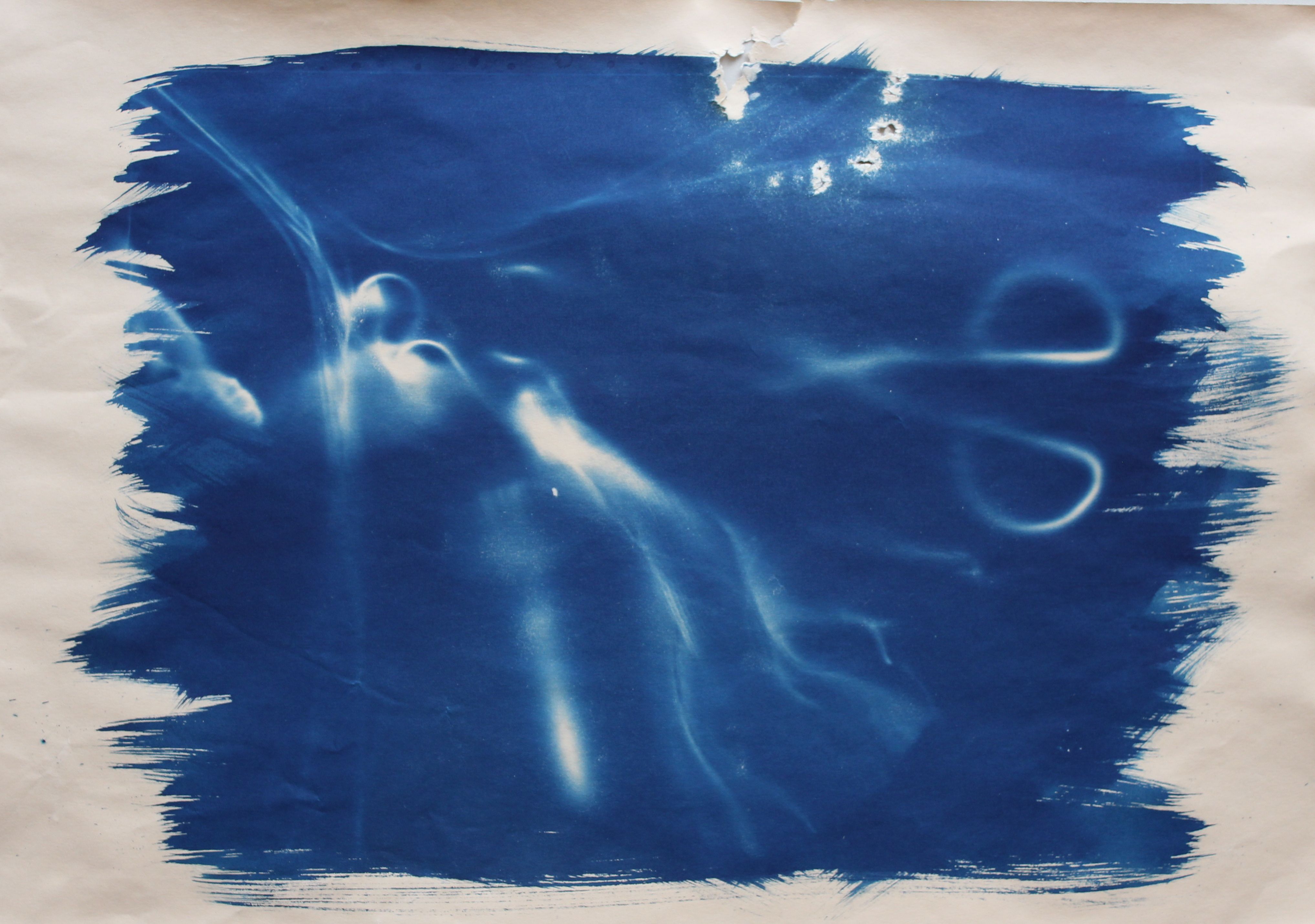
So this was another version, this time with a distance between the objects and the paper and exposed it for 35 minutes outside- an overcast day, or this would have been quicker, and sharper. This had been a planned composition, using household objects (insert photos from phone) to suggest a theme (childbirth). I chose the most gruesome kitchen utensils I could find, metal tongs, an old fashioned tinopener, hooks… I left the paper a bit too long under the running water which then added a pattern of holes: this seemed to complement the theme of violence, so was a lucky accident.


IMG_3852

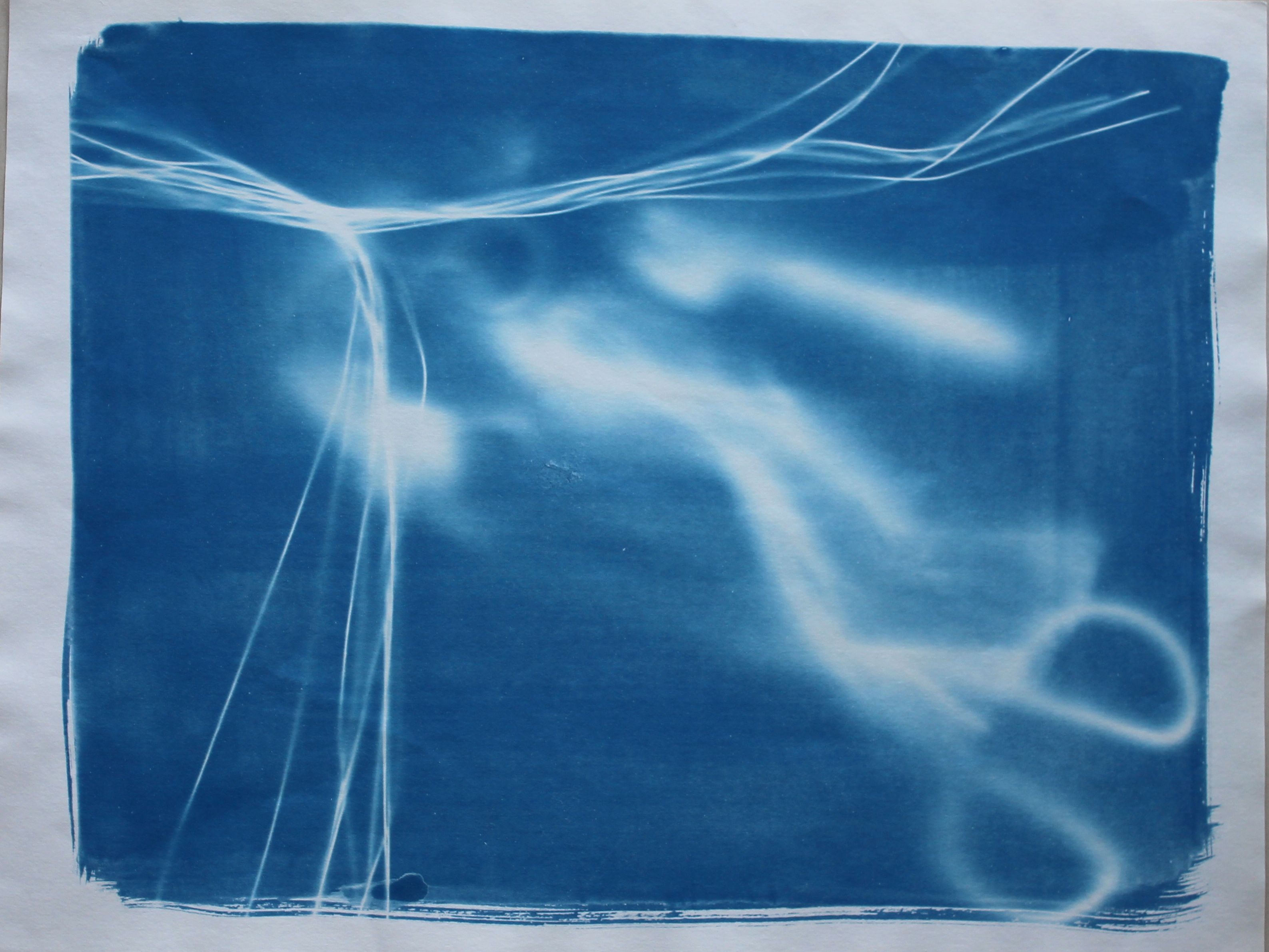
I wanted to get something in-between here- semi- abstract, so pinned some of the objects down and tried again:

IMG_3850

It now has more of a suggestion of growth perhaps, and the less sharp parts now take on a ghostly image, a bit like an ultrasound scan.

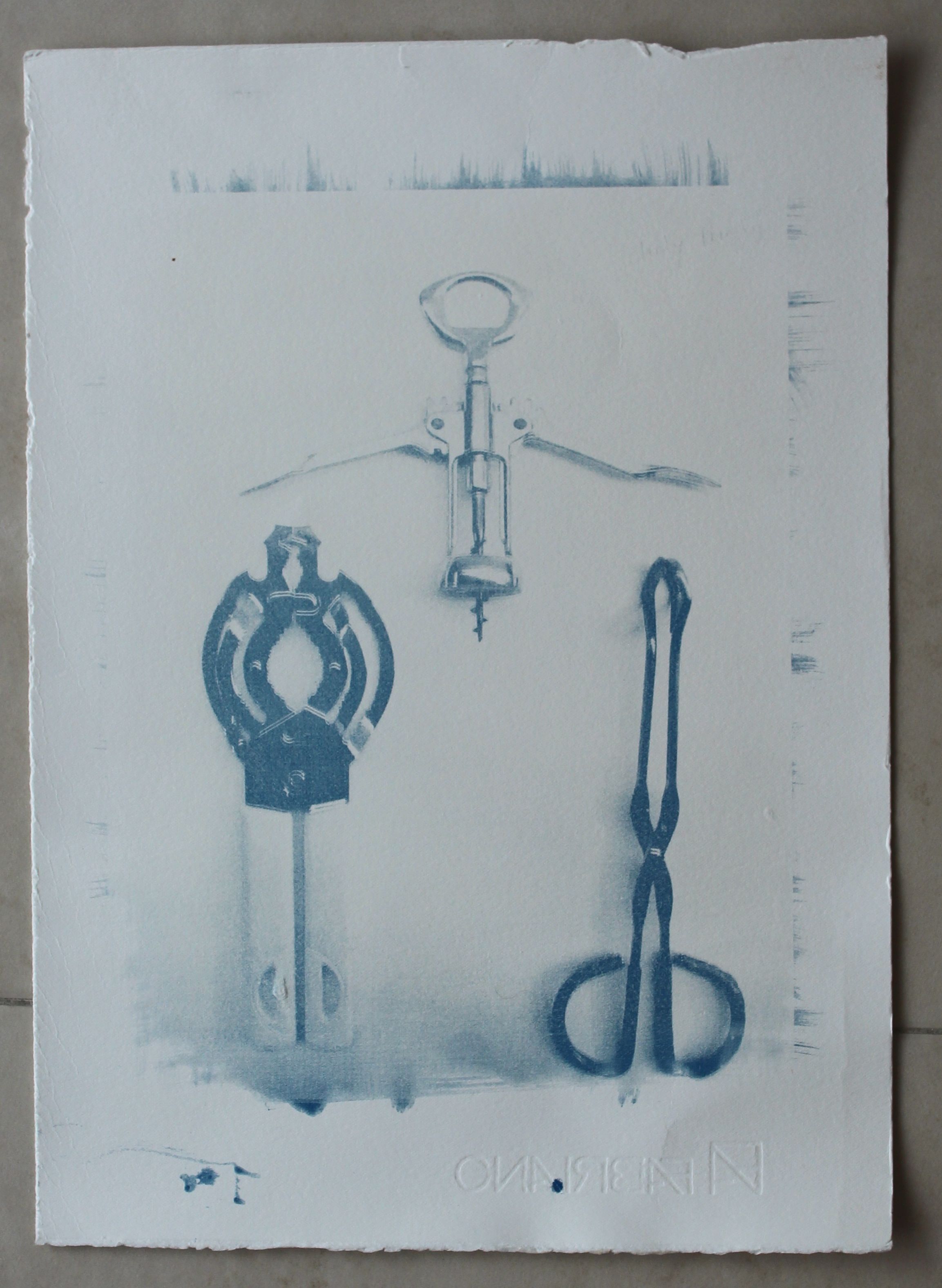
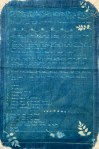
Another technique that could be used with this method is negative films- made my sketching onto tracing paper, or using a photograph. Thsi was only an afternoon workshop, so there wasn’t too much time to experiment, but I had this photo prepared- again, my kitchen tools, but reimagined as a rather harsh “holy trinity”.

This is possibly a little underexposed.

Holy Trinity

Holy Trinity

Similarly with this one- should have been exposed longer- I was using similar scribbling/ markmaking to that use on plexiglass- this time with graphite on tracing paper- the edges of which can be seen. I like the drawn line texture and the shades.

IMG_3853

Right now, I don’t have the chemicals to experiment with this technique further, but I like the possibilities it offers, and would be interested in combining the images with other techniques- the fact that this image is waterproof is handy, as the paper can be wet again for, say, intaglio.


Assignment 2: Abstraction: Materials and process: gesture

Assignment 2

The course designer suggests approaching abstraction in two ways: geometric and gestural.

The thing about being “gestural ” with printmaking is that the marks you make are indirect, so there’s not the same immediacy as there is, say, with a Jackson Pollock splatter painting, where the movements and the momentum, and the gravity are directly influencing the marks made. When it’s a transferred image, you can splatter, drop, splash, but the mark you get will reflect the fact that the paper has been pressed on to the paint. That’s to say, that in printmaking, materials and processes determine the marks you get, as much as the way you design your plate.

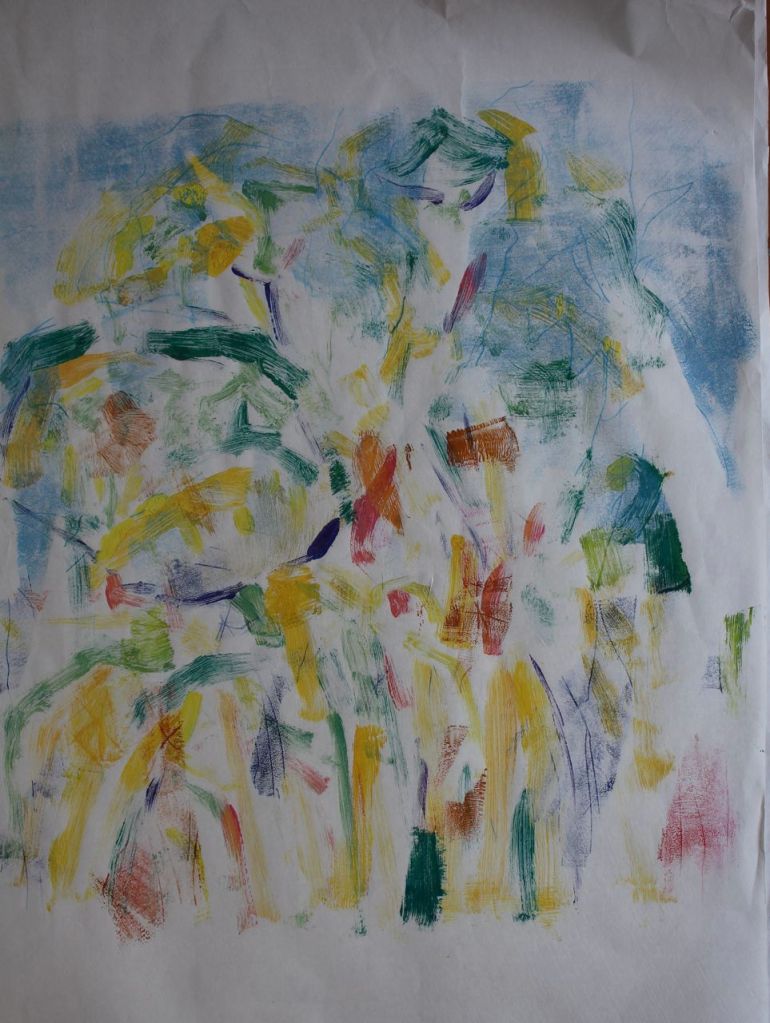
I wasn’t keen on just splattering because it’s likely I’d just get squished blobs. So I painted quickly, using a painting I’d done as inspiration. This kind of image is determined by materials and, if the ink is water-based, as mine was, by speed. I’m not sure this monoprint interpretation adds much. The range of marks is limited, even using brush marks and backdrawing, but it has to be done very quickly.

Monoprinting

Basically, with mono printing, if you want control of the finished product, you have to use materials, namely the inks, with a degree of viscosity that means they are going to remain the same when transferred. There are many examples of these “painterly” mono prints in the well known book by Jackie Newell. You have to be very convinced of the point of this.

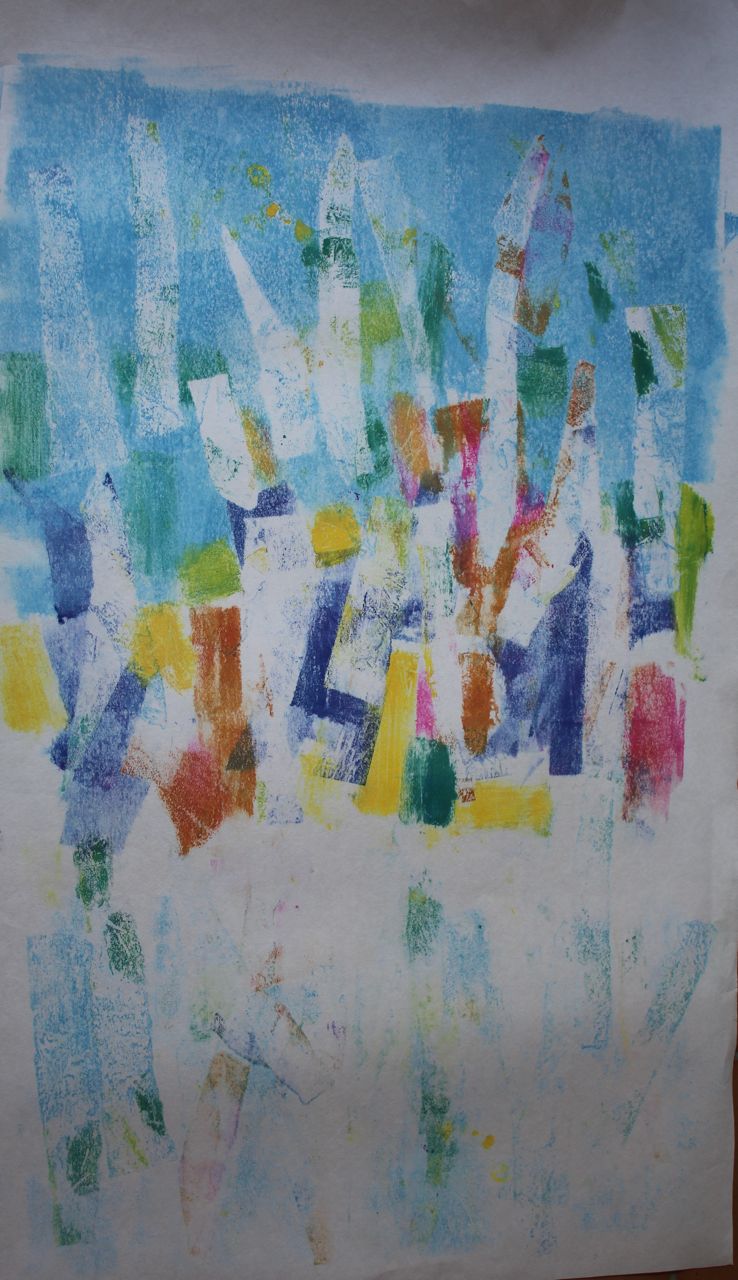
I am more drawn to those techniques which create automatic effects through the printmaking process. Maybe I am lazy. This was a pochoir technique – using torn shapes which were reversed in order to create interlocking and overlapping colours and shapes. This works better  and is “gestural” in the sense that the paper masks are torn roughly, and are positioned at random, then repositioned at random, and thus it is an action process that determines the outcome, not composition.
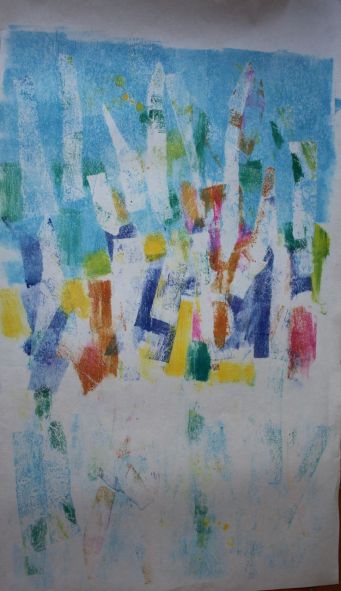
IMG_3822

So, to return to the materials and processes- what processes could be carried out with particular materials to create marks automatically? I have seen a YouTube video showing a print being made by burning paper and then quickly smothering it in a press, so that the resulting image is a burn mark, and each time it’s different. That’s surely an example of “gestural” printmaking.

With paper: folding, scrunching, soaking and spraying with water, oil and alcohol products:

These are vaguely suggestive of wood, water, trees, or rain streaking down a window.

A feather laid into the ink above made interesting marks.
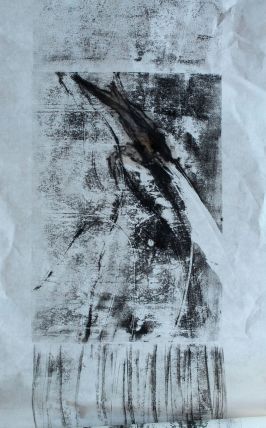
IMG_3535 IMG_3827


These images were made by just making intuitive childish scribbles- and also using the effects of letting turpentine and stand oil react to one another to make a bubble pattern, which is quite attractive.
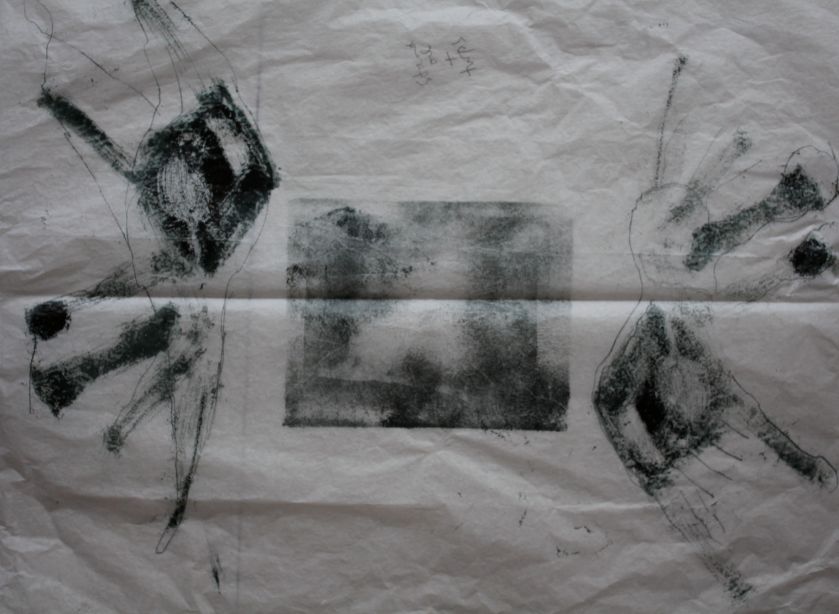
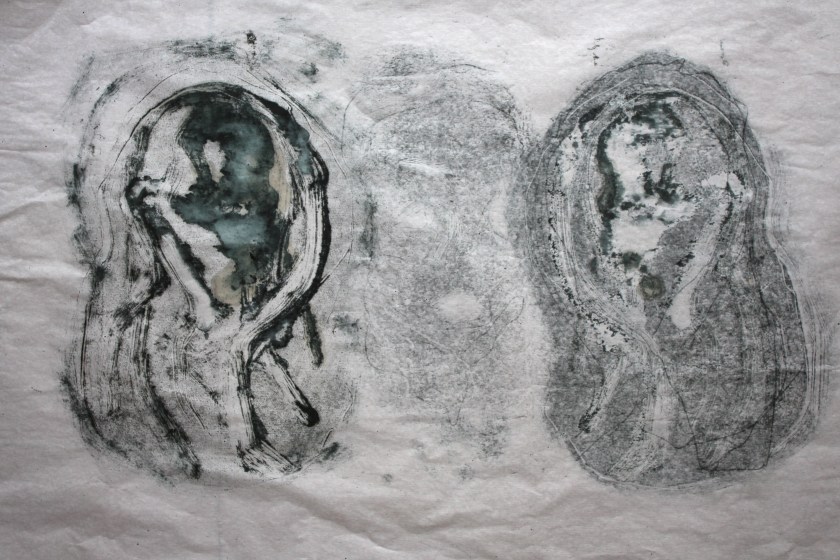
IMG_3846

IMG_3845

I feel I am not moving on much here though.

Collagraph

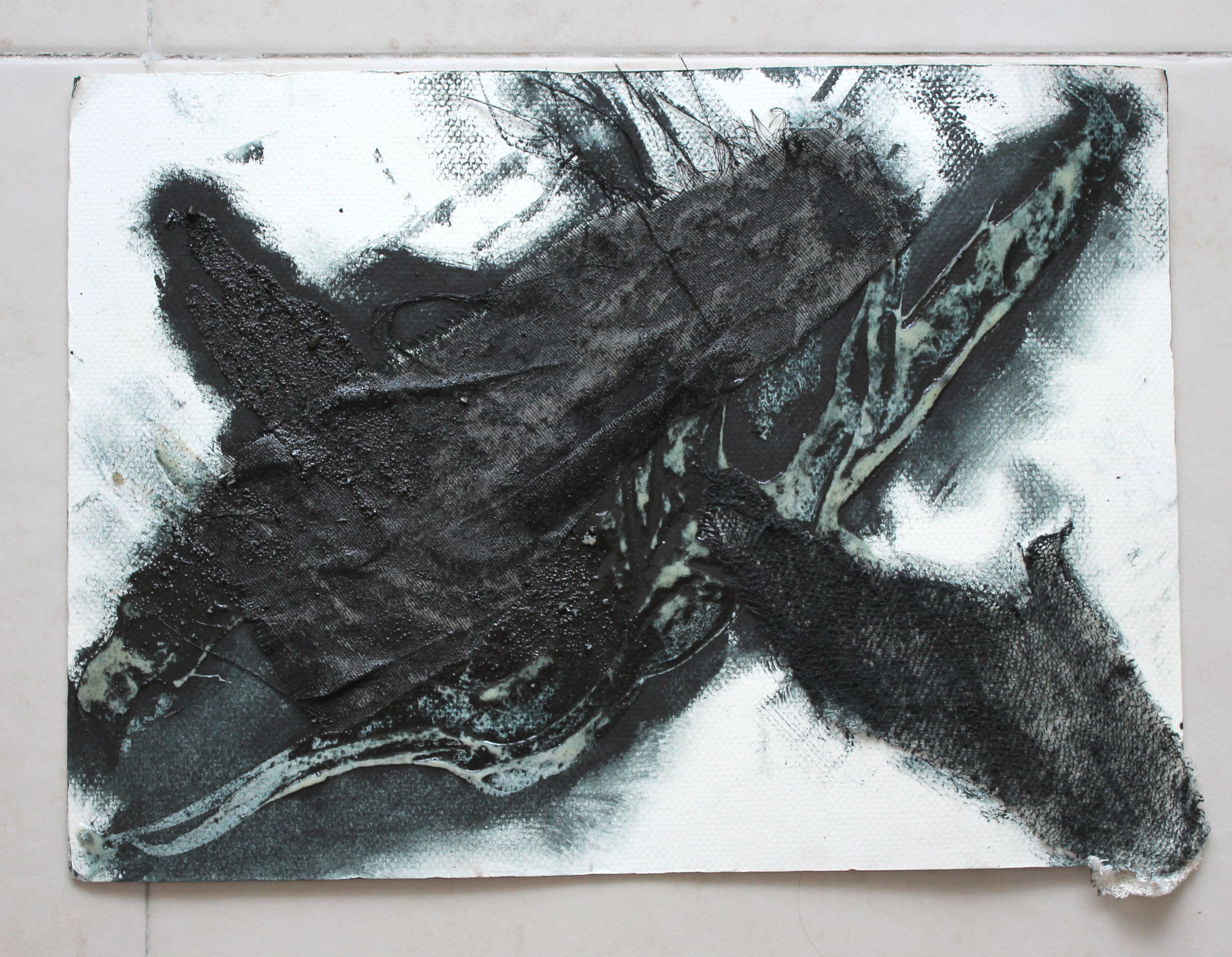
Collagraph is all about textures- the most elemental being soft and hard. I made a plate using a bandage- silkscreen fabric and sand- (I had no carborundum), with thick glue as an in between “fluid” texture: I just placed the pieces more or less randomly, trying to balance them, with a basic diagonal composition.

This is the inked up plate:
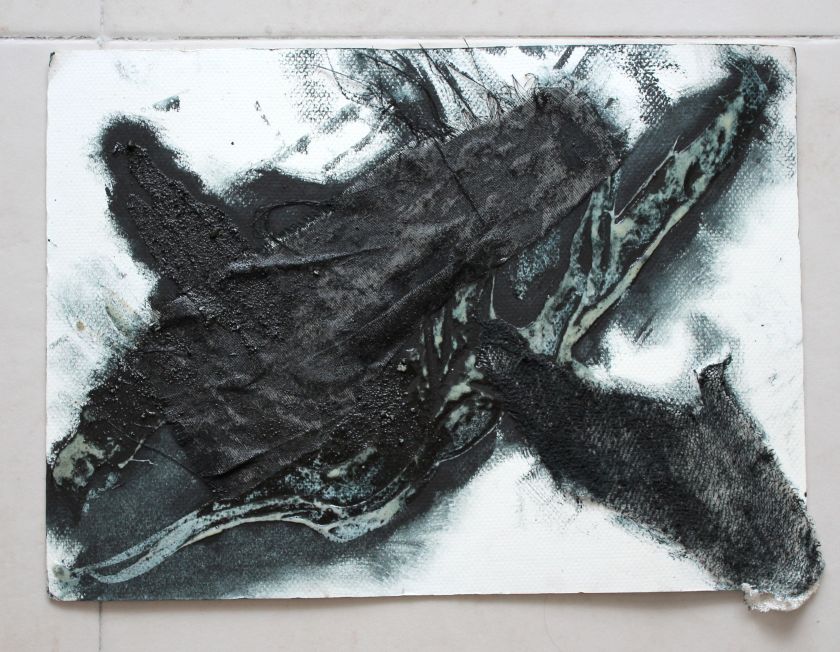
IMG_3841

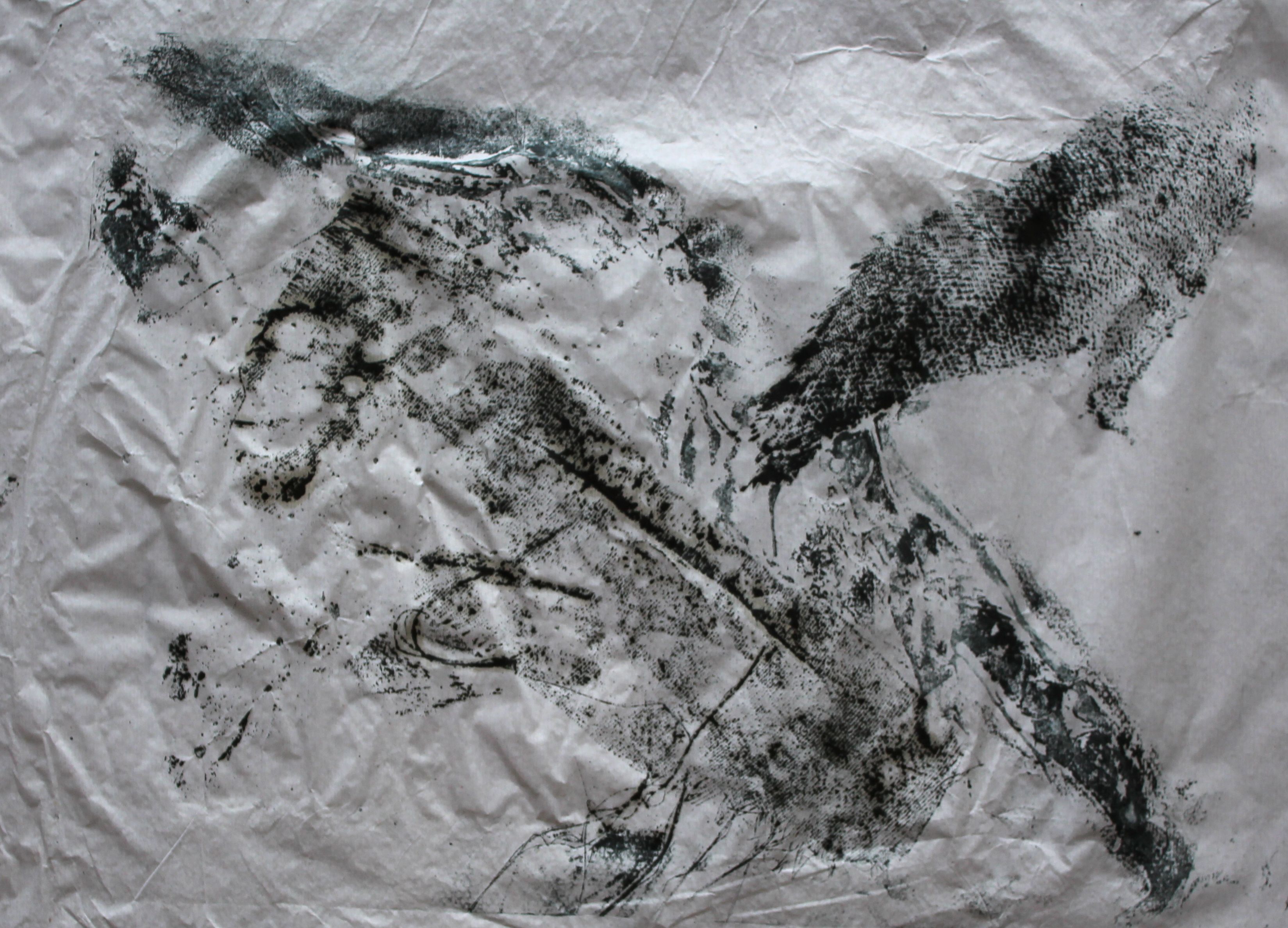
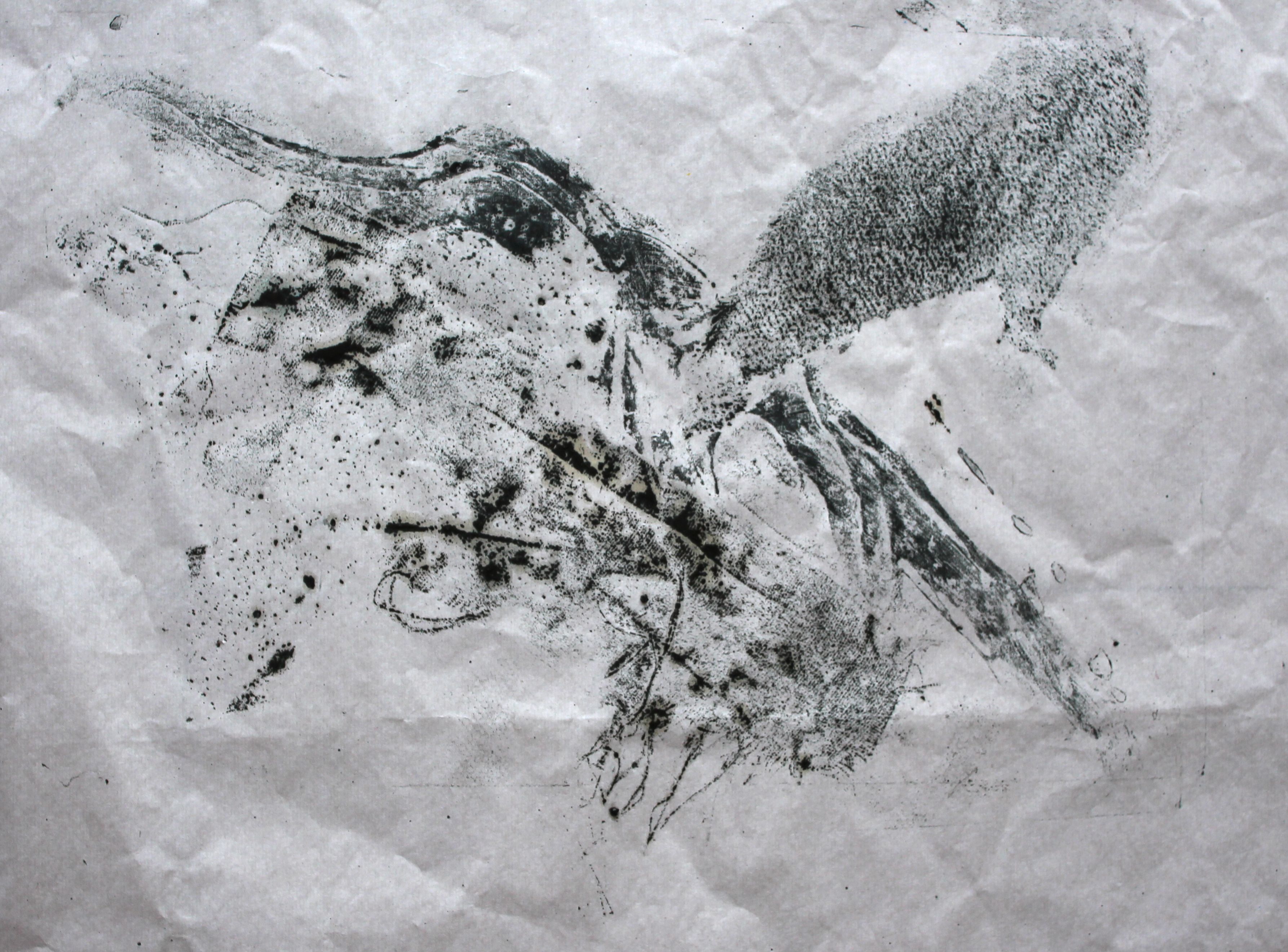
Without a press this had to be printed on thin paper, or on wet paper pressed between weights.

On thin paper, the sand was a bit destructive, but I like the shapes and textures on the right hand one.
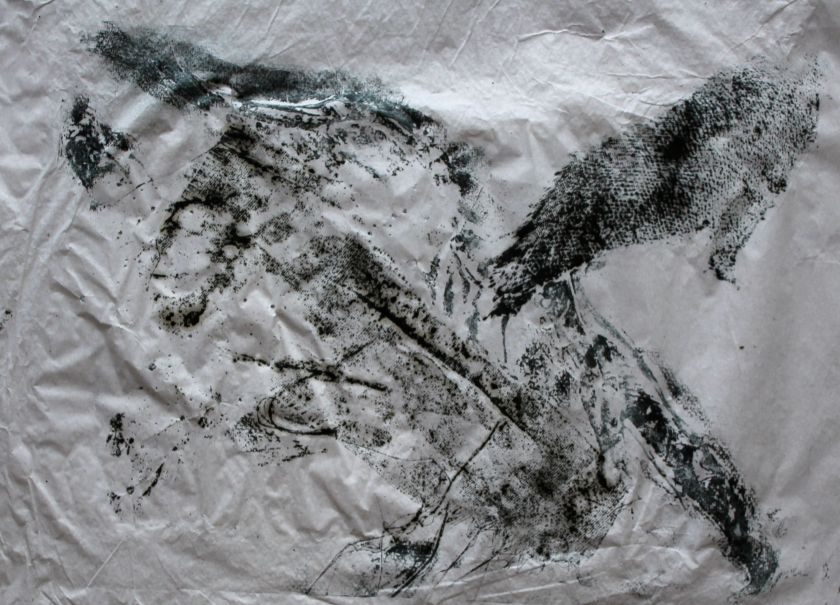
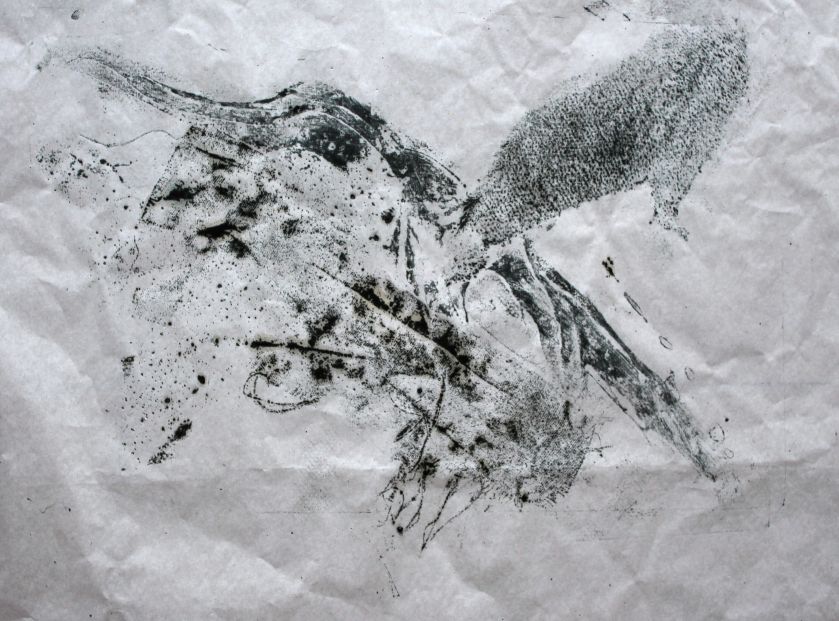
IMG_3843 IMG_3844

On thick paper the textures are quite sharp:
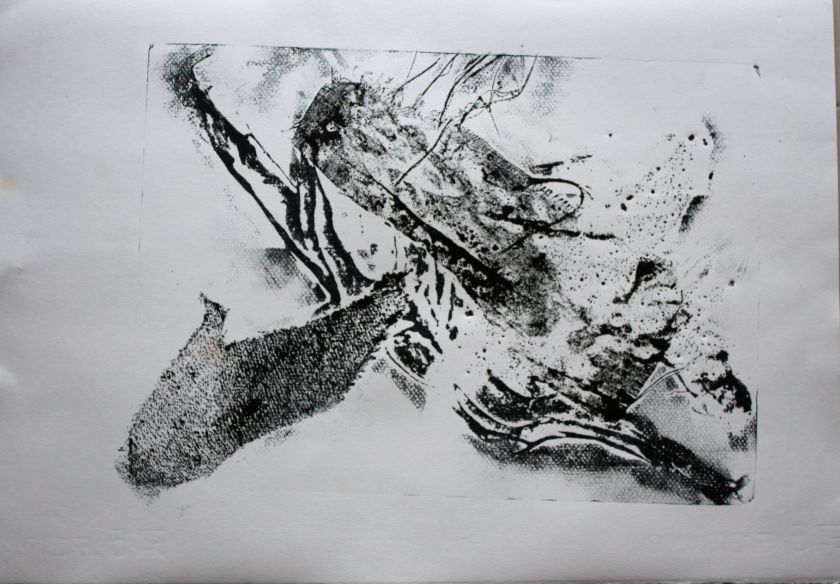
Abstract collagraph

Abstract collagraph

I should probably have used sandpaper instead of actual sand, so as not to indent the paper quite so much, but the dotted patterns are interesting, and they create a lot of space. I’m still unsure what I am trying to achieve here though.


Woodcut

With wood: burning, splitting, splintering:

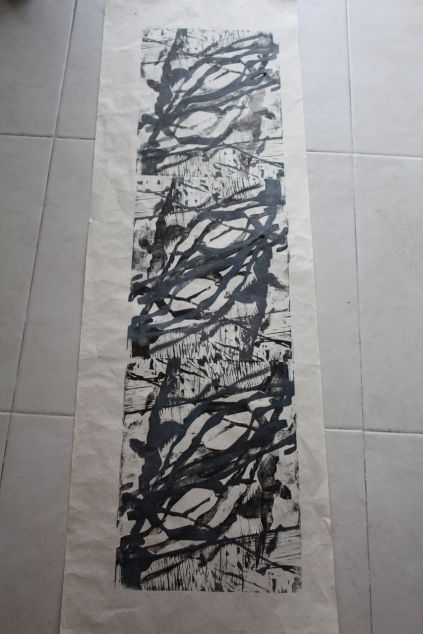
This piece of wood was set alight after having lighter fluid poured on it, but I didn’t get much of a relief pattern as a result- the fluid burnt out too quickly. (Need to use different wood? petrol?) I then used a screwdriver and a knife, cut quickly, and let the plywood layers split. It’s been printed four times to make a continuous pattern, then overprinted in a second analogous colour, which again, is a technique to create a random and not representational design. This could have been planned so that the edges met up as a repeat pattern.
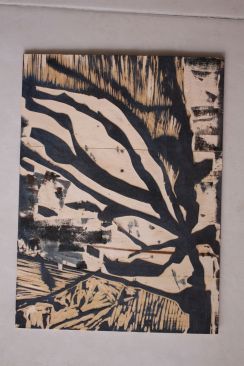
 

Plywood block
Plywood block


IMG_3833

Lino: I could make random marks with caustic soda. (But I’m not going to- I don’t have much of the real stuff, mainly vinyl, which is impervious to most random markmaking stuff.)

But when I think of “gestural” marks, I think of drawing and writing, marks made by spontaneous movement. The most direct technique I know for achieving that is intaglio, where the scratched line you make is pretty nearly the mark you get.

Intaglio

These images are made on A4 pieces of 2mm plexiglass, and have been gouged with a variety of sharp objects, including knives, etching needles, sandpaper, a screwdriver and a Dremel. Then the plexiglass was cracked  with a hammer and other sharp tools. Before that, a sheet of contact plastic was affixed to the back to hold the pieces together.

I like the variety of marks I’ve got here. The sharp engraving needles have been used quite violently in places to scratch, as have lino carving tools and knives to peel off some surface plastic. The use of a rocker engraving tool has made dotted and hatched lines, as has the Dremel used at different speeds. The Dremel is nice for the curly lines, and the engraving needle is also relatively easy to write with. The marks are made quickly, and deliberately artlessly; scribbles, random words, scratchings out, phrases that come into my head, symbols. I painted some caustic soda and left it overnight to see if the lines would get etched by that, thinking that some of the plastic in the sheet might be affected by it, but no- it looked exciting for a moment- with bits of crystal shapes forming- but it was just the dried soda on the surface and it washed off.
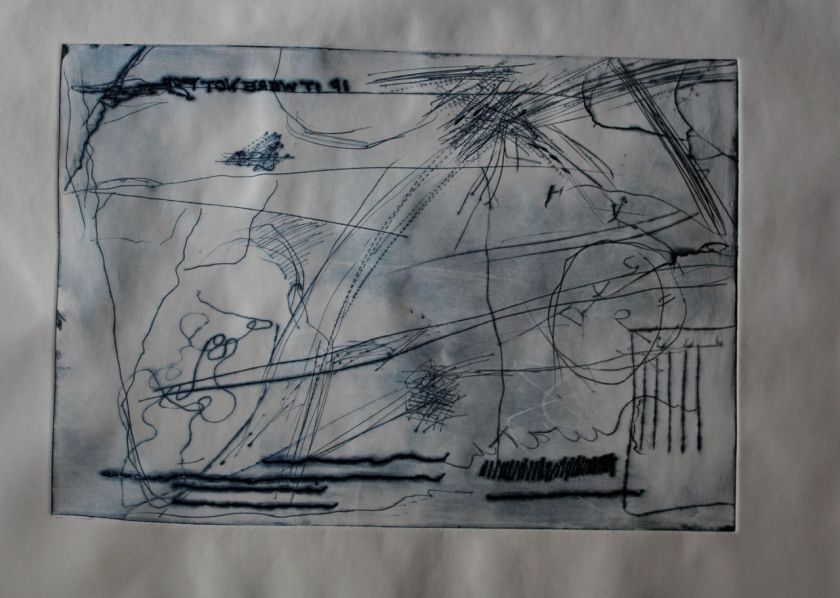
 

Intaglio on plexiglass, Akua Lamp black ink

Intaglio on plexiglass

By leaving some ink on the plate, that too can be marked, written into. Wet paper soften the deeply etched Dremel lines, and makes a contrast with the sharper ones. Where the Dremel  has bitten deeply, there’s an open bite effect where a thin line is left uninked as the pigment is held by the edges of the gouged line. The cracks though, create all sorts of different effects- they are organic in a way, that is, they make sense, as they have happened naturally as a response to pressure on the material. The ink sits in them in different ways, depending on how deep the break is and whether the plate bends at that point.

This is quite interesting.

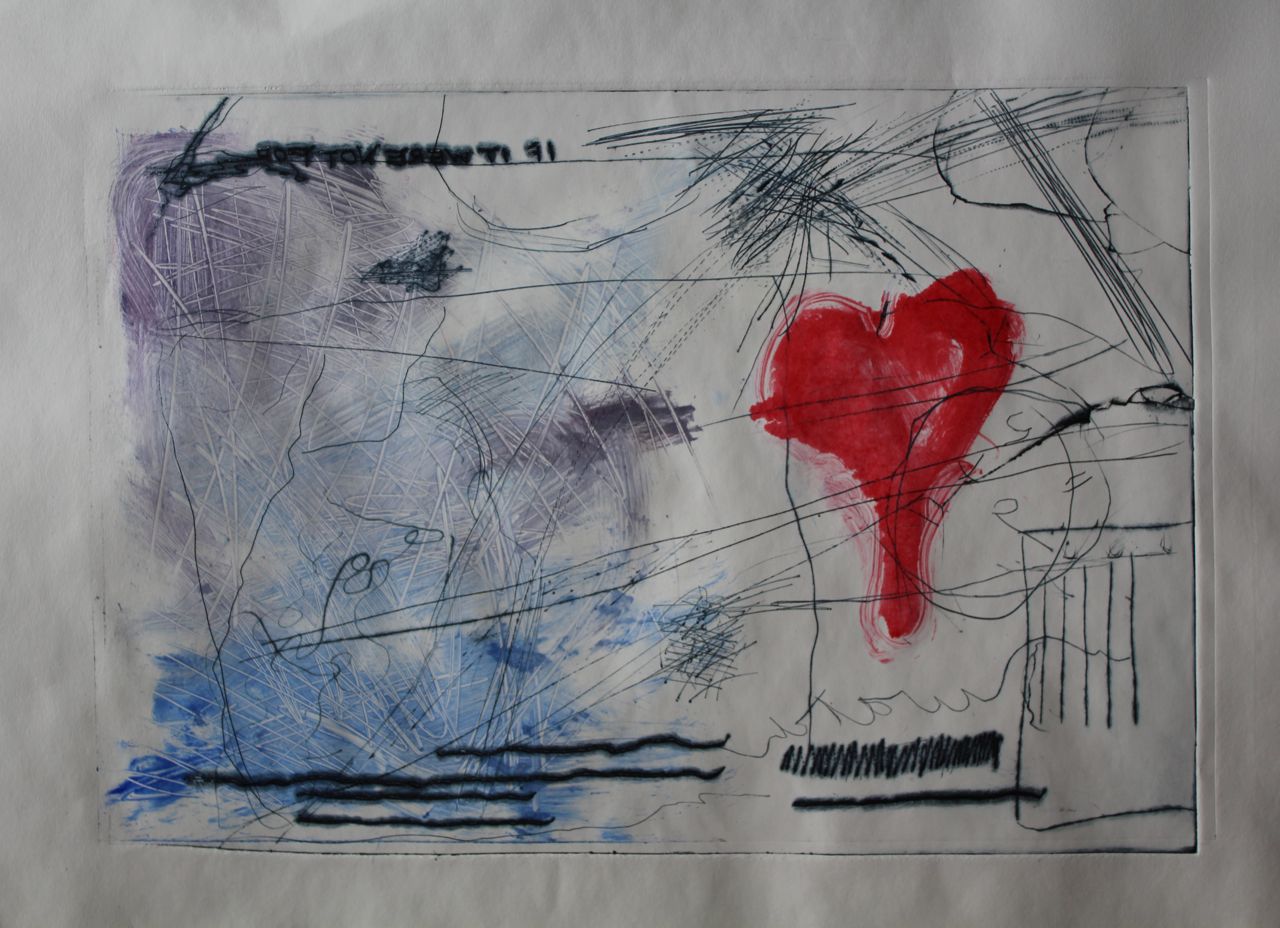
Another sheet of plexiglass (annoyingly not cut to the same size) as a colour layer, quickly painted with inks, scrubbed, scratched into with a fingernail. Heart symbol painted, edges wiped and wetted slightly. It feels like conflict, miscommunication, love letters getting lost on the post, poignant.

I was wearing a Jean Michel Basquiat t-shirt, and may have been channelling that style: the primitive markmaking, childlike images. It could be interesting to match the layers and colour in the outlines.
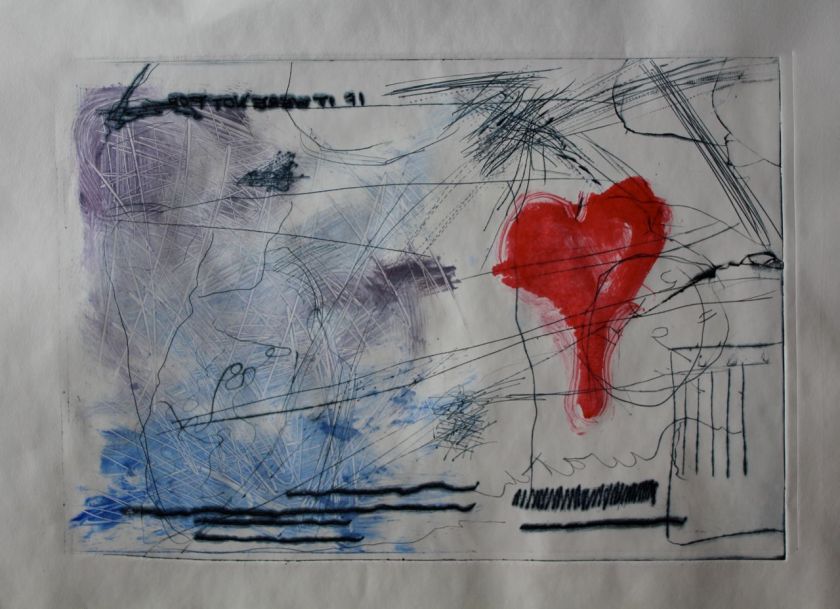
Intaglio and monoprint

Intaglio and monoprint


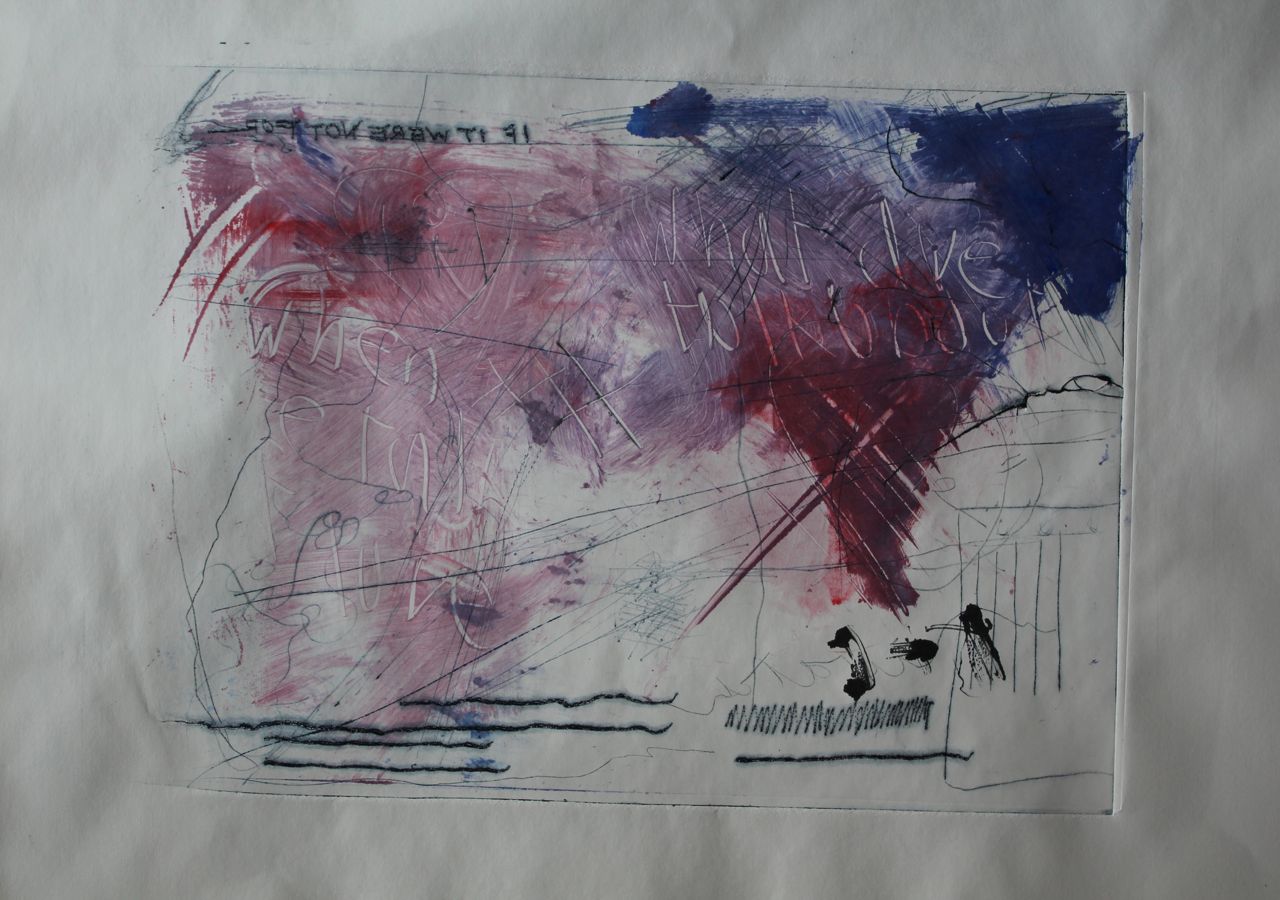
This is the ghost print of the intaglio, and the lines are finer. The monoprint layer has accidentally- or not, depending on one’s view of what random marks reveal- turned into a map of the world.
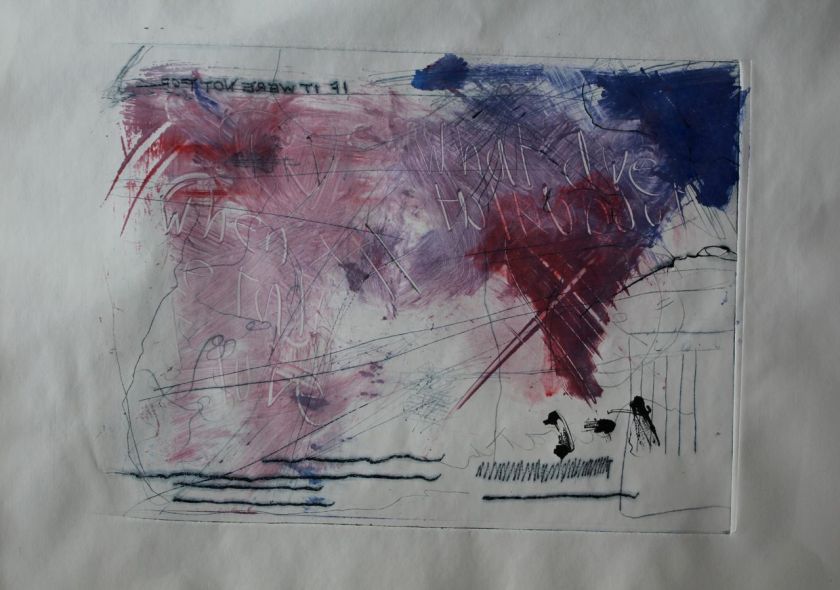
IMG_3837

This is something to come back to.


Assignment 2: Abstraction: Serendipity

Assignment 2


I’m defining abstraction rather generally. Yet, I understand abstraction as a process: abstraction FROM something… But my problem with abstraction is, what subject matter do I begin with? Or do try to come at abstraction from another route? I identify three basic types of abstraction which do not rely on observation: geometric, intuitive and serendipitous.
Obviously, if, rather than being inspired by those artists who were trying to make visual sense of their world, Cubists, Orphists, Futurists, the terms of reference are those dogmatists of “pure” abstraction- Mondrian and Plastic art, Malevich and Suprematism- then anything which seems to imitate nature would be considered mere representation. What was left to those artists as their subject matter then? The language of art- pure form: balancing shapes, colours, lines. Those elements belong only to art, and thus define its being. Renaissance art provided idealised images of man, but Plastic art paints itself in its own terms. These could become spiritual and mystical – symbols of an eternal language.  Or geometry.

The course designer suggests looking at renaissance art to identify the “pure” forms that underly its compositional structure: the triangle, the hemisphere, shapes which are symbolic of the beliefs in the holy trinity, of the dome of the heavens above. Lines of congruence which direct our eye in a painting, which tell us how to “see” what’s more important, the truth of the universe.

Personally, though, I don’t privilege maths over nature, and when Coleridge writes of “that eternal language which thy God utters”, he means the natural world, and this chimes much more with my emotional instincts. Besides, some abstraction, such as Hilma af Klimt’s, seems to have been illustrative- symbolic representations of a system of belief- or in other words, what we would now term graphics. Agnes Martin, however, is one artist who has put the mysticism back into geometric abstraction, by privileging the process of line-making as meditation. This is something I have experimented with, and find satisfying.

Influenced by the claims of psychoanalysis, painters such as Kandinsky created abstract images inspired by dreams, or music- in this case, putting on canvas images which were “seen” in the mind, not based on external observation. This is a more intuitive approach, which could be seen as the precursor of abstract expressionism, of action painting, gesture, or of colour field painting. This is an approach that puts emotion and instinct in the forefront.

Max Ernst used frottage as a way of making patterns, which he then developed into fantasy images, responses to what he saw in the patterns- the frottage process being a kind of randomising process to get him thinking out of the box. Ernst is considered to belong to the group of Surrealists, for whom random juxtapositions challenged perception and remade reality. This was serendipitous, and opens the way for seeing the familiar strangely, for repositioning and reinterpreting the world of our direct experiences.

If I consider abstraction without the capital A, though, it is a process of distancing. That may mean distancing in time, or place or space, or emotionally: it may mean generalising, or conceptualising. It may mean shaking off the normal associations that objects have. And in doing so it may create new ways of seeing, rules and laws, like those of Plasticism, Cubism or Suprematism. To that extent then, it is the process of modernisation of art at the start of the 20th century, and the forerunner of all the movements and -isms that rejected photographic realism. Which makes the topic of this assignment rather broad.

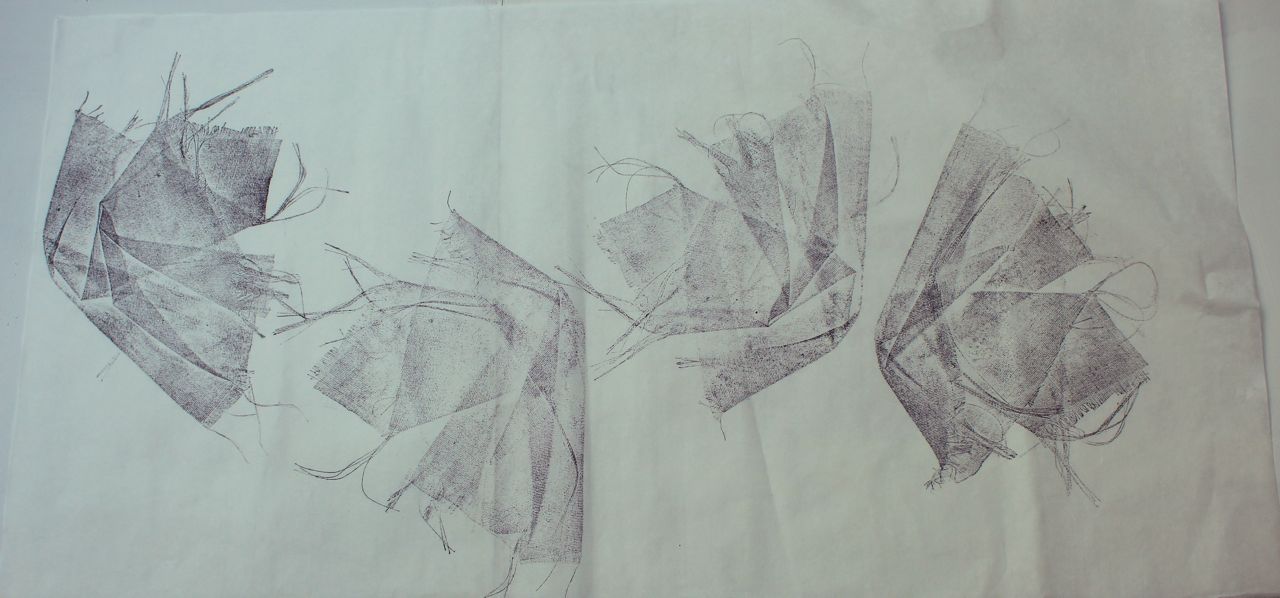
These “abstract” shapes are made by inking squares of tarlatan, and folding them, fraying the material, using a mask, duplicating- it’s a type of collograph technique in that it’s a relief made from material placed onto a surface, but the transparency of the object, and the lightness of the lines make it suggestive of something floating in space or swimming in liquid. But is this abstract? Its clear what the material is, even though the way it has been printed is suggestive of something other than what it is composed of. I could use the patterns created to make another abstract design, an arrangement of shapes. but am not sure how I could improve on it. The fine lines would be hard to achieve in any other way, but I could try something labour-intensive and  meditative. Or these random patterns could become part of another image, reminiscent of the way Ernst used frottage.

What is clear to me though, is that there is a link between process and meaning: if the lines are made laboriously, that is part of their meaning, if they are light- like these, and have touched the paper for only a brief moment, which has captured a particular arrangement that is actually temporary, then that is part of their meaning. And that, I think, is what I’m trying to work out here in this foray into “abstraction’- a match between the way the marks are made and their meaning.


IMG_3516


Assignment 2: From sketch to abstraction: looking

Assignment 2

One of the biggest challenges for me is using my own sketches to arrive at an abstract image. (I know that this is not what the coursebook suggests as a direction here, but it is recommending starting by looking, even if, this time, it is looking at the work of artists.)

If I take abstraction to mean simplification, then I try redrawing, reducing the number of lines: that may result in seeing patterns and balance of shapes, in the creation of a certain rhythm, or the identification of certain analogies between one thing and something else. But there’s a risk it will end up as a mere pattern, something predictable and repetitive, or it may end up looking like a piece of graphic design. Where’s the line between these? Early 20th century abstraction, in movements such as Cubism, Orphism, Futurism, was influenced by changes in perception of the world. The typical Renaissance landscape, single point perspective, static eye view was now outdated as a means of representing the modern world of movement and speed. Visual art could now be a moving thing, with layers beneath  the surface, hidden depths, a state of changing from one place to another, from one state to another.

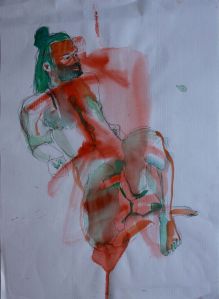
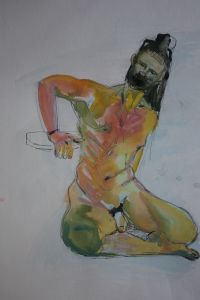
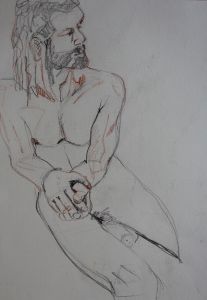
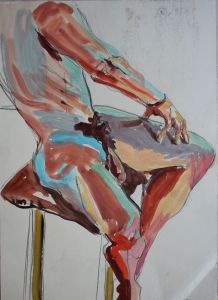
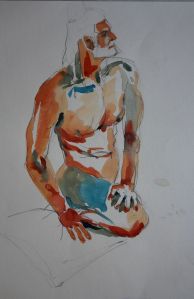
I started with a series of life drawings of my favourite model, Vangelis, who pops into HK at various times in the year. He does balletic movements which are a great inspiration for gestural drawing, but these were still poses. How could I make these more abstract? I started by tracing, simplifying the drawings into fewer lines, accentuating the sculptural shapes, making the body into blocks.

At the same time, I had to think of my resources. Monoprinting is the most straightforward when you have few specialist resources to hand. I had painting materials, ink, sheets of perspex, Chinese rice papers, tissue paper and heavier cartridge. The techniques that suggested themselves were transferred paint, masking, and backdrawing so I had my “language” of seeing in the form of shape, colour and line. At its most basic, any form of translating a solid 3D person into a pattern of shape, colour and line, is a process of abstraction.

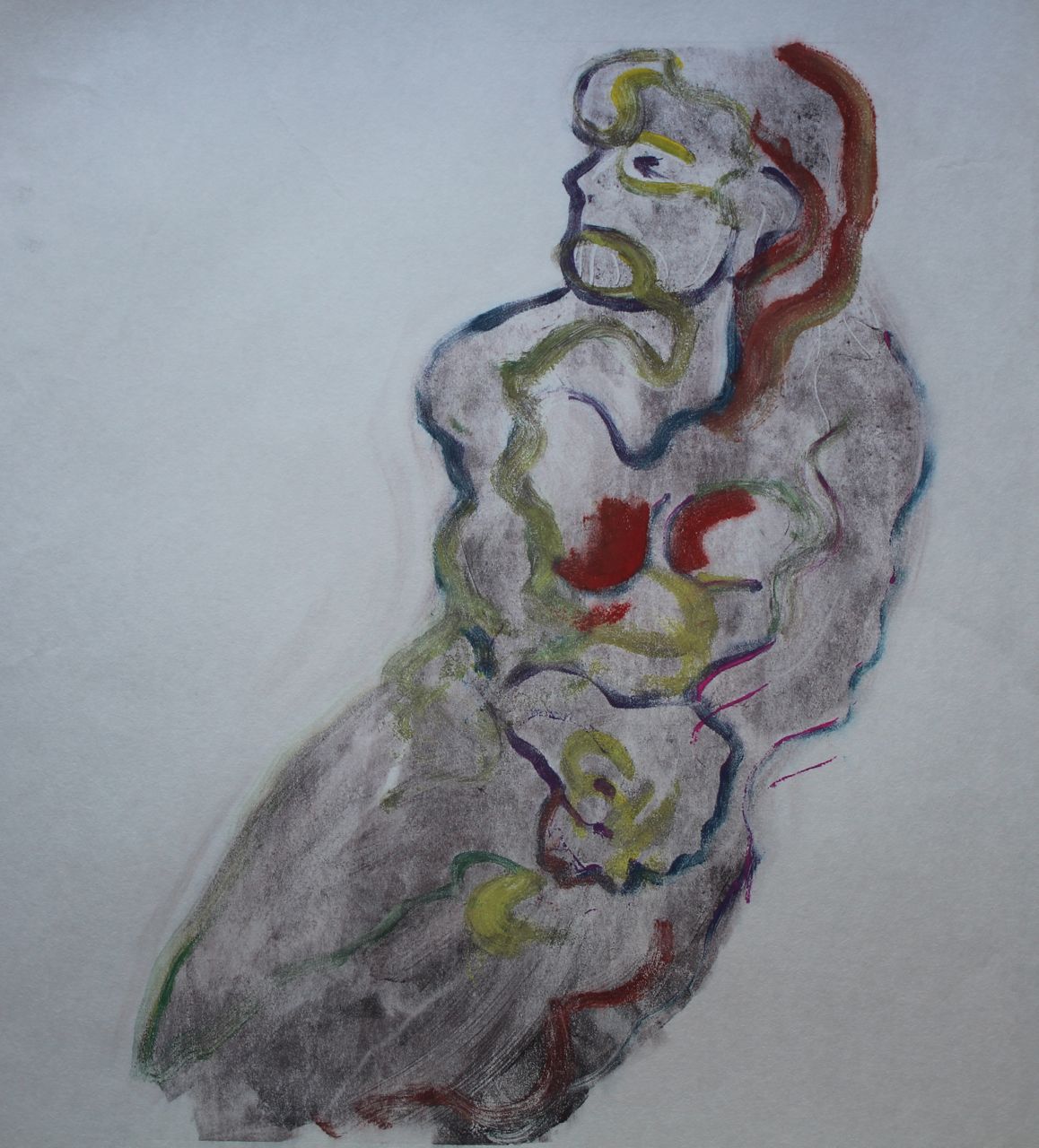
This first image is an “abstraction” by analogy- the lines are simplified, the colours arbitrary, the naturalism is lost, the limbs are no longer articulated but are fused into the body, which now suggested an analogy of a piece of gnarled wood, something perhaps sculpted and primitive.

Analogy

Analogy: monoprint A2

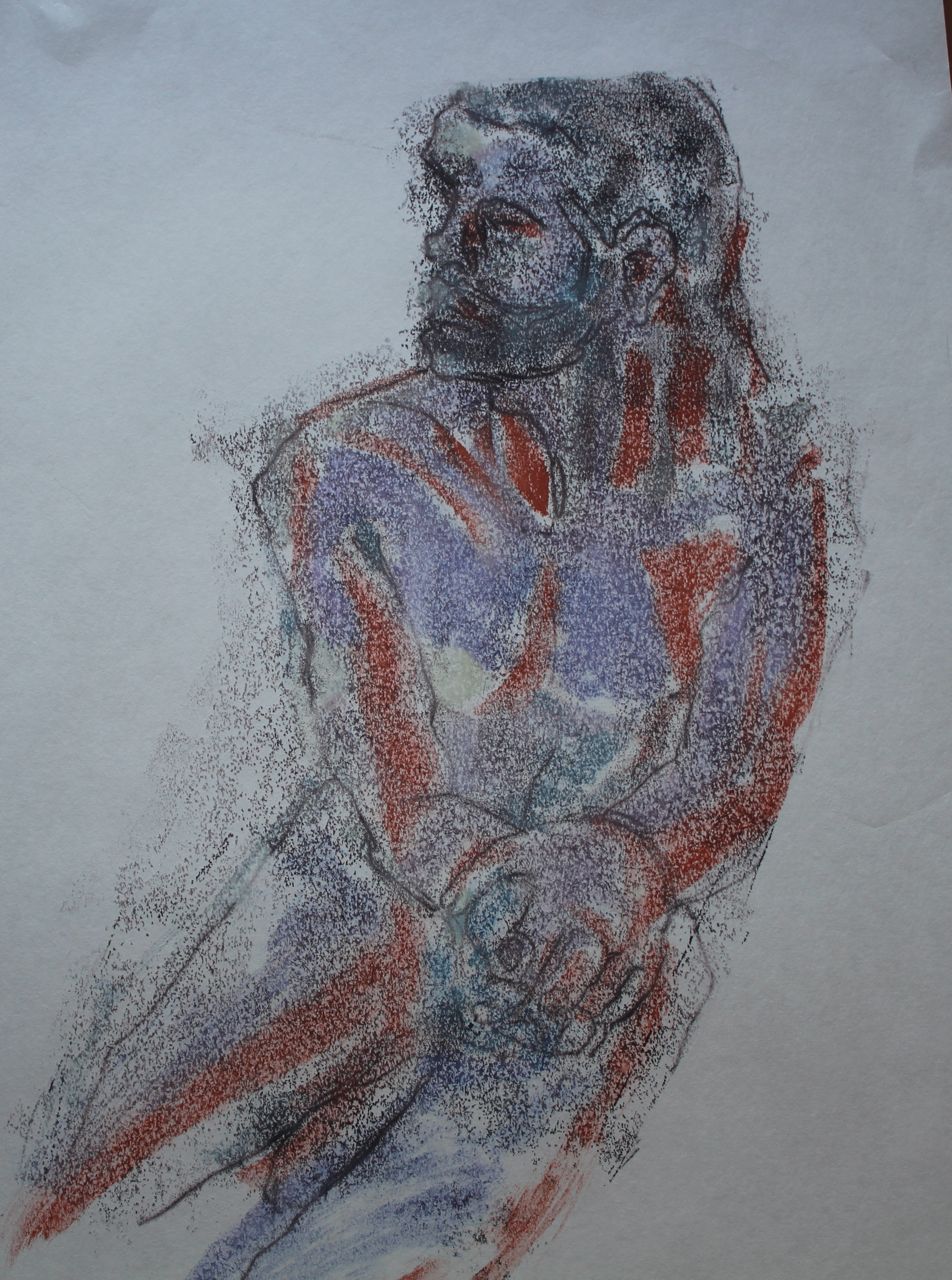
The second image is using the soft mottled colours of wet paper, and backdrawn outlines, but the two layers of the print exist separately, and emphasise the artifice of both. The body seems to be a collection of atoms, barely held together by a porous outline, man as construct. Now the pose fits too, coincidently, as the image of the folded hands mirrors the idea of encapsulation.

Containment by line

Containment: Monoprint A2


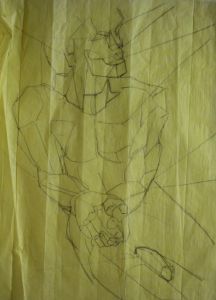
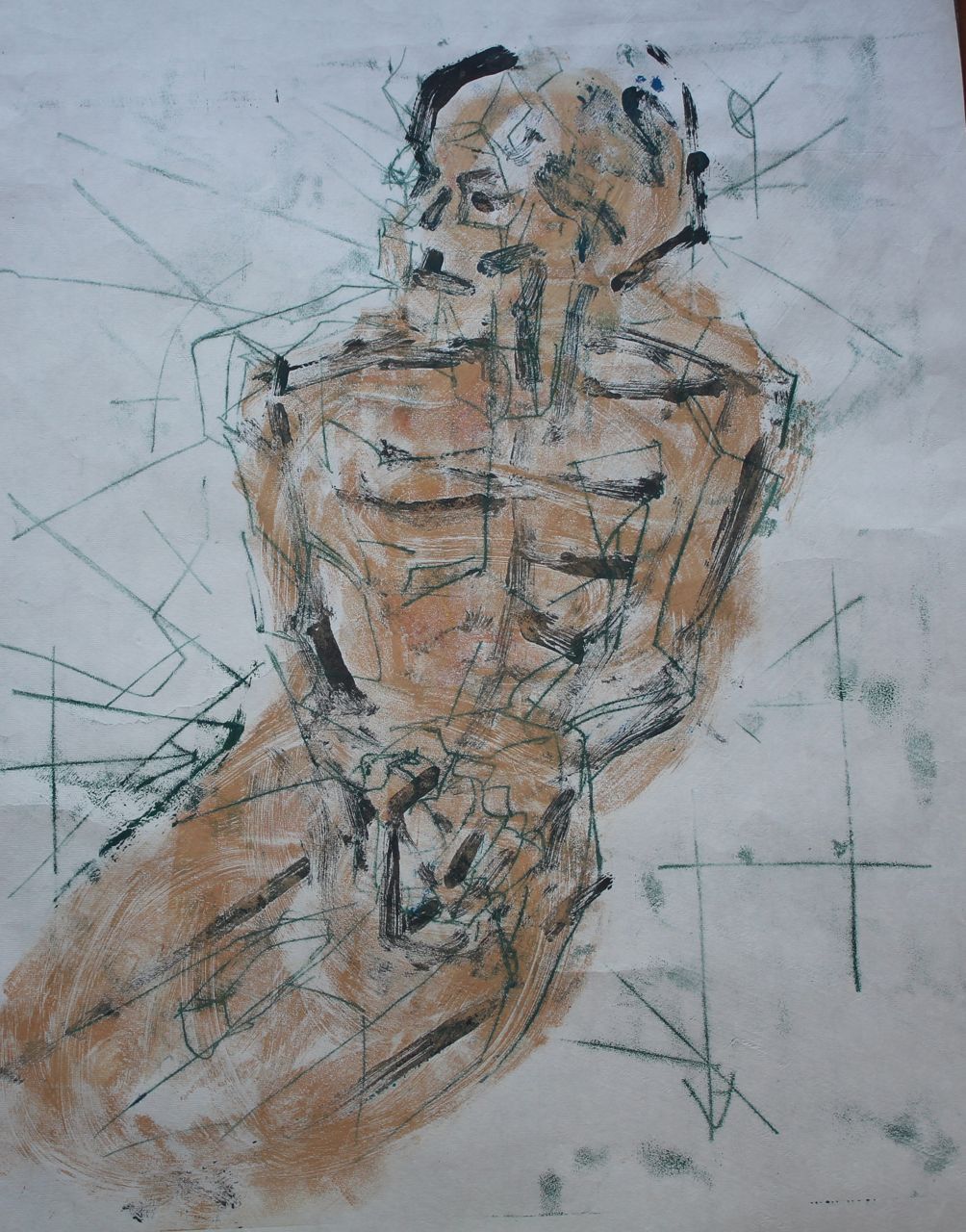
This image is the most explicit and self-conscious: a reflection on the act of looking- shape as the congruence of internal structure and negative space.

Negative space

Negative space: Monoprint A2


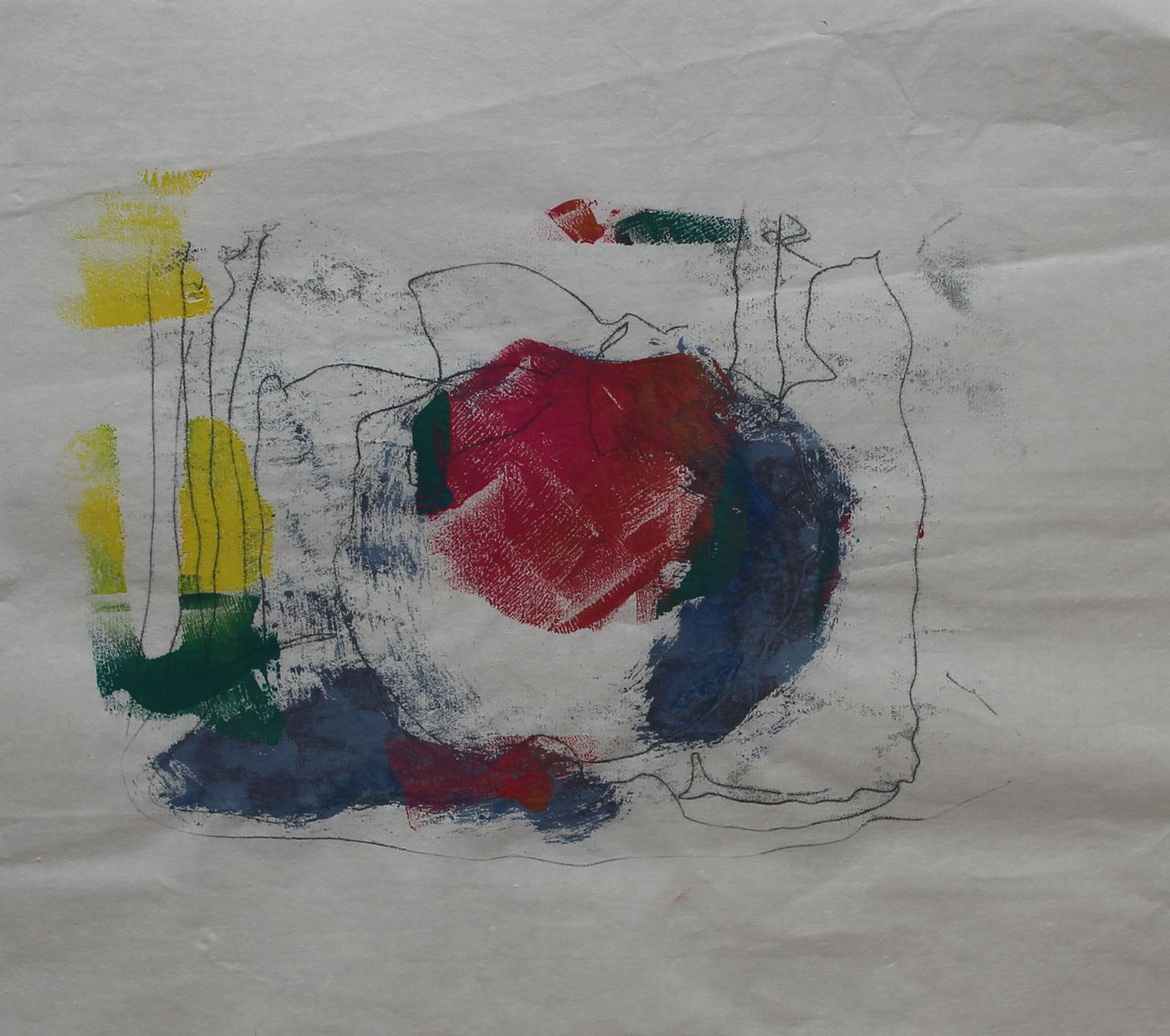
This wasn’t inspiring though. Below, this was the first print that I felt enthused by- a fast impression of a group of objects- apples, a plate, a bottle, a cloth- torn masks, blind painted and then blind backdrawn. This shows the three elements of shape, colour and line as three distinct entities. The texture of the lines, the textures of the colour and the fluidity of the shapes, suggest things trying to come into being, to form themselves using this visual language, parallel to how Cubist paintings resolve themselves from splintered planes.

Still life

Still life


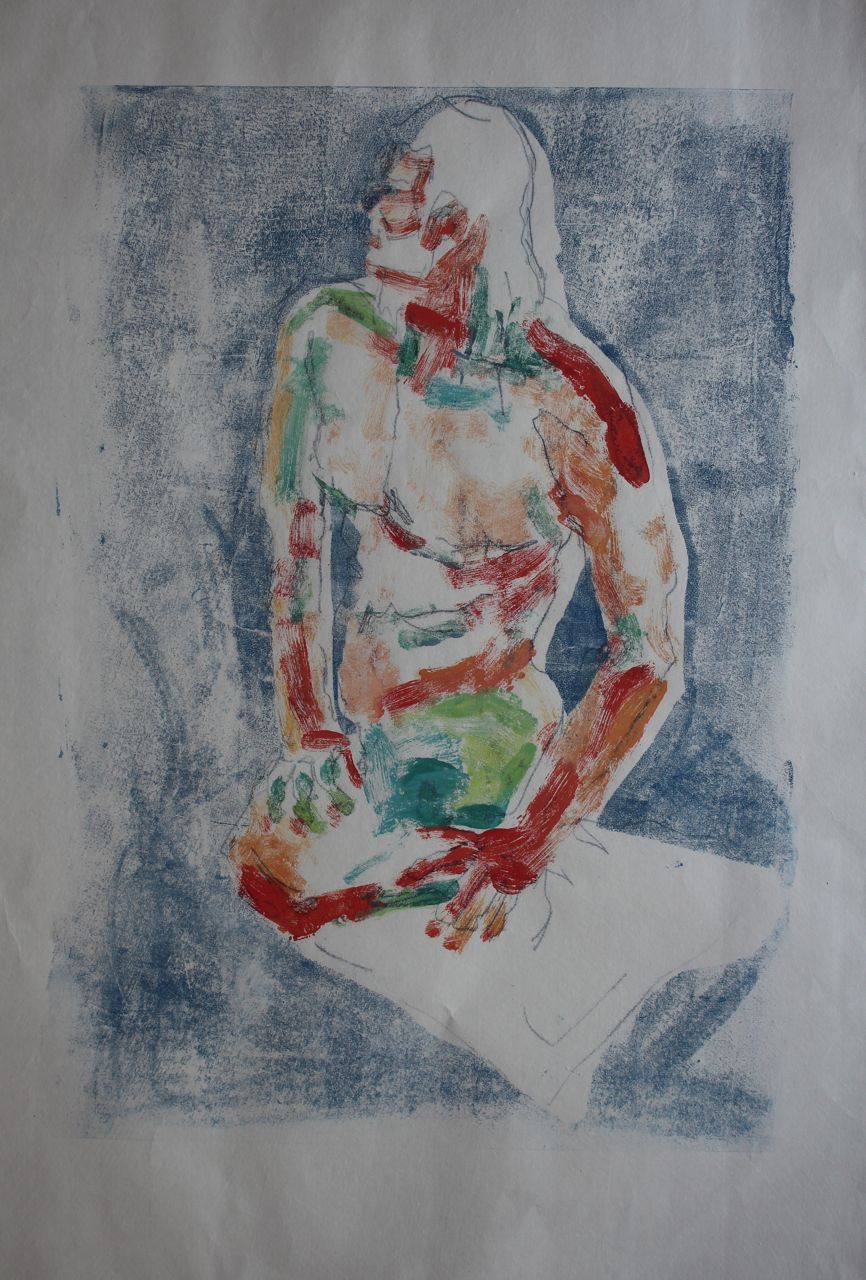
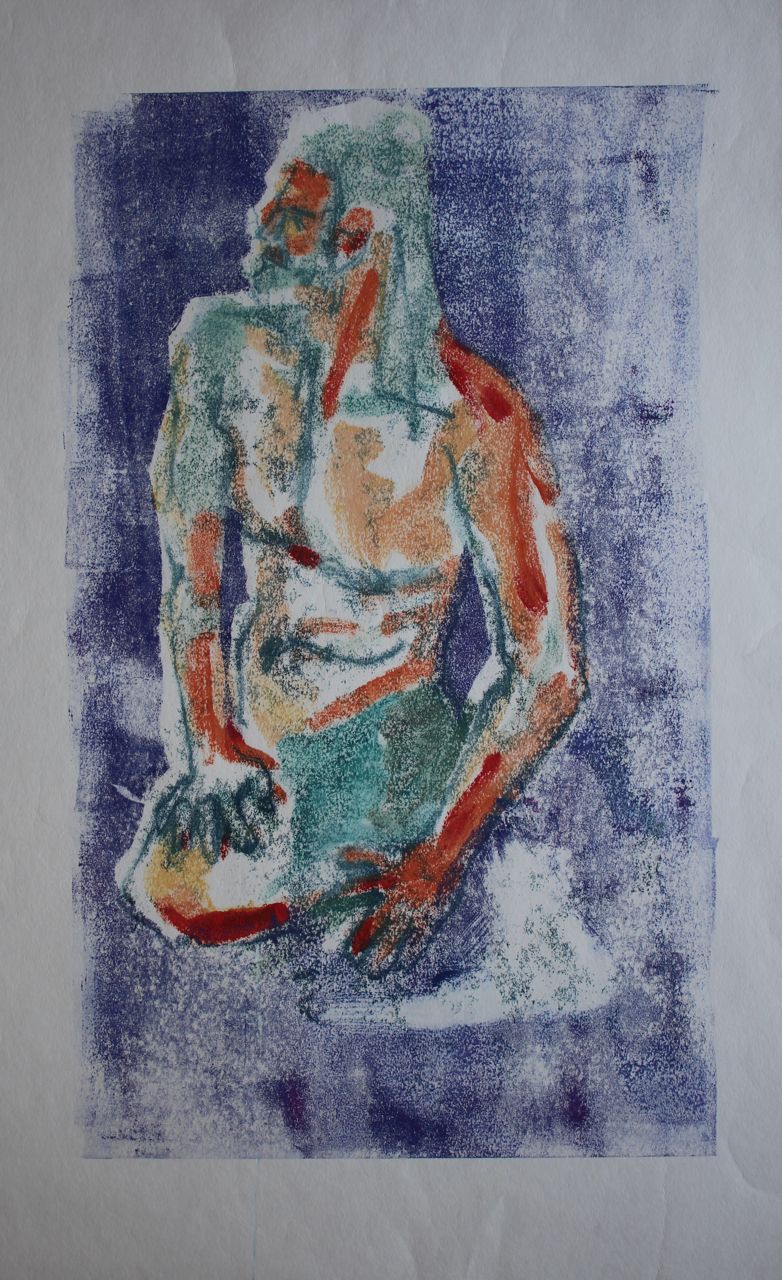
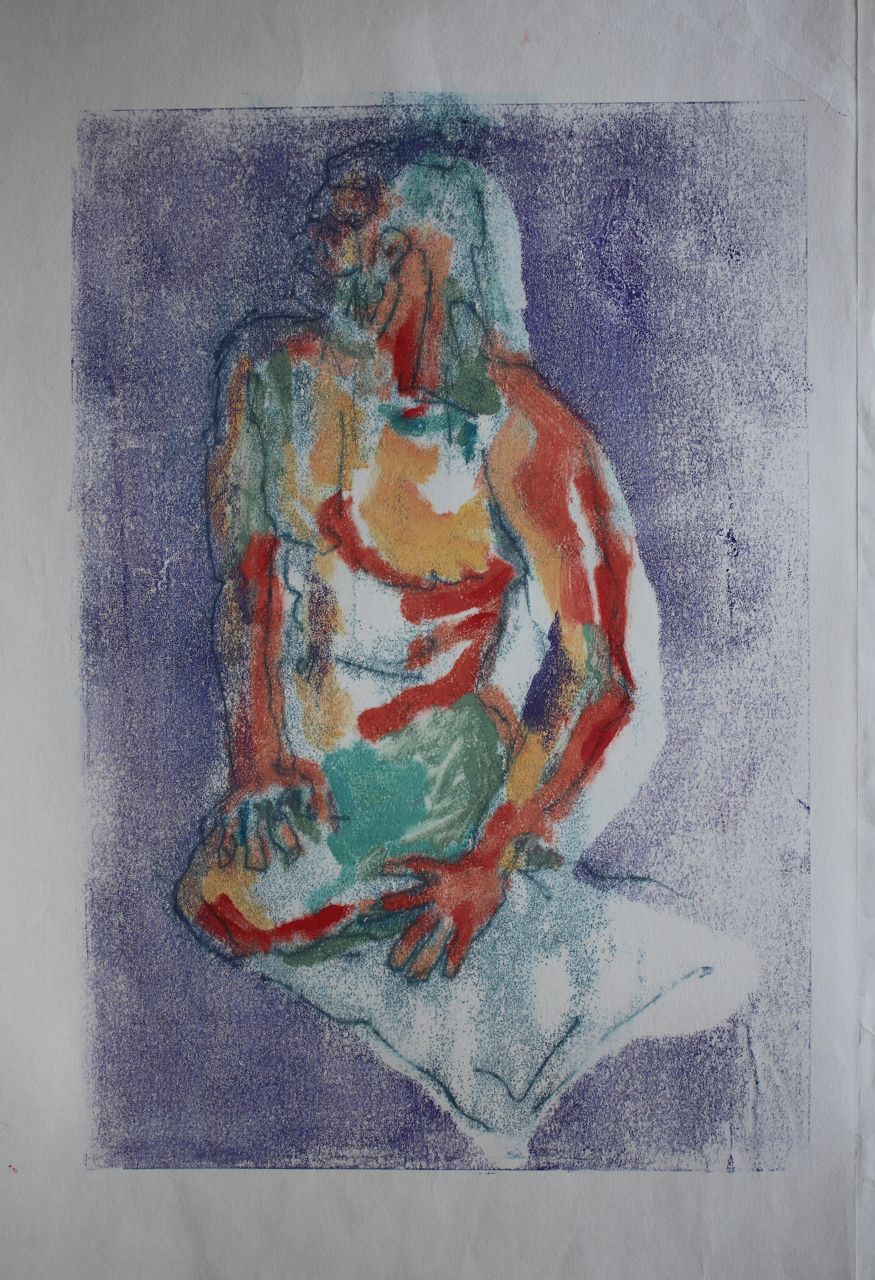
So I tried to use the figure in the same way, using a mask, painting and backdrawing,  The mask creates an empty space and a negative shape. Warm and cool colours and white spaces suggest form, and an illusion of 3 dimensions. Backdrawn lines posit an alternative space to the masked shape. Mis-registration is the element that creates the “abstraction” from life, the deliberate juncture with reality. That is to say,  the “language” of printmaking can do the job of suggesting that what we see is an unstable thing, dependent on perspective. On the other hand, the images also suggest movement, in the  same way as “Nude descending a staircase” works by showing transitions into and out of a place in time, as if the figure is getting into or out of position. The separate elements “become” a figure because we interpret it from our habits of seeing.

Technically, I used different degrees of paper moistness to get different line quality. The middle one was using wallpaper lining, very strong, and quite damp. The other two are on Chinese rice paper, dry on the left, slightly dampened on the right. The same images seem to move in different directions, away from the masked shape.


What I like about this experiment is the emphasis on the monoprinting processes, but this could go in so many different directions that I’m not feeling I have found a focus yet.