Landscape This is not a conventional landscape, but it has arisen from observation of the environment and is some kind of comment on it. The final prints use the same monoprint technique as the previous exercises, but I decided to make them sharply geometric, floating, as on constructivist images, and ironically ungrounded. The first idea I had was to create slices of bark, signifying the cut trees. This is done on a single rice paper scroll.
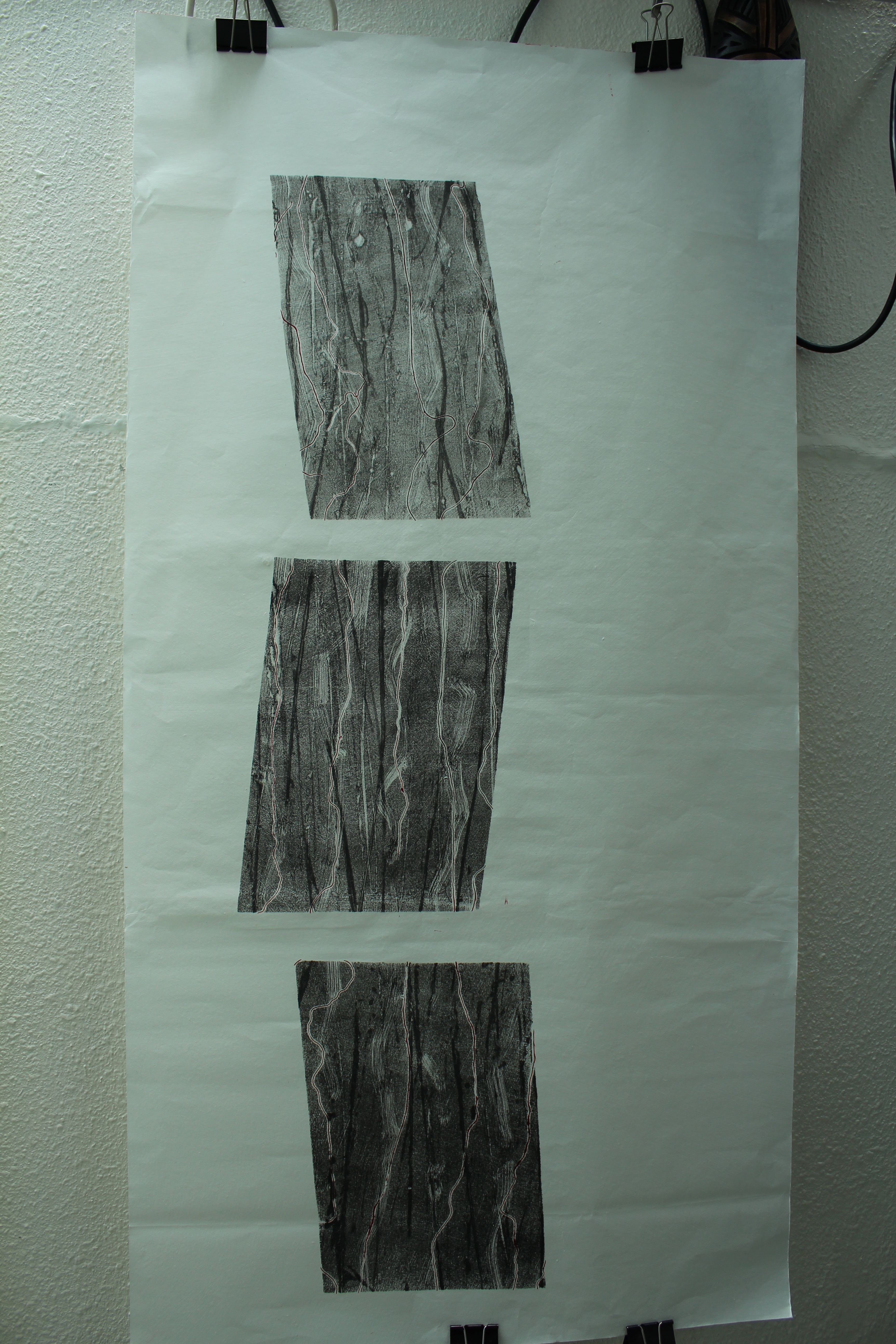
Slices: Monoprints on a scroll Paper size: 70 X 140 cm
This, I thought further, reflected the way the natural environment is being treated, commodified and turned into geometric shapes for development, and I decided to make floating parallelograms that could be read as rectangles viewed from and angle as if floating above the white paper. Then I decided to “draw” out the threads/ veins of the bark/ trees, to create a narrative progression, suggesting to me that as the images move from bottom to top, there is a process of construction to deconstruction, evolution to dissolution, closeness to distance, concrete to abstract. In the top image, there is a sense of resolution in the opposition/ separation of shape/ line/ forms, but a complete loss of perspective.
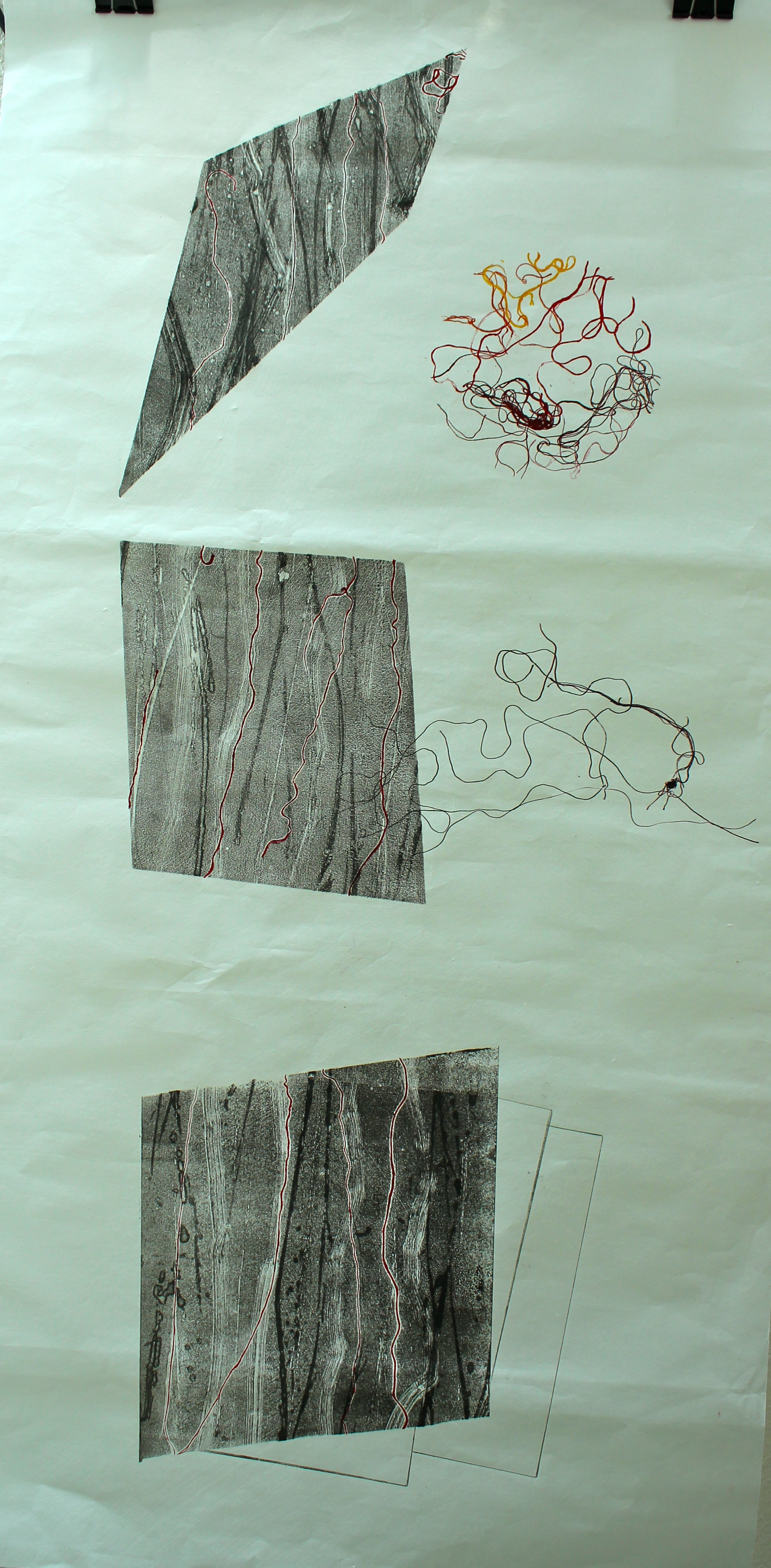
Land
Paper size: 70 X 140 cm Monoprint on scroll
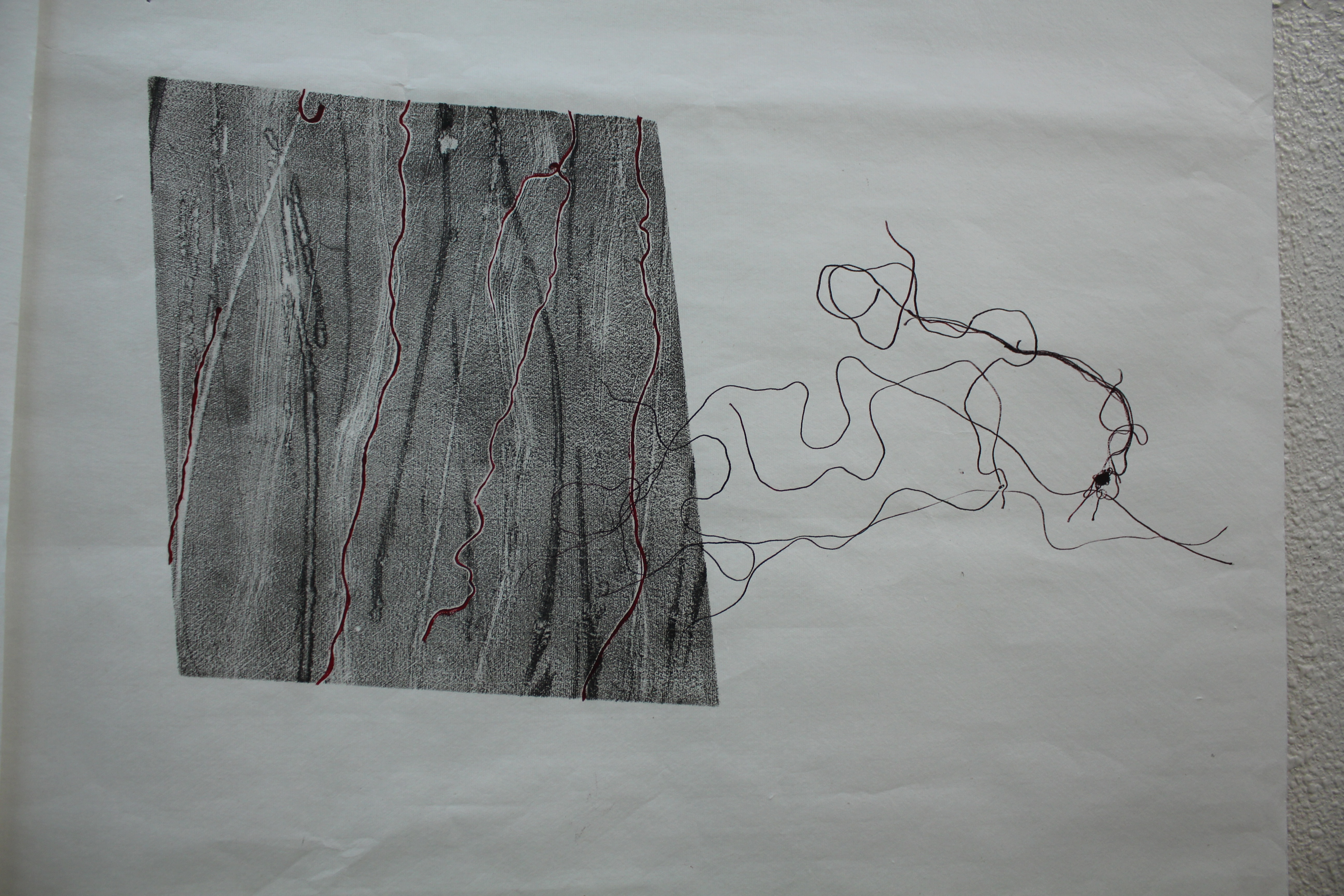
Detailed images 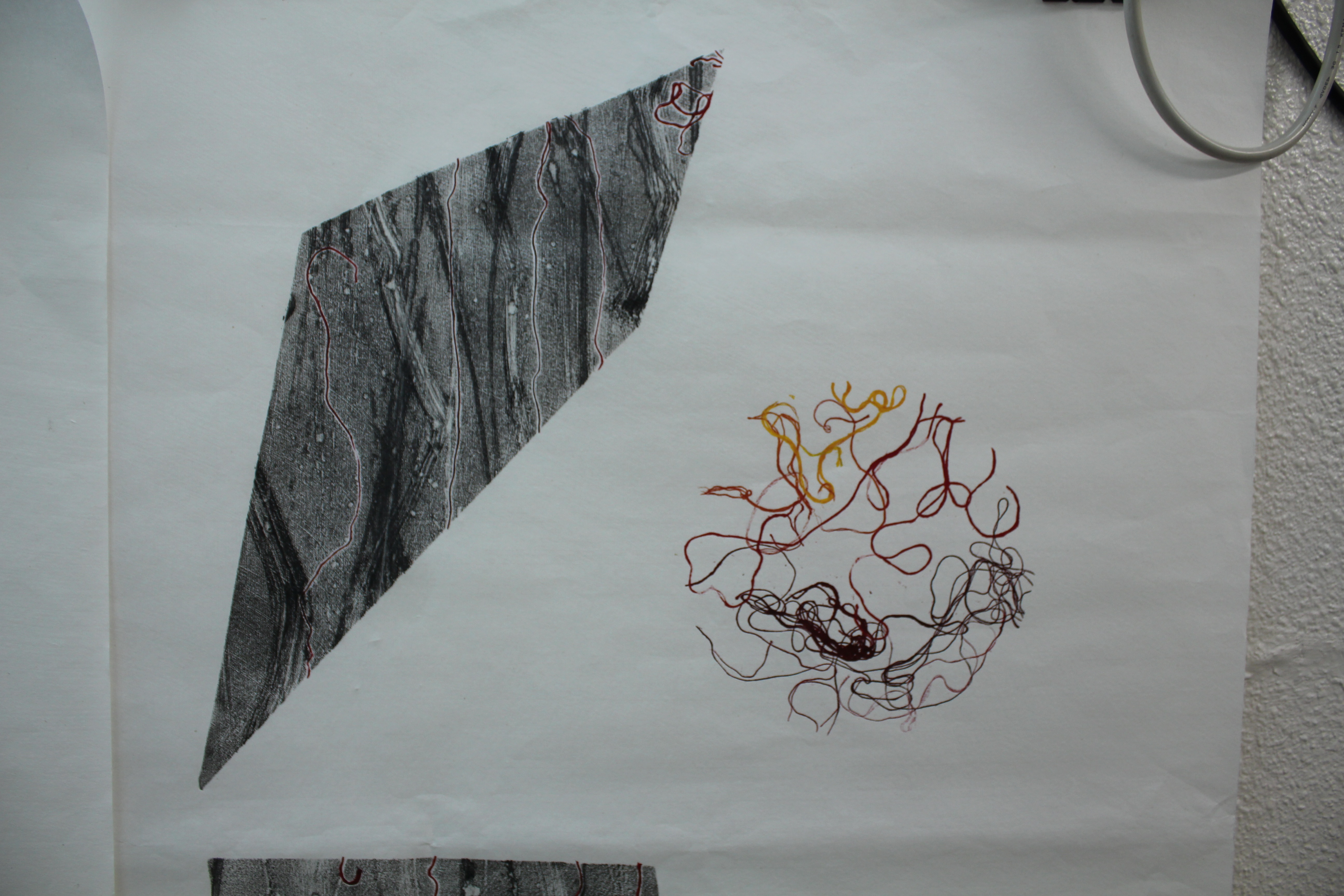
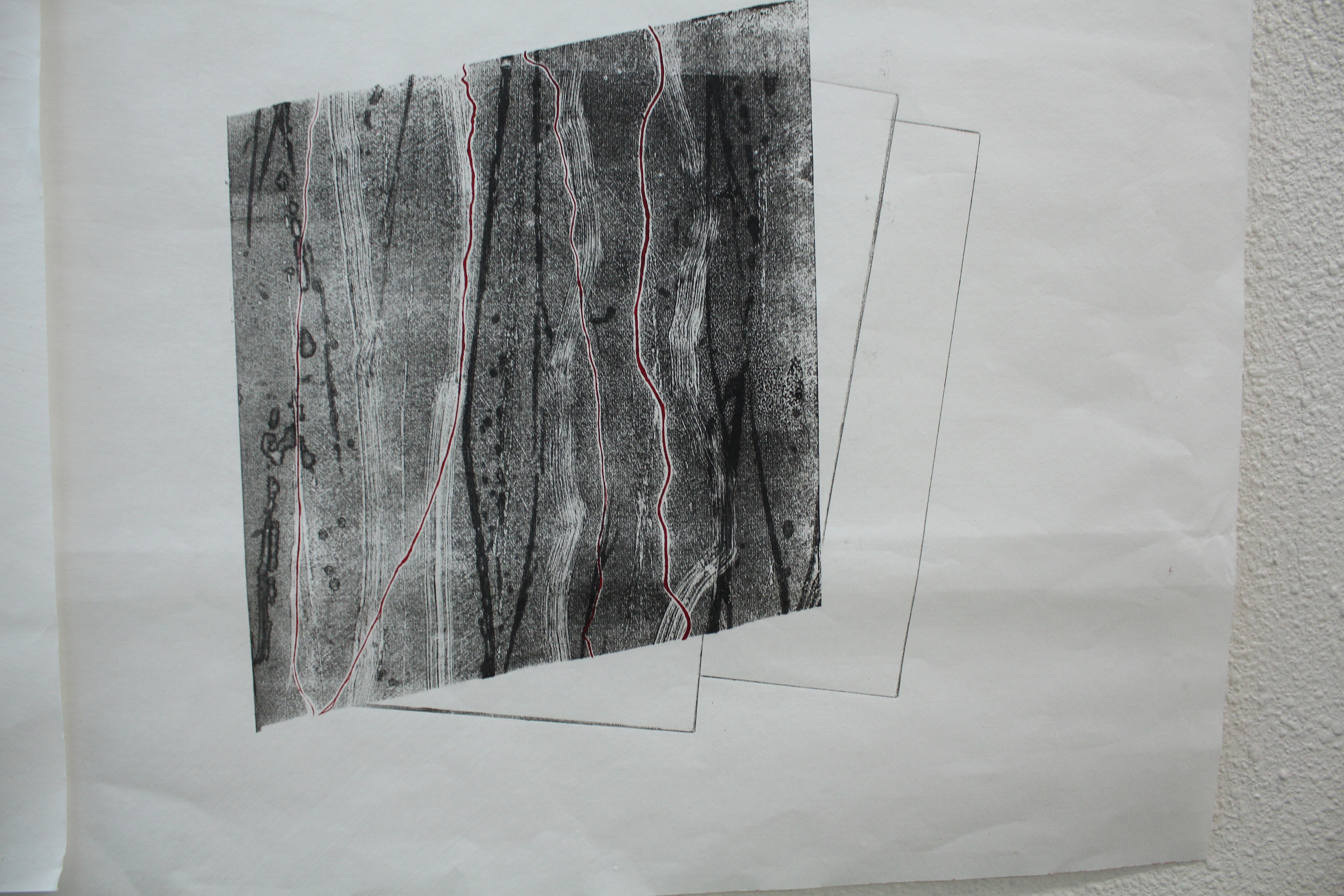
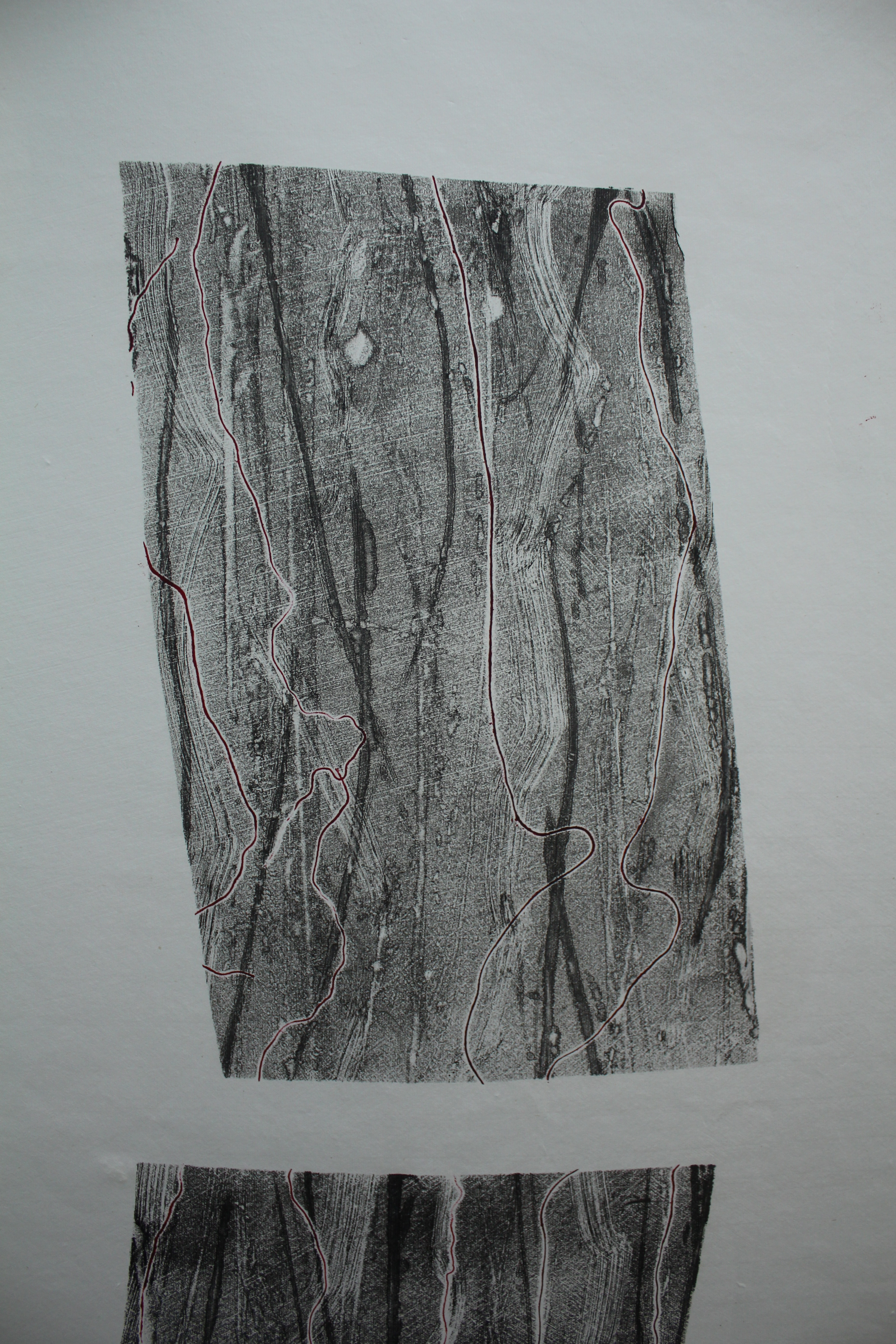
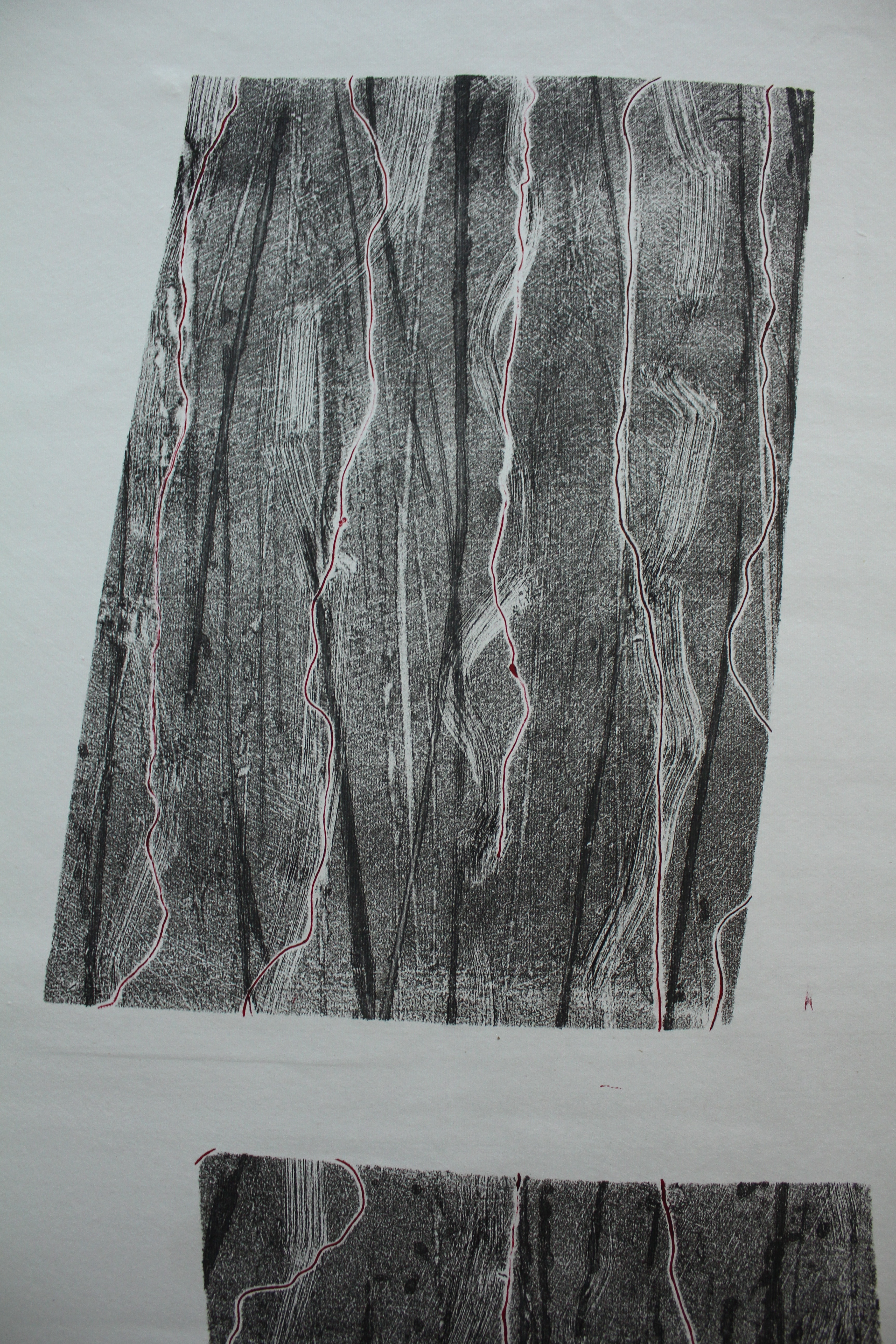
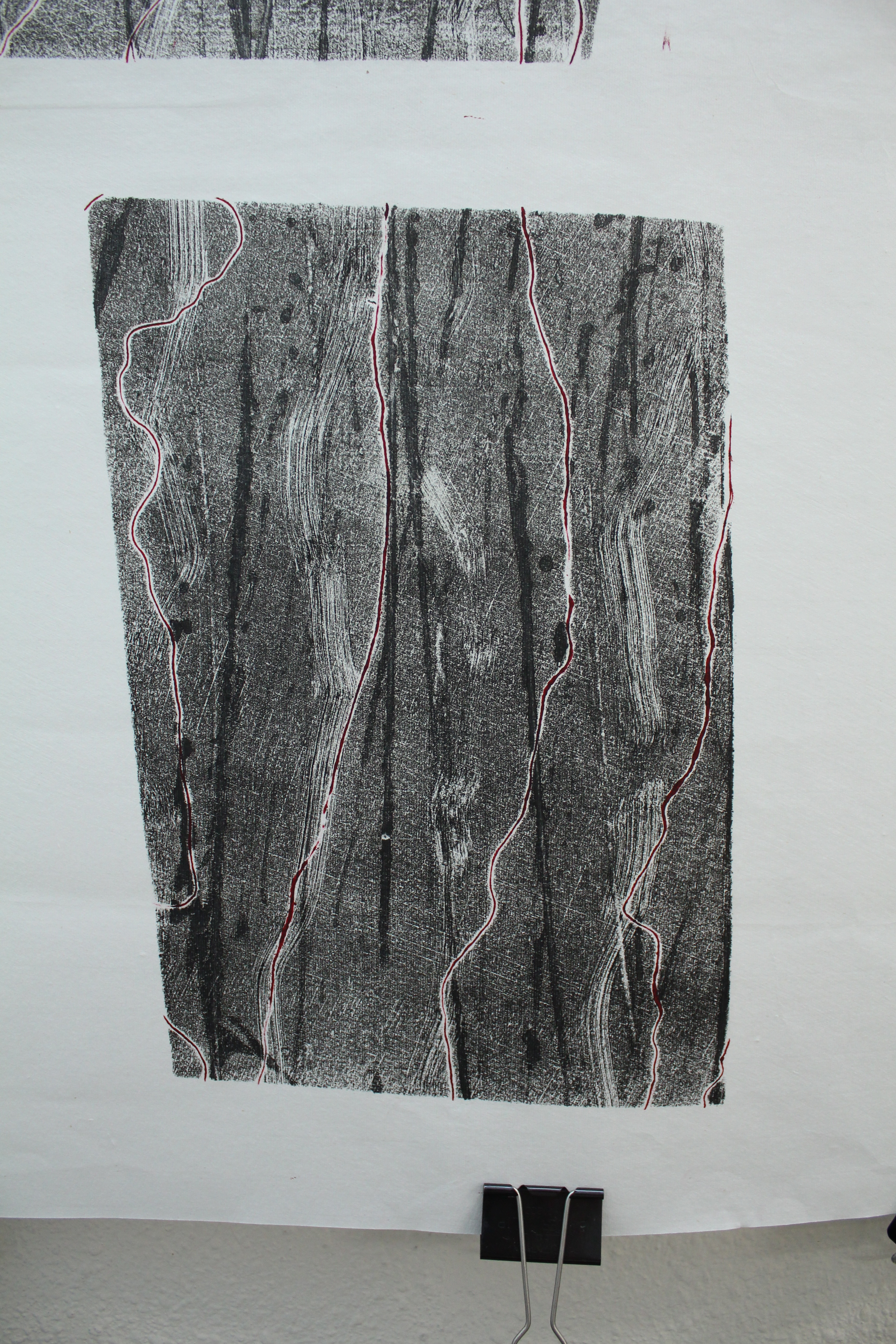 Evaluation I feel quite pleased with these last prints, and happy with the direction I took this, rather than making a three-colour representational linocut or similar, as seemed to be implied by the course materials. I like the minimalism of this. Skills? Registration and image placement was relatively easy because I could use the semi-transparency of the paper. The biggest challenge was handling the large pieces of paper. With a press I could get sharper edges. Technical questions: are the materials I used ok? I started with vegetable oil, which left yellowish stains, moved onto linseed oil, which also spread into the paper, and then finally baby oil, which seemed all-round kinder. Will it change colour? And the turps. Distilled, Winsor and Newton, not white spirit, but will it rot the paper? I could try this with water soluble inks, but right now, in this heat, they wouldn’t stay wet long enough.
Reflective Commentary Added post-tutorial, where it was suggested that this is an omission. This series of prints, “Land” and before it, the “Mid cloisters dim” prints, emerged from a response to my immediate environment, from my reaction to change being wrought on the natural environment, the mass destruction of trees and the imposition of large oppressive structures. It evolved through observations of textures, materials and the relations between them, into he creation of analogies with emotional overtones, trees clutching the earth, flowers like disembodied hands, signatures and stamps imprinted in concrete, which coalesced into a concept of “human traces” and mark-making in a brutal sense. This evoked a poem which has inspired me before, “Frost at Midnight”, by ST Coleridge, in which the poet celebrates nature and bemoans the spiritual loss when forced to live apart from it, “mid cloisters dim”. I’m conscious of this is a personal theme, visited before in prints on “The Dream of the Rood”, which related trees, violence and casual neglect through the Old English poem of that name, a mediation of the “rood” on which the crucifixion took place. This series developed as a more abstract exploration of shape, line, mark-making and texture, via the “mid cloisters dim” more pictorial/ verbal stage which included a recognisable image of trees and an intaglio print of the verse, from which the idea of a series of broken but related shapes emerged. The shapes were conceived as a series, rather than a group, and thus evoking the sense of narrative which was influenced by the prints of Xu Bing. I struggled for a while to understand the tutorial comment that the final prints, the “Land” series, had had too much added with the monoprinted threads, as at the time, I felt that the piece lacked balance, visually as well as semantically, and that the threads provided a counterpoint, resolving the image while the abstract shapes dissolved. I can see the minimalist argument however, and think of the works of David Nash, both prints and sculpture, which have a monumental feel.
This raises questions about the relationship to the audience and “direction”, in both senses. The use of a scroll might imply a certain way of viewing, as traditional Chinese landscapes were meant to be “read” from top to bottom, or bottom to top, with the perspective changing en route. By contrast, I’m thinking of some of Nash’s lithographs of monumental shapes, often groups of three, where the horizontal placement might suggest a scene rather than a narrative, more akin to traditional western paintings.
 Christine Bruce