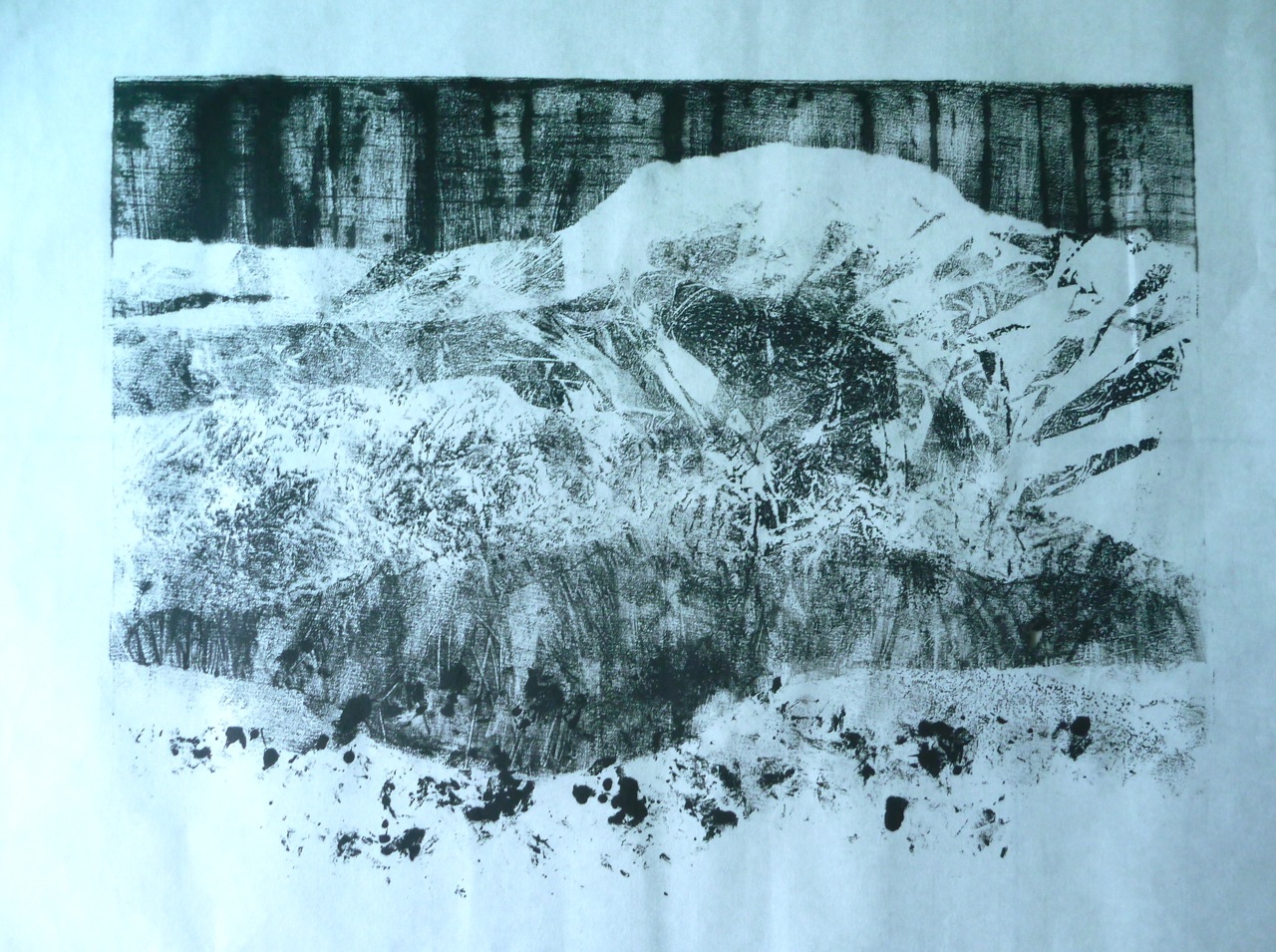
Snowy landscape Image 30 X 40 cm Ink and oil masked monoprint
It has been a struggle to get going. To be honest, I felt the assessment results from my last module were disappointing and the assessment comments rather different to the tutor comments I had received. It made me doubt everything, and I lost the confidence I had been feeling. I still feel I have no way of judging quality.
But anyway, here goes.
The first topic: landscape.
I approached it by sketching, but wasn’t inspired. I thought, and planned and made notes. I eventually and worked though some imagined landscapes. I eventually played with textures, took photos, and just printed stuff. The final piece, to the extent it is one, evolved by just printing stuff. Otherwise I over-think and do nothing but produce words.
This set of experiments was mainly inspired by photos taken around the New Territories village where I live. Two things to observe here: first, it’s a complete mess, as there’s huge construction project going on, building a motorway extension, several flyovers and a tunnel. Second, all the trees, hundreds of them, beautiful flowering ones of many varieties, have been cut down. That’s the subject matter.
Another point is that I was inspired by the prints of Xu Bing, particularly his early set that show the serial loss of agricultural land: a reduction woodcut print becomes a series of images of loss.
I’ve already written a bit about this in my PM 1 blog. https://chrisocaprintingblog.wordpress.com/other-artists/wasteblock-artists-reduction-prints/
I’ll now document the process of doing this first assignment.
Chine colle and perspex layers
This is something I made last year, and liked: it’s made of layers, rough rollered ink, on different pieces of paper, some coloured, some creased, some back written text on creased paper, and a layer of thin perspex with ink on both sides. It’s all about contrasting textures, abstract shapes, transparency.
I decided to start with monoprints.
Materials: Sakura (student quality) oil-based ink
Printing Plate: Perspex plates (40 x 30 cm, 25 x 50cm)
Paper: Chinese rice papers of different thickness and absorbency, tissue paper – large sheets, scrolls, from which I’m cutting sheets of around A2 size.
Just played about with tissue paper to try to get used to printing again, and stuck to black.
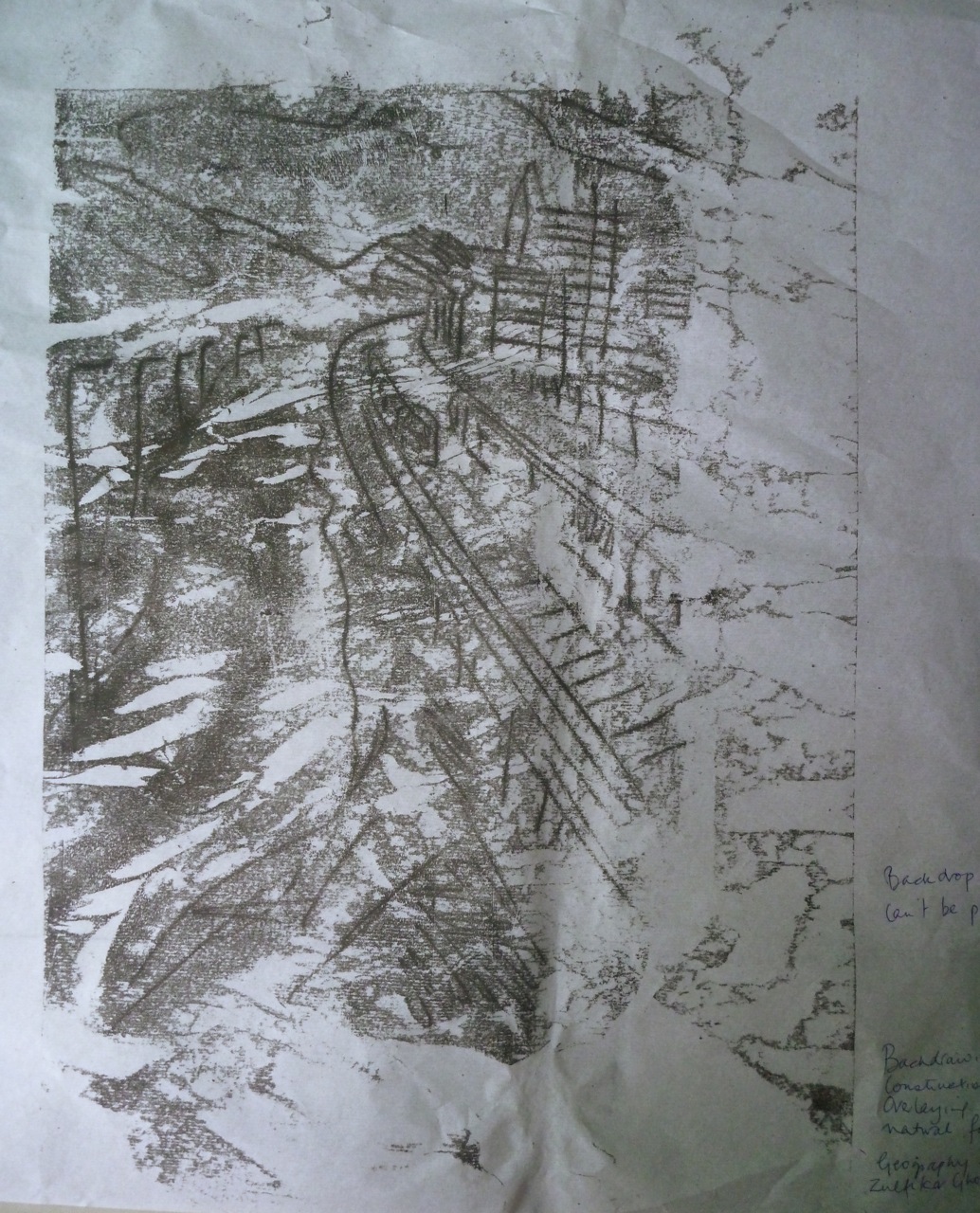
Back drawing village landscapes:
Experimenting with creasing, folding, rubbing, pulling off the inked plate:
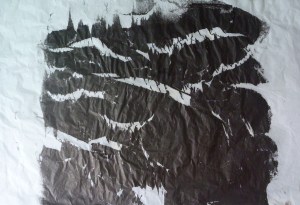
Heavily inked plate, pulled
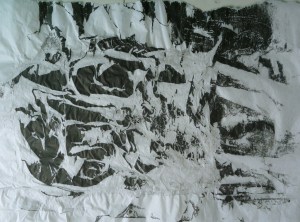
Less ink
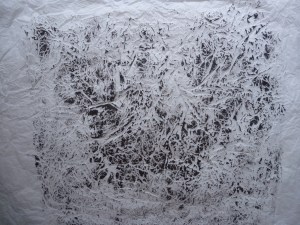
creased paper
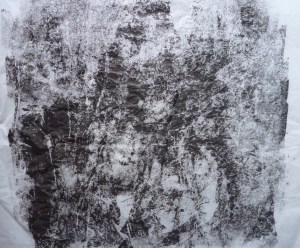
ghost print after pulling creased paper
Experimented with using oil/ water to smudge lines, and liked the atmosphere created by soft, dark lines.
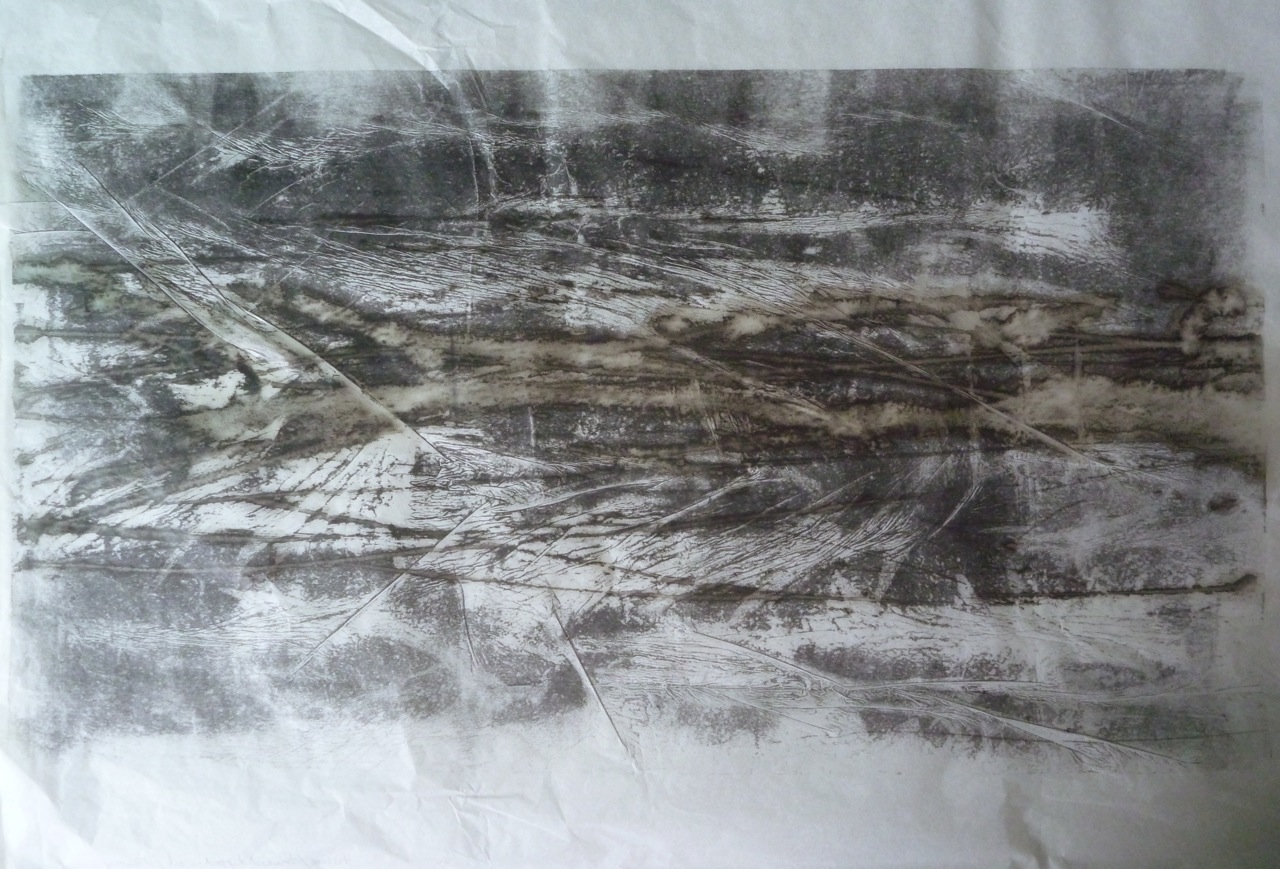
Oil and creases, creating landscape
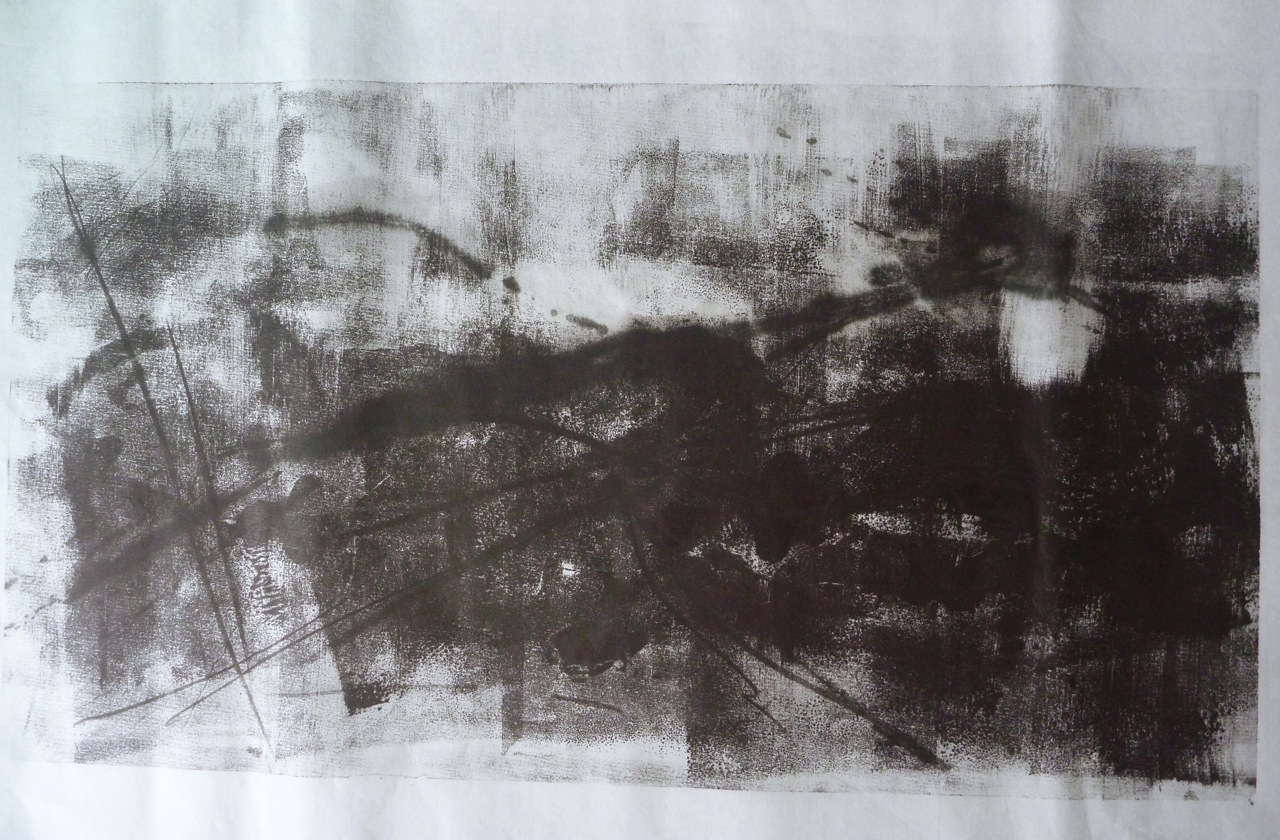
Mountains, oiled brush backdrawing
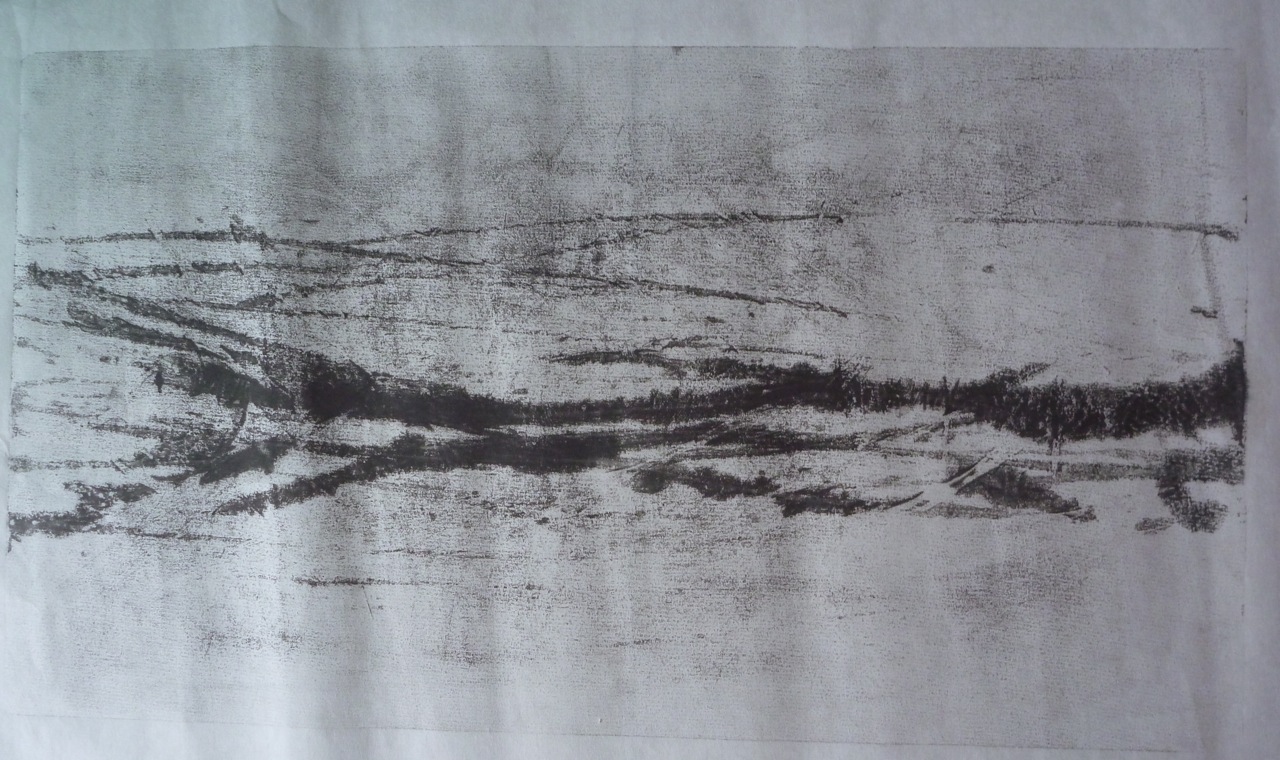
ghost print, picking up oil soaked ink: nice lines.
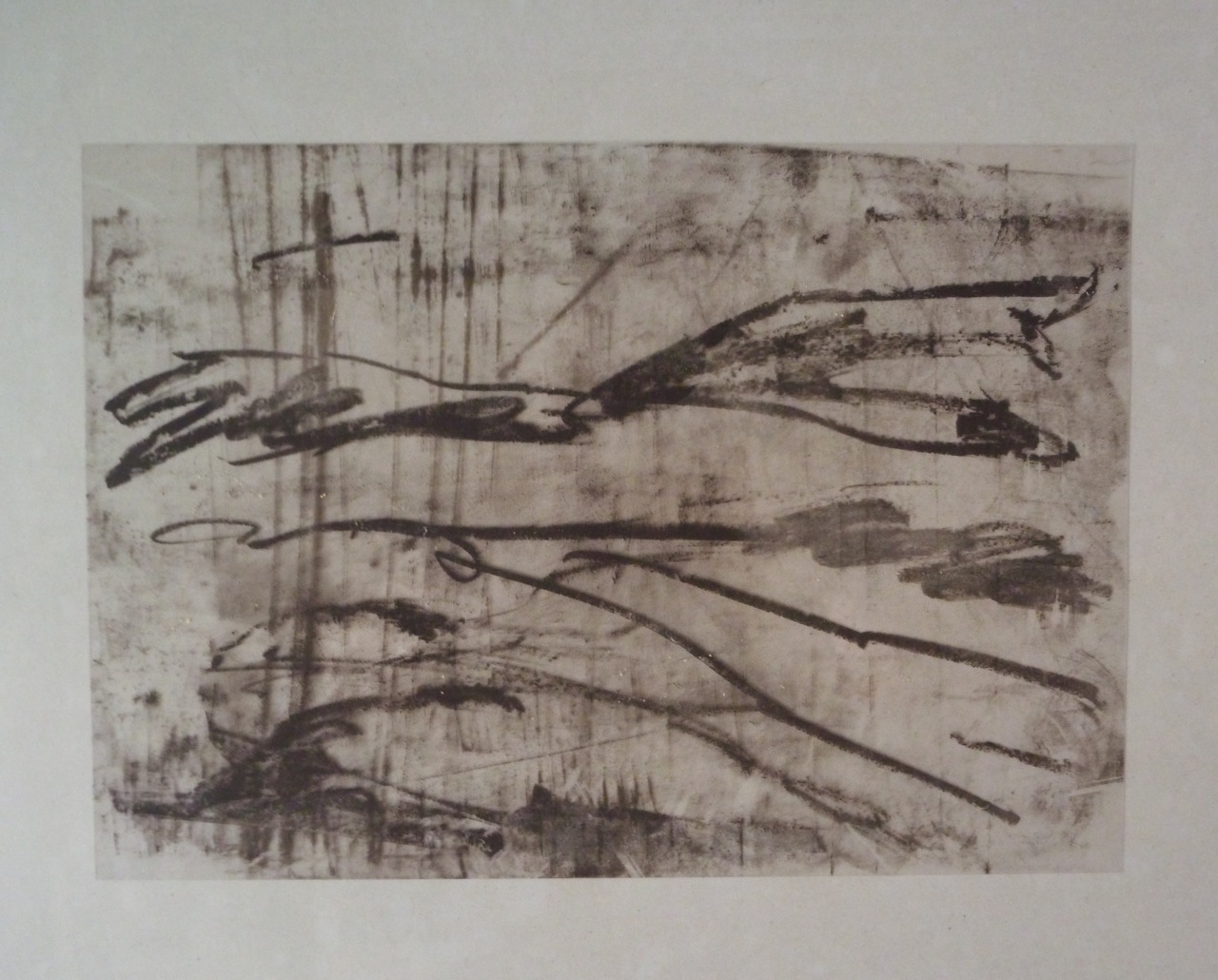
soft lines form inking over oil pastel on perspex
fine lines, back drawing over ghost print
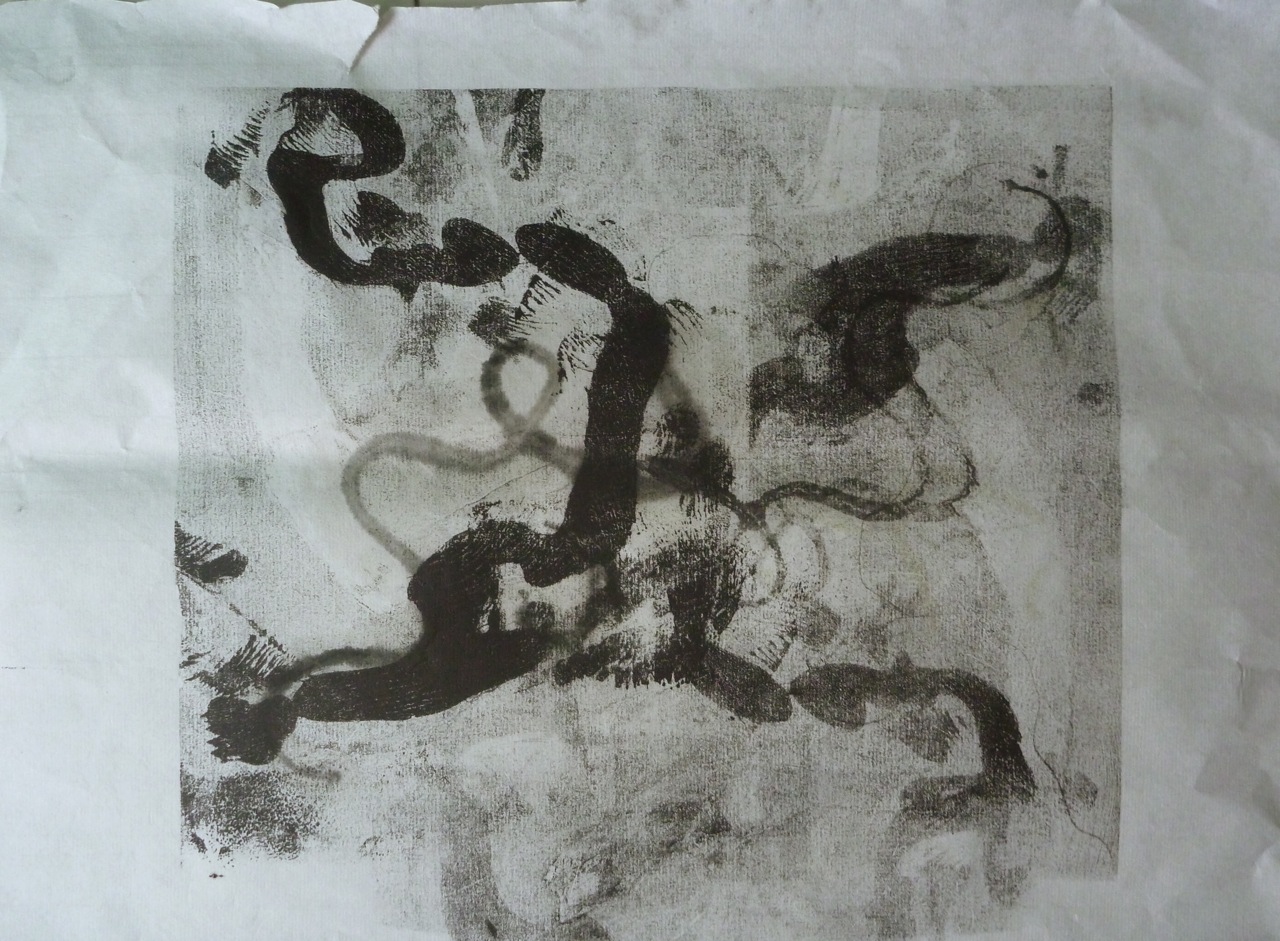
ink squeezed straight onto glass, pressed. String dipped in oil. Wiping.
Finally, I combined techniques to produce semi-abstract landscapes with texture and line, wet and dry, string masks, brush marks, backdrawing with hard and soft instruments.
This one has a sky with brushed ink, lines made with wet ink (ink plus oil- vegetable oil at this point, probably not a good idea) and squeezed lines of inky straight on the plate, then leaving a pattern where it is lifted off. Torn paper masks. String as mask- clean string and oil-dipped.Some areas are wiped clean.Effect of gestural lines is movement- weather?
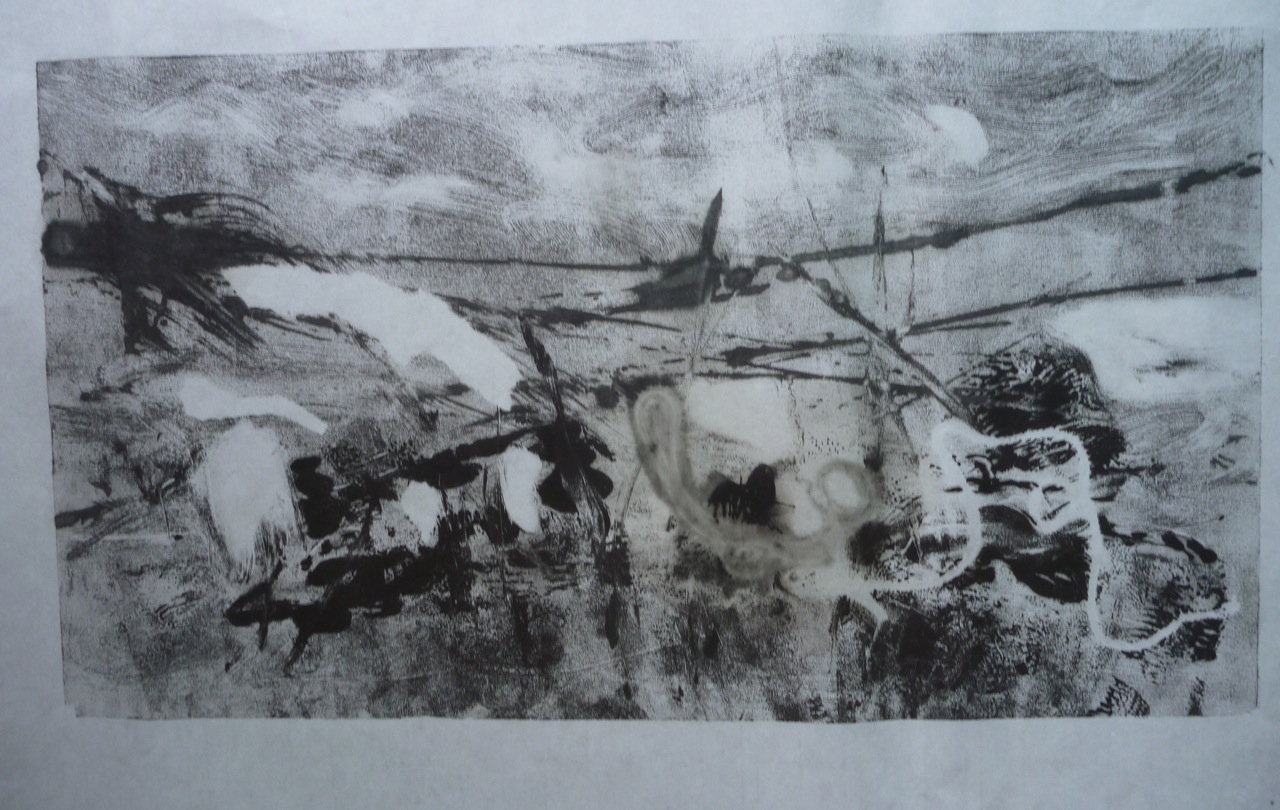
Landscape with barbed wire 25 x 50 cm
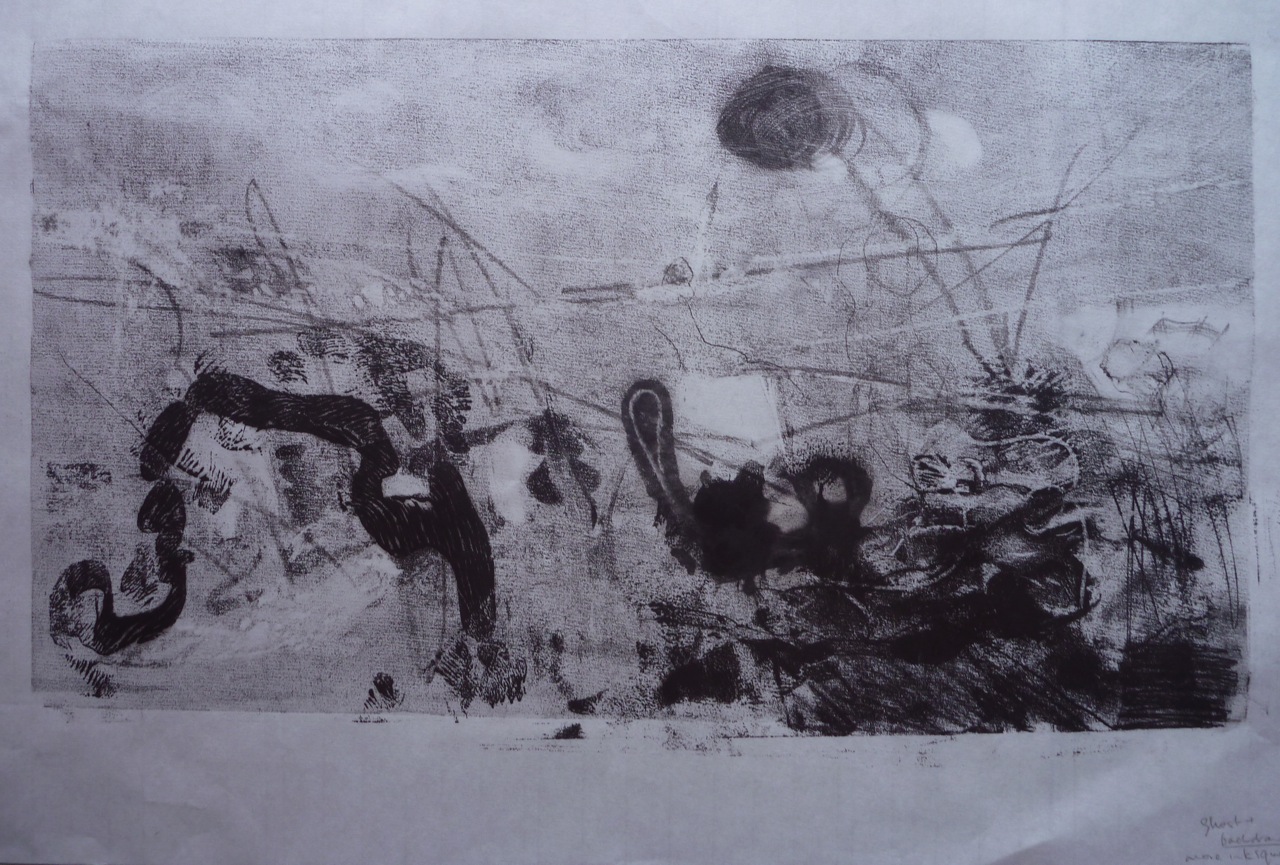
Landscape with dark sun 25 X 50 cm
Here the page was lifted a couple of times, and not put back carefully (Registration!) but there is a lightly textured background that was residue, i.e. the ghost print of the one above, and softish lines made by backdrawing using rubber, finger, brush handle, and pencil point.
From here I experimented with making multiple layers of different textures, using torn paper masks, to create an imagined (remembered) landscape.
This uses oil, brushing, scratching, wiping, masks, ghostprinting repetitions, and ink squeezed directly onto the plate, to create what I see as a woodland scene.
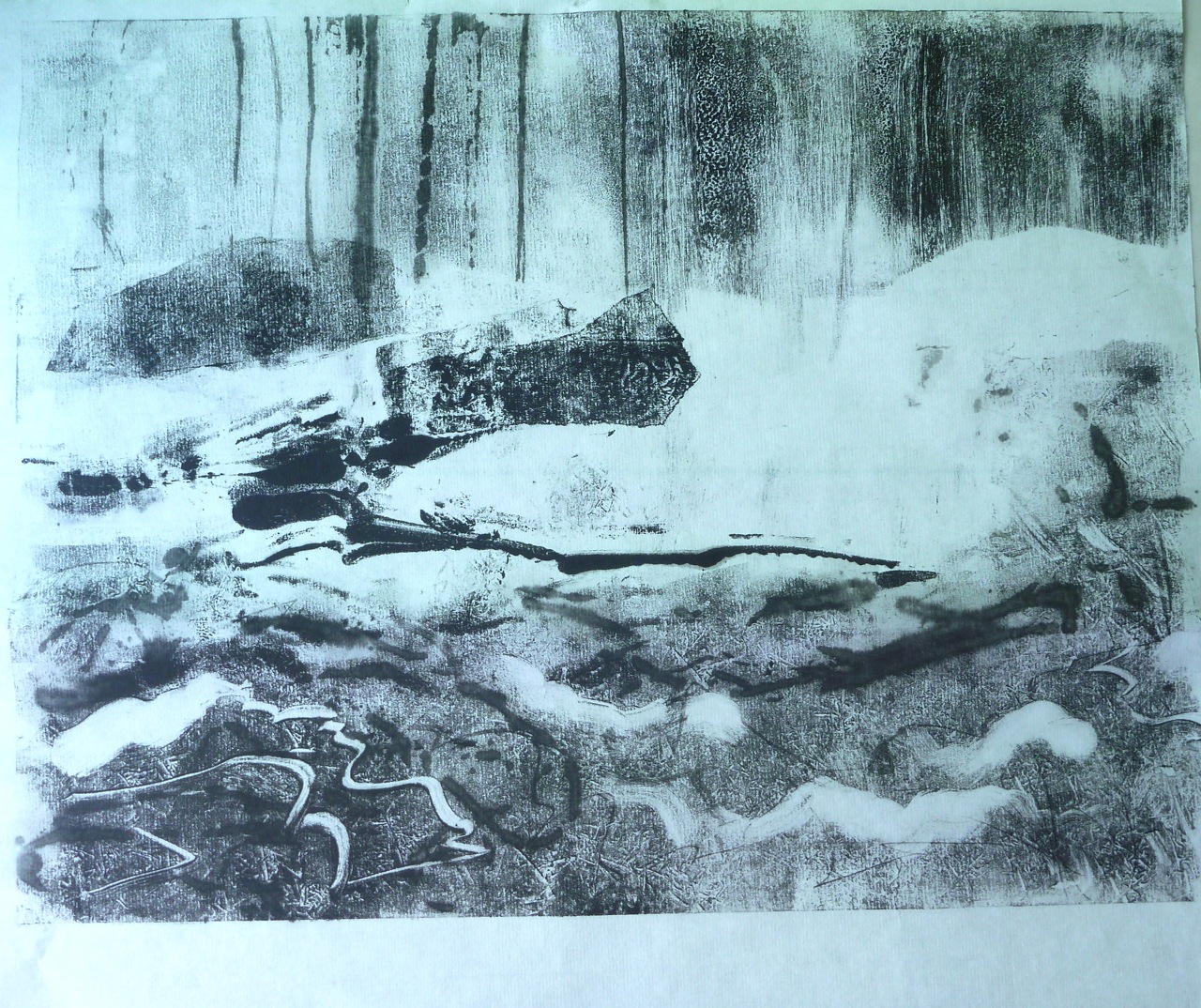
Masked Monoprint 30 X 40 cm
Then, finally, this one I like:
Snowy Landscape Masked Monoprint 30 X 40 cm
Using oil, and thread to drag it into a pattern for the sky, paper masks create the effect of receding hills. The textures are created by using clingfilm and other types of plastic to texture the ink on the plate prior to masking and printing. Backdrawing and scratching has been used for the darker layer, to suggest grasses, and finally ink pressed directly onto the plate for the close-up plants in the foreground.
Started.
 Christine Bruce